
The Art & SCience of Photographing wildlife in low light
July 30, 2025 at 7:00 PM Eastern | LIVE ONLINE WORKSHOP | $99
Mastering ExposurE
For many wildlife photographers, low light is where things fall apart. Noise creeps in. Detail softens. Frustration sets in and so you do what we’ve been told: keep the ISO low, underexpose just a little, and then try to fix it in post-processing.
The photographers getting the best results from AI enhancements understand that they need to bring the best, most detail-rich files into post-processing, and that means being able to push the limits in the most challenging lighting conditions.
And, photographers singing AI-based software like Topaz, DXO, or Adobe Denoise for sharpening or noise reduction because of the way they alter the original pixels can’t enter those images into contests without risking disqualification.
This workshop helps you better understand exposure so you can capture clean, detailed images at ISO 20,000+.
Includes two hours of instruction, complete with real-world examples from ISO 8,000 to 64,000, a 45-minute live Q&A session, and a copy of the workshop recording for you to keep.
Can’t join us live? You’ll still get the recording just for registering now.
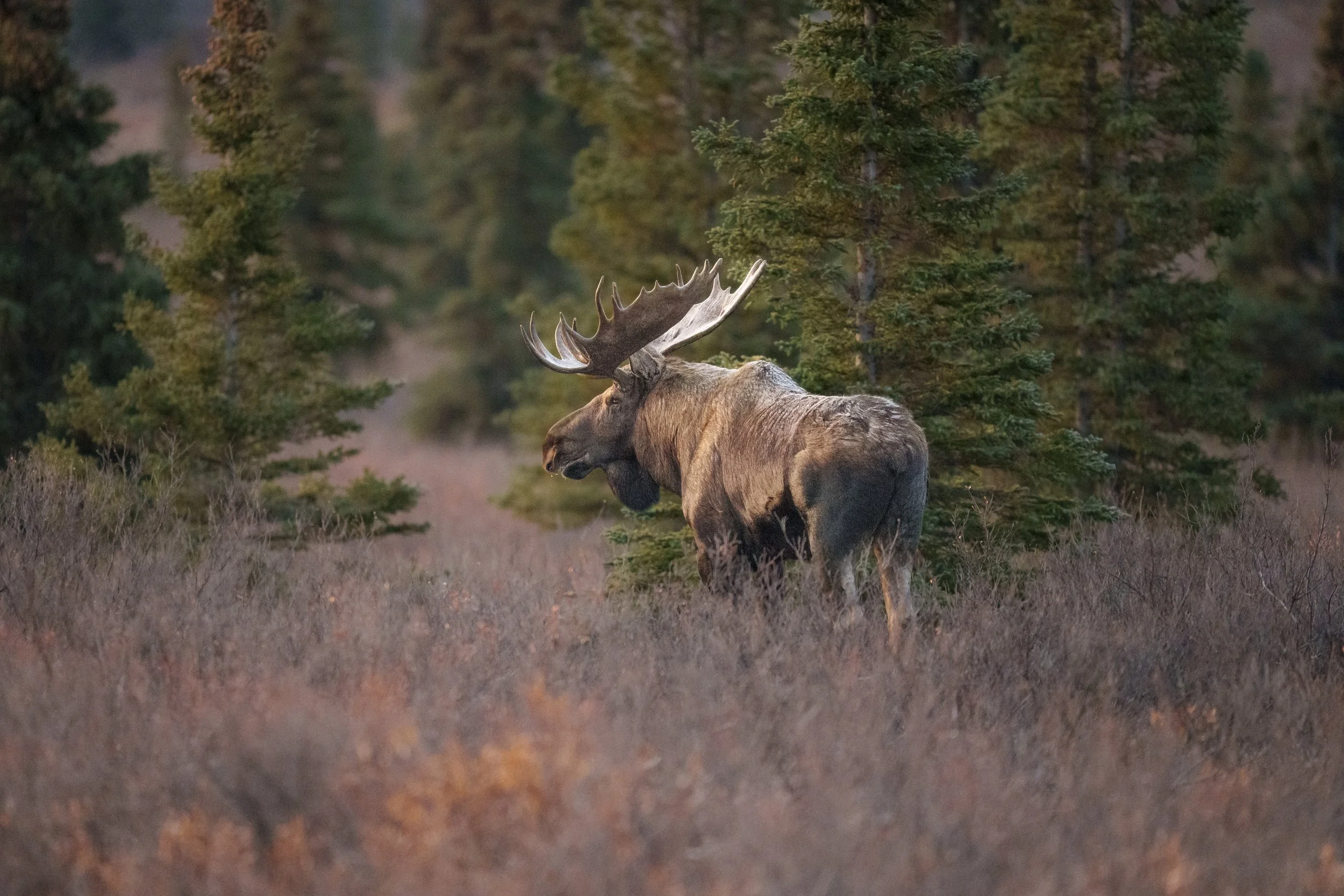
Bull moose photographed at ISO 25,600 without AI noise reduction
HIGH ISO ISN’T THE ENEMY. IT’S The Answer.
Misunderstanding modern camera capabilities
If you've ever found yourself underexposing images to keep ISO within some sort of "safe," zone only to then spend considerable time in post-processing trying to recover detail and manage noise, you've experienced the fundamental challenge of modern wildlife photography.
The conventional wisdom — keep ISO low, underexpose slightly, fix it later — actually works against the capabilities of today's cameras. This approach often creates more noise and less detail than properly exposing at higher ISOs from the start.
Today's sensors handle ISO 12,800 better than cameras from a decade ago handled ISO 1600, yet old habits persist. The fear of high ISO causes more problems than high ISO itself.
Over-reliance on Post-processing software
When you consistently underexpose and attempt to recover in post, you're asking software to create detail that was never captured by the sensor.
50% of what our sensors are capable of capturing is found in the last 20% of the histogram. So underexposing, even by just a little, can leave as much as HALF of your camera’s capabilities on the cutting room floor.
Even the most sophisticated AI algorithms work best when they have good source material to enhance, not rescue.
Low light often coincides with the most compelling wildlife behavior. By avoiding dawn and dusk activity, dramatic weather, and challenging lighting situations, wildlife photographers miss out on some of the most incredible spectacles nature has to offer.
Missing The Critical Moments
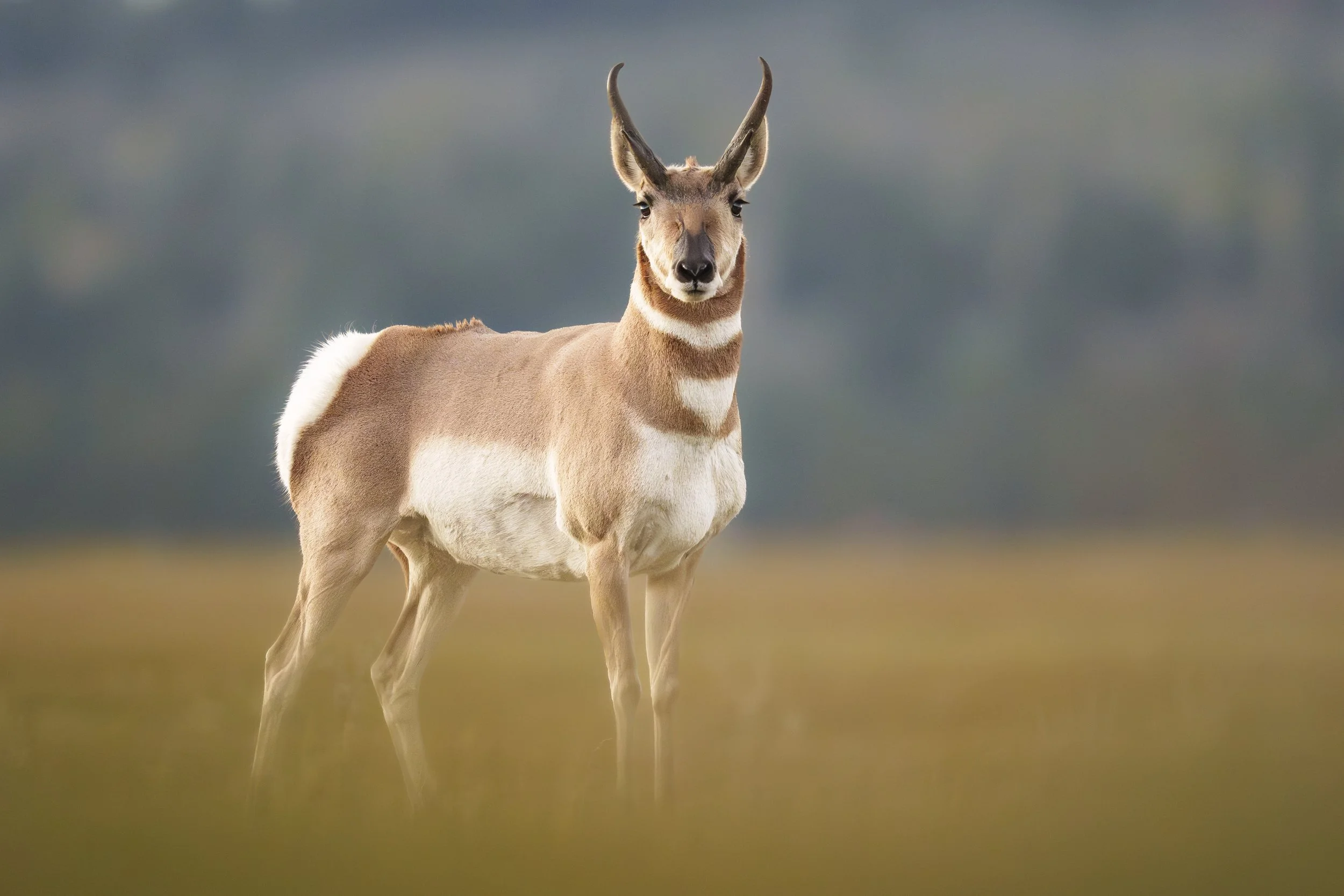
Pronghorn photographed at ISO 8000 without any AI noise reduction
A Different APProach
Rather than fighting your camera's high ISO capabilities, this workshop teaches you to harness them strategically so you’re bringing back the cleanest files possible.
The photographers who are getting the best results aren’t using software to fix fundamental exposure problems. They’re using them to polish already well-exposed images.
You'll learn to read your camera's histogram like a field guide, understanding exactly how to gather as much detail as possible, and bring back the cleanest, most detail-rich file for post-processing.
The goal isn't to eliminate all noise, but to capture images so well-exposed that any noise reduction needed is enhancement, not rescue. You didn’t get into wildlife photography to become dependent on software algorithms.
what You’ll Learn
How today's cameras handle high ISO differently than previous generations
No jargon, simple breakdown of how our sensors work and why it helps to know that
Why proper exposure at ISO 20,000 often yields cleaner results than underexposed ISO 1600
The relationship between sensor size, noise, and practical shooting limits
Working with moving subjects in challenging light
When AI enhancement helps vs. when it hurts
How to work with color noise vs. luminosity noise
Reading histograms in real-time for optimal exposure decisions
Techniques for balancing ISO, aperture, and shutter speed for wildlife scenarios
Recognizing when to prioritize different exposure elements
Why getting it right in-camera means less time editing and cleaner, more detail-rich files
Walk through of real examples of images from ISO 8,000 up to 64,000 without any AI software
Maintaining natural texture and detail in high ISO images
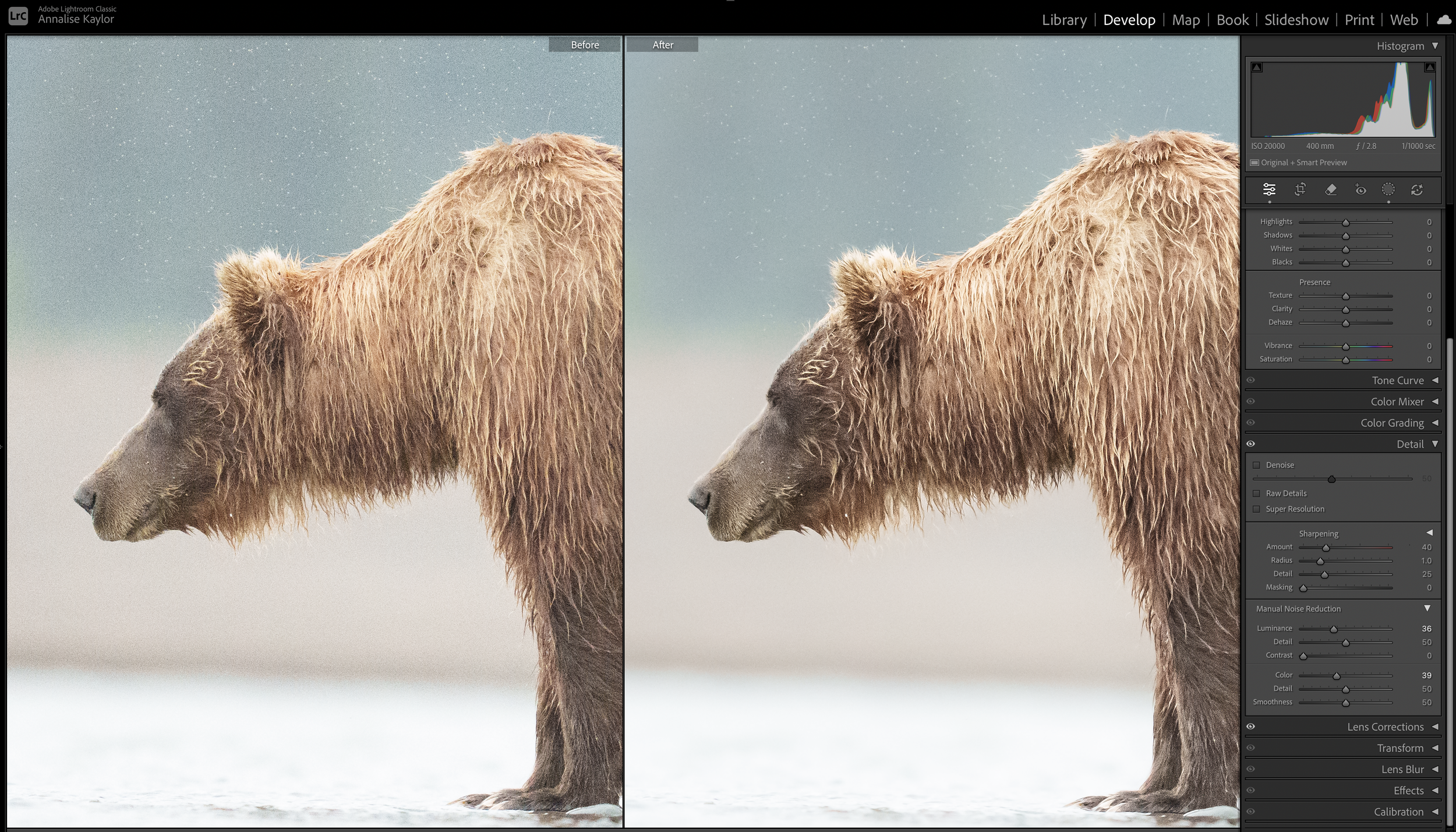
An example side-by-side comparison of an ISO 20,000 photo raw vs. edited without the use of any AI software
Common Questions
-
These exposure principles apply universally across camera systems. While interface details vary between manufacturers, the fundamental approach to reading histograms and managing high ISO performance translates to any modern camera.
-
The complete workshop is recorded and you receive lifetime access. Many participants prefer the recording format as it allows them to pause, review sections, and take notes at their own pace.
-
The workshop assumes basic familiarity with camera controls, but is appropriate for all skill levels.
-
There are a few reasons! AI works best when it has the best possible source material to work with. This class teaches you how to create the highest quality raw file so any additional processing is not “rescuing” an image, but “polishing” it.
Also, these programs use “generative AI” which is forbidden for use in all major photo competitions and publishing. So if you enter contests or have goals of publishing your work, you need to know how to get results without these programs.
Ready to master low light Wildlife Photography?
This workshop represents years of field experience distilled into practical techniques you can apply immediately. Rather than continuing to struggle with underexposed images and heavy post-processing, learn to work with your camera's capabilities to capture the wildlife moments that matter most to you.
Reserve your spot for the July 30th workshop.
Investment: $99
Includes: Live online workshop and copy of the recording to watch and re-watch on demand
Have questions? Send them to Annalise here.
Photographed at ISO 12,800 and edited in Lightroom with noise reduction done with sliders only. No AI-based noise reduction or sharpening software was used.
Photographed at ISO 8,000 and edited in Lightroom with noise reduction done with sliders only. No AI-based noise reduction or sharpening software was used.
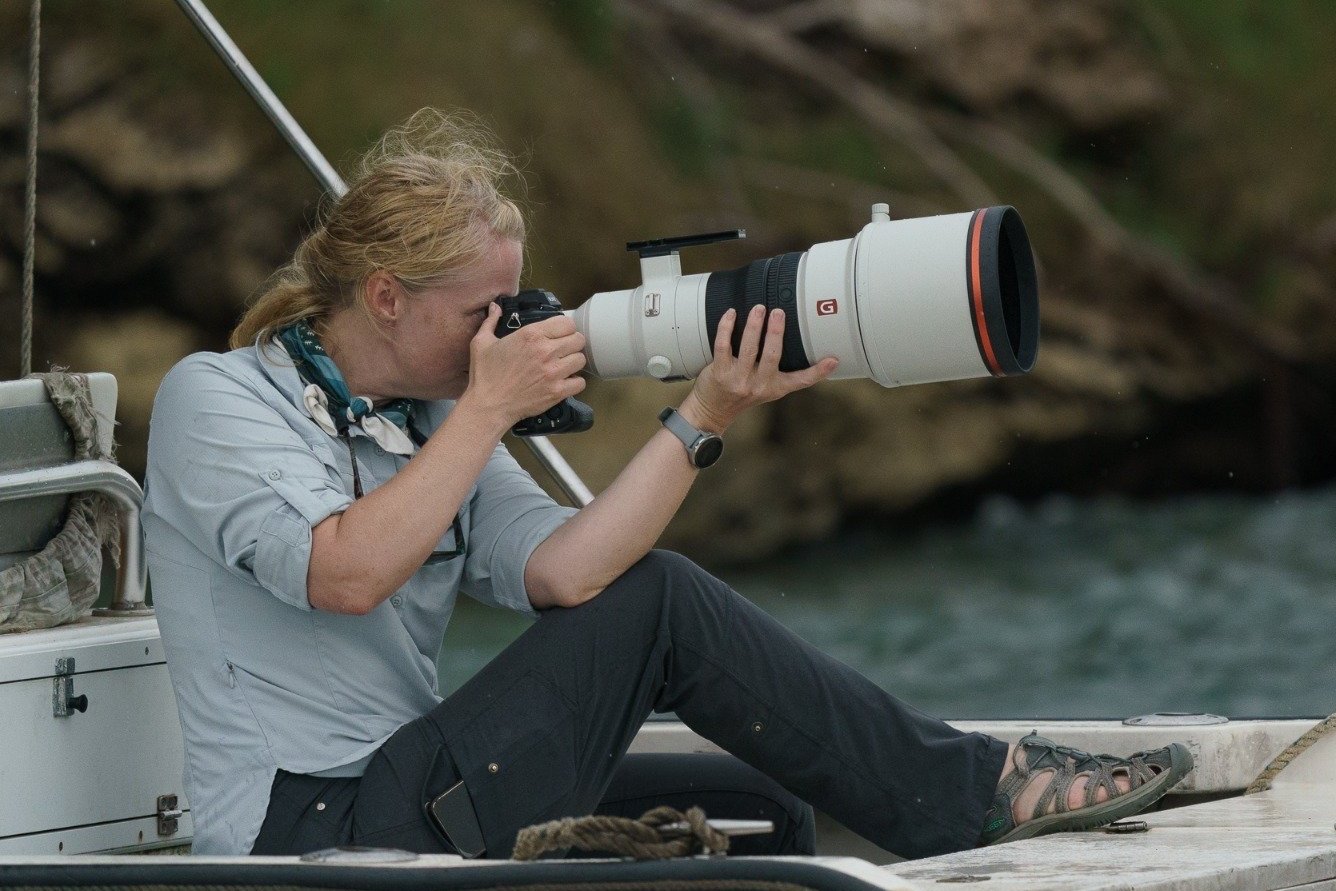
Photo by: Michael Hodgson
Meet your instructor
Annalise Kaylor is a wildlife and NGO photographer whose narrative-driven work has taken her to 40 countries and appeared in The New York Times, The Washington Post, Audubon, PBS, and more. She collaborates with conservation groups and NGOs like The Nature Conservancy and Habitat for Humanity, and co-hosts the PhotoWILD podcast, where art and science meet in the field. Her photography has been exhibited across the Americas and Europe and is held in the permanent collections of the UN, WHO, and the Jimmy Carter Presidential Library.