Waterfowl of the Prairie Potholes: A Floating Blind Photography Workshop
There are few places where water and sky feel so stitched together that you lose all sense of boundary. Here, in the Prairie Potholes of North Dakota, the earth is dimpled with thousands of glacial basins—shallow bowls born from ice and time. These are wetlands carved by retreating glaciers, and they form one of the most ecologically vital regions for migratory birds in North America: the birthplace of nearly 80% of the continent’s waterfowl.
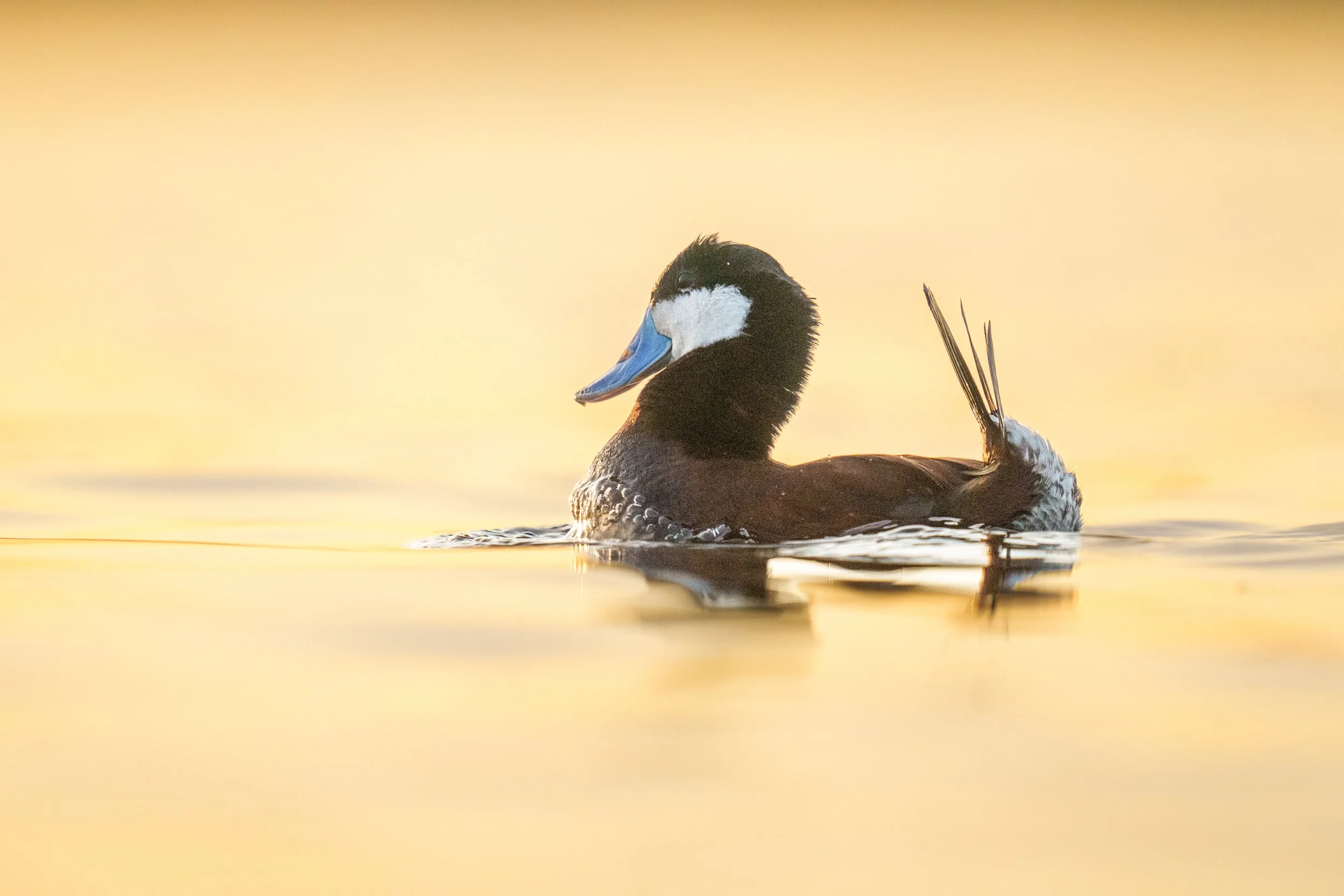
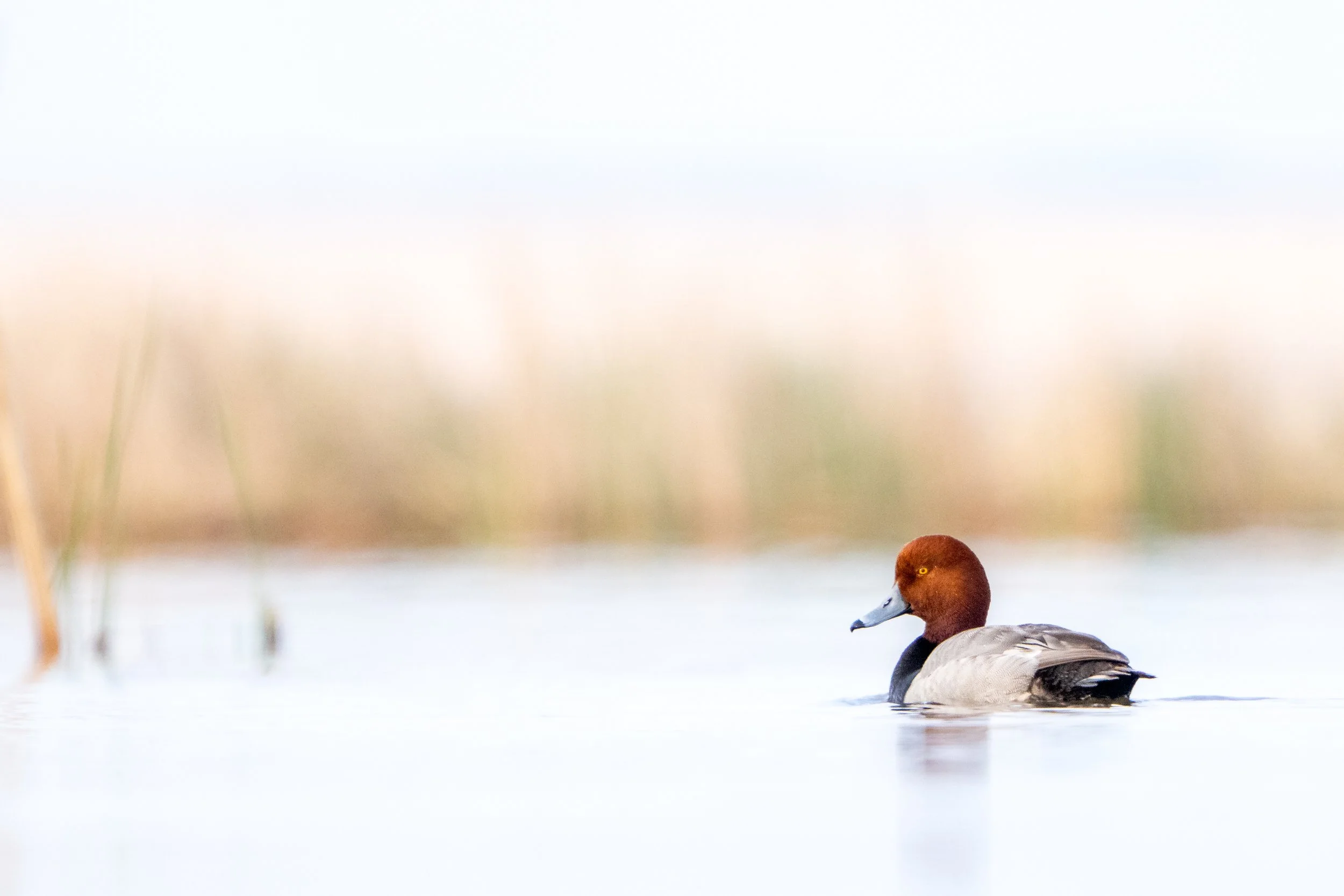
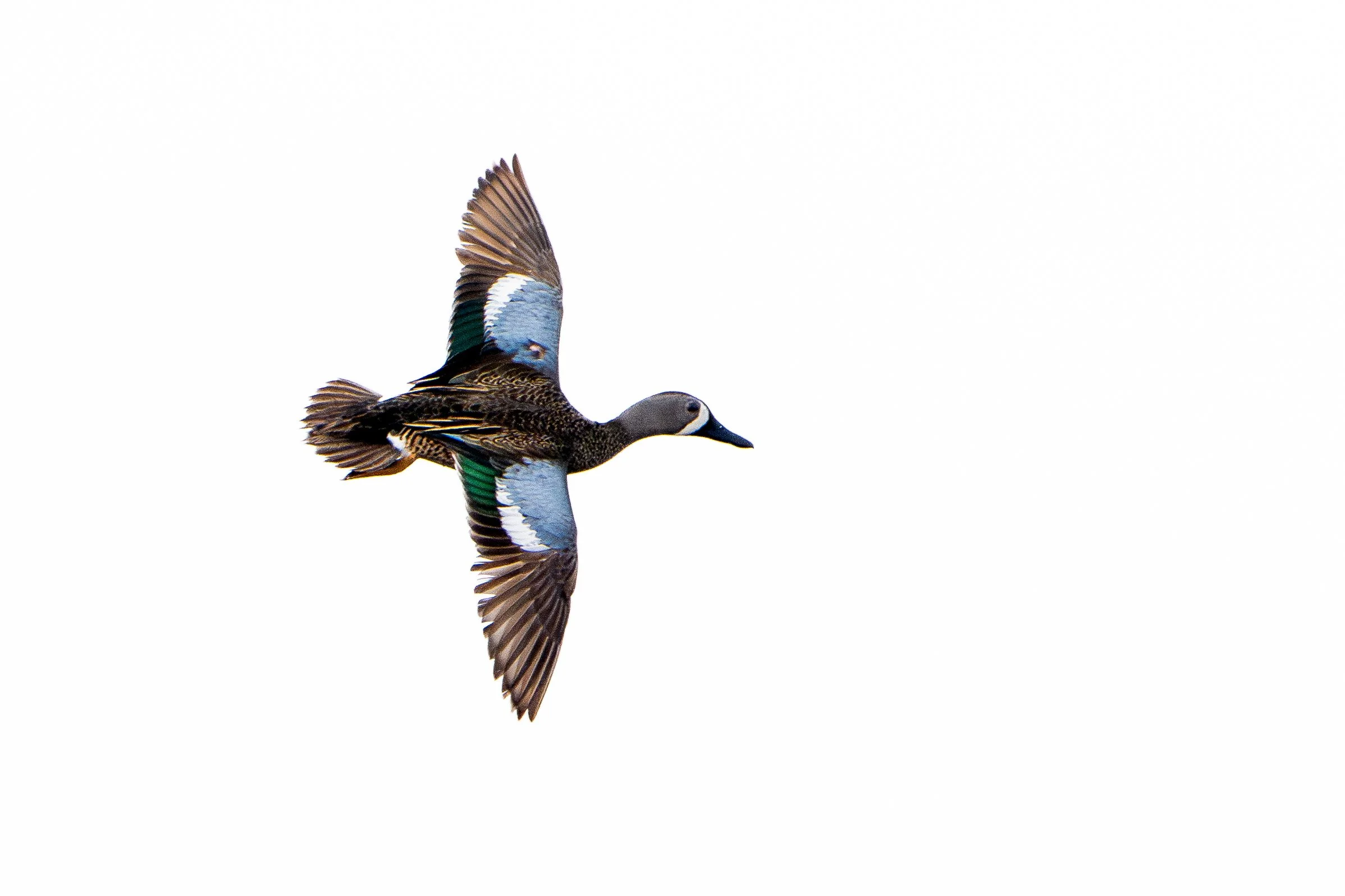
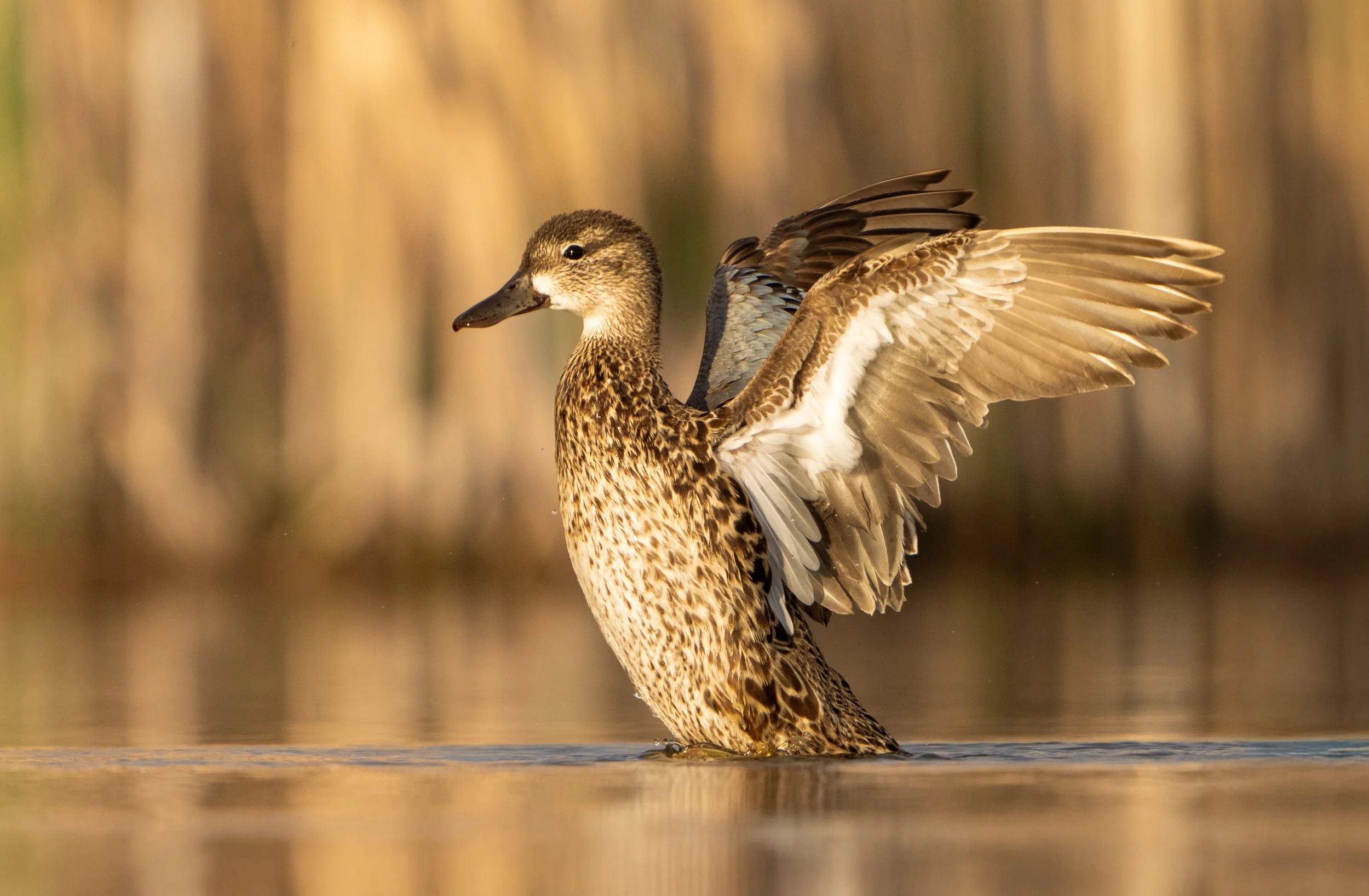
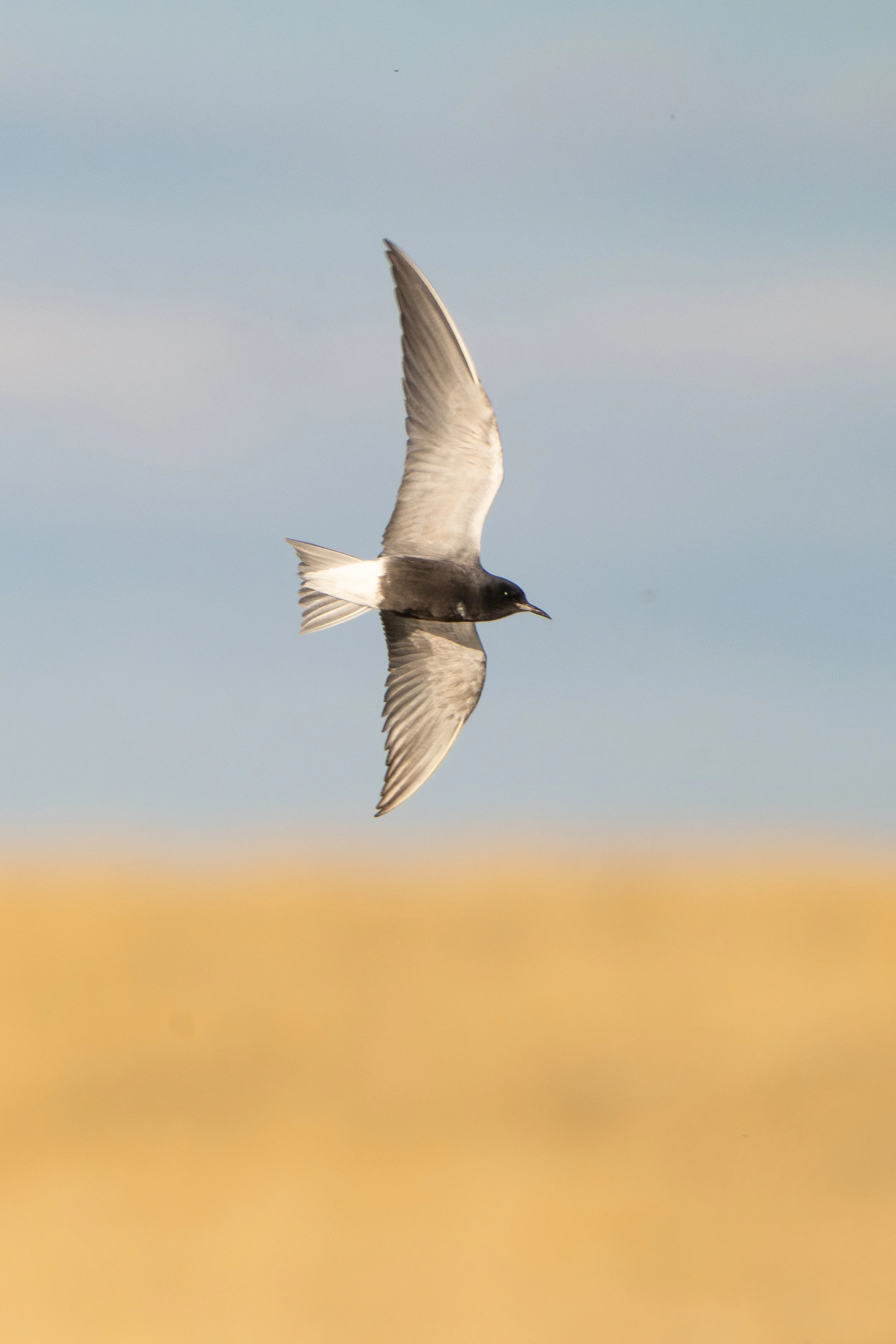
Built for photographers who want more than good images, this workshop drops you right into the heart of the action — not from shore, but from the water itself. Using custom floating blinds, you’ll photograph at eye-level with blue-winged teal, Northern shovelers, redhead ducks, ruddy ducks, pintails, and myriad others as they move through their daily rituals during the height of breeding season. It’s quiet work, immersive work, and it changes how you see and approach your photography.
Over the course of our week together, you’ll learn how to work from the water itself, mastering both the technique and fieldcraft required to photograph waterfowl ethically, intimately, and with intention.
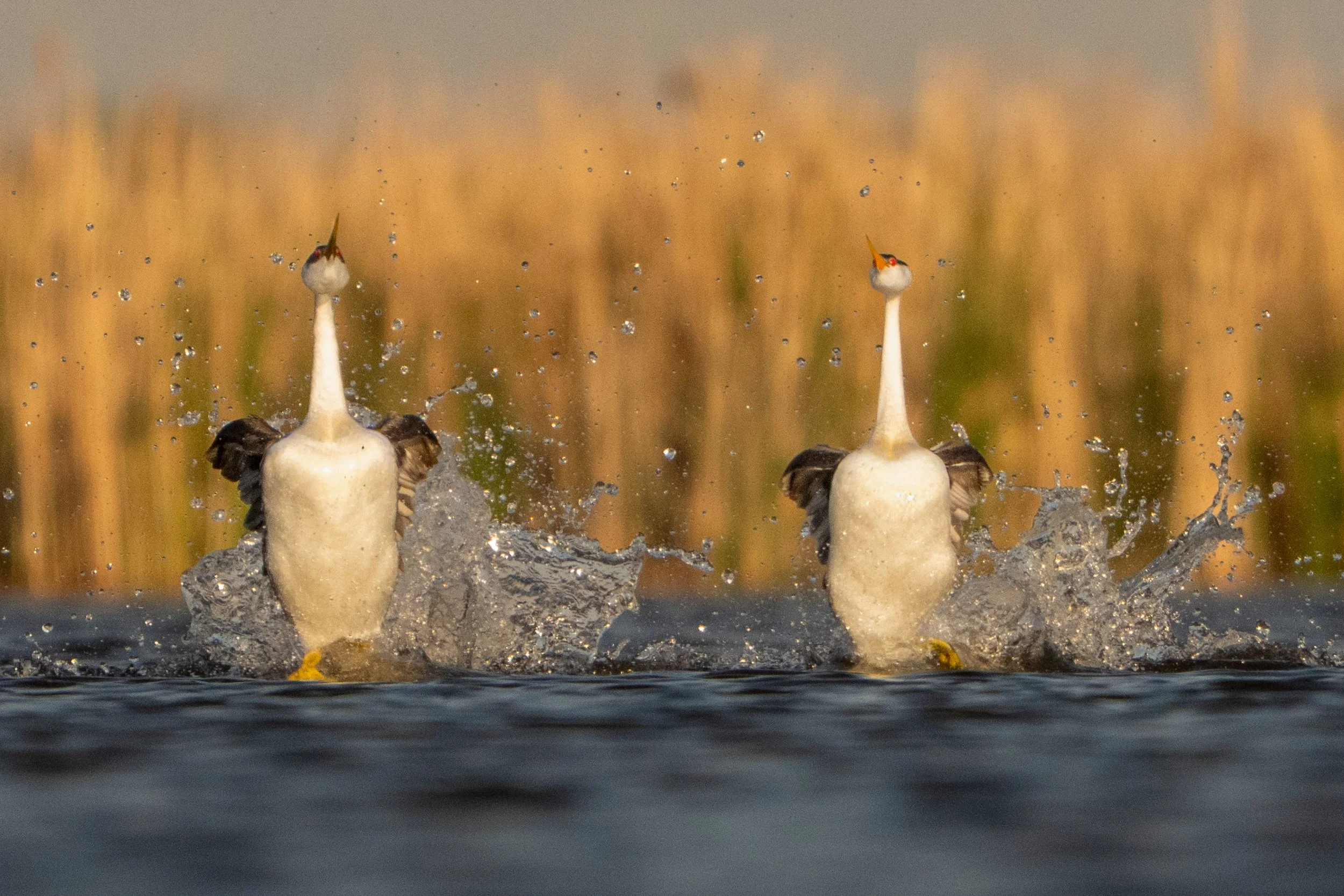
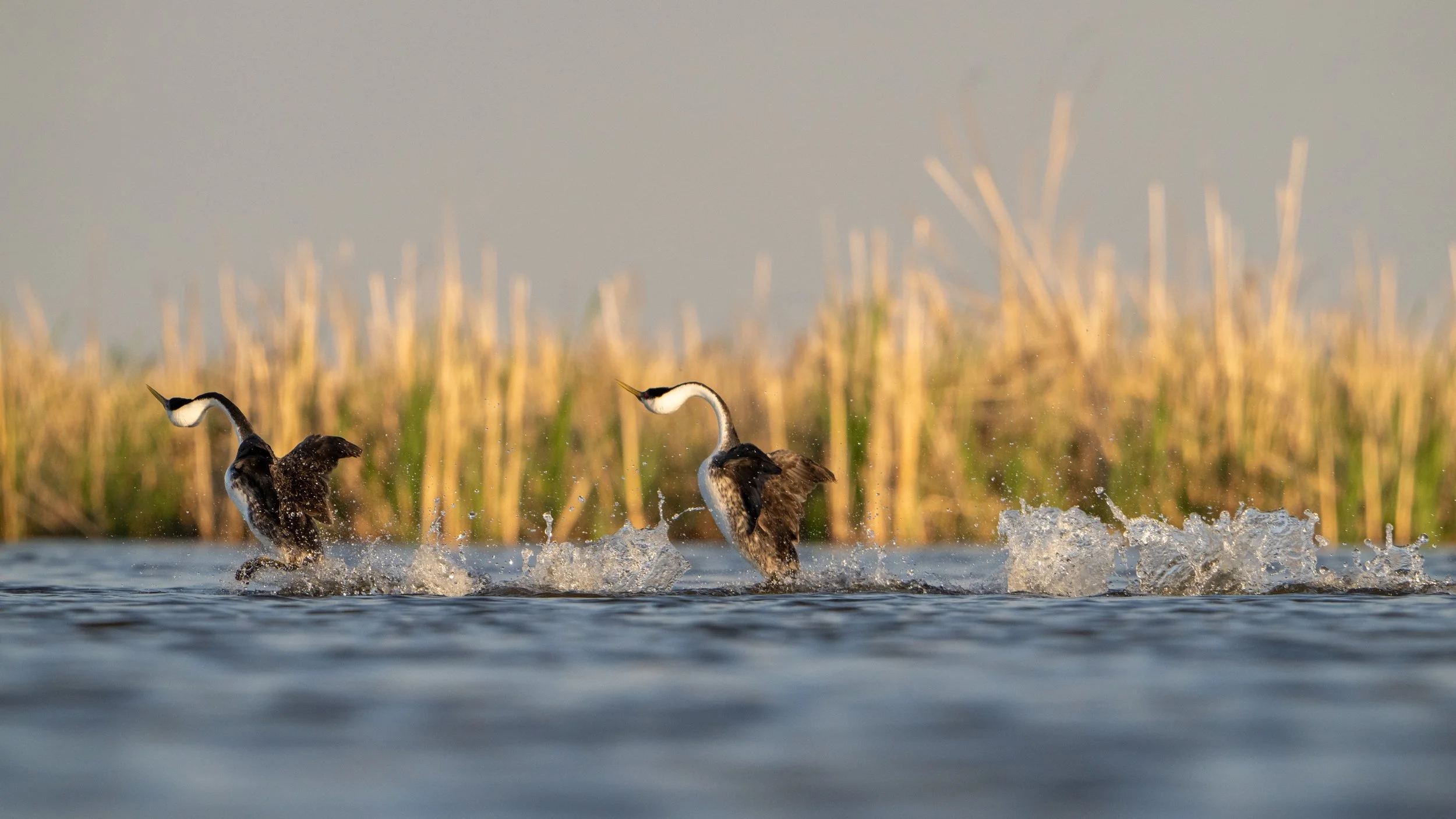
Stretching across the northern Great Plains, the Prairie Pothole Region, and specifically this area known as the Missouri Plateau is often referred to as “the duck factory of North America.” It’s a landscape that quietly sustains nearly three-quarters of the continent’s migratory waterfowl. These shallow wetlands, formed by the retreat of glaciers thousands of years ago, function like a vast ecological heartbeat. Each spring, snowmelt and rain fill the basins, creating a living mosaic of water, sedge, and sky. Here, blue-winged teal and pintails return to nest, redheads and canvasbacks pair off in mirrored ponds, and grebes perform their ancient, running dance across the surface of the water.
To the untrained eye, this place can appear empty. Even Lewis and Clark thought of it as too open, too ordinary, too plain. But beneath that horizon of grass and wind lies one of the most biologically productive ecosystems on the continent. These ephemeral wetlands filter water, recharge aquifers, store carbon, and sustain countless species, from dragonflies to sandhill cranes. Every puddle and pond carries a chorus of life that begins long before dawn and ends long after the sun has gone.
I’ve been obsessed with the prairie since childhood, and that love and curiosity about has only grown over the years. In the fall of 2025, I kicked off a year-long project with two of the country’s most recognized duck conservation organizations. My work takes a deep dive into this often overlooked landscape, and highlights the beauty of the space, but also the incredible collaboration between farmers, ranchers, conservationists, and hunters to preserve and protect this vital ecosystem.
Most photographers have never been here. Fewer still have photographed from this perspective. Working from a floating blind allows you to disappear into the marsh, to become part of the landscape instead of a visitor to it. The birds will come to you. Sometimes, they’ll even land on top of the blind itself. And, don’t be surprised if some of them come so close they are well outside your minimum focusing distance.
The Prairie Potholes region is not just a habitat, but a place of resilience and renewal, one that deserves to be seen and understood for its beauty as much as its biological importance.
GENERAL INFORMATION
PRICE: $7500
DEPOSIT: $2000
GROUP SIZE: Limited to 6 people to minimize pressure
SKILL LEVEL: Beginners to Advanced
INCLUDED IN PRICE:
Single-occupancy lodging
Classroom session focused around how to set up and tear down the blind, and field craft techniques
A floating blind - yours to keep after the workshop! (Discount if you already have your own)
NOT INCLUDED:
Transportation to/from photography sites
Waders and safety gear
Meals
Items of a personal nature (e.g., laundry, souvenirs)
Travel insurance (highly recommended)
Incidentals incurred by participants at lodging
PHYSICAL DIFFICULTY:
This workshop involves photographing from floating blinds in shallow wetlands. Participants must be able to carry and manage their own blind and camera gear while wading through water that is generally stable underfoot but can be soft or muddy in places. We will always be working from depths that suit our chest waders. Good balance and comfort working at water level are important.
Because we’ll be taking advantage of both early sunrises and late sunsets, the days can be long and physically tiring. However, there is ample downtime in the middle of the day for a well-earned nap before heading back out for the evening light.
This is a workshop that is more physically demanding than many anticipate. You’re working in water, with a new piece of gear and largely on your own. It can vary in effort dependingon water levels, too.
If you have questions about the physical activity level or whether this trip is a good fit for you, please reach out—I’m happy to talk through the details.
INSURANCE:
General travel insurance is highly recommended, but not required.
DATES:
May 9 - 16, 2026 // SOLD OUT
May 13 - 20, 2027 // SOLD OUT
May 20 - 27, 2028







This is not a casual photography tour. It’s an immersive, field-based workshop designed for photographers who want to deepen both their technical skills and to elevate their fieldcraft. You'll refine your instincts, your eye for light, and your understanding of avian behavior.
On the first day, you’ll be given your own floating blind (yours to keep after the workshop) and we’ll put them together as a group. Then, you’ll learn how to appropriate “brush up” your blind for the habitat we’ll be in, an important step in making ourselves disappear into the marsh. That evening, we’ll put our handiwork to the test and get into the water so everyone gets comfortable with the blind and their gear.
The rest of the workshop we’ll be in the water before sunrise, working until the light no longer suits our photography. Then it is back to our hotel for a generous mid-day rest, the perfect time to download and cull images, review your work, and recharge for the evening ahead.
In the early evening, we’ll be back in the water with plenty of time to take advantage of golden hour until sunset.
Because the days start both very early and end late, group meals are not formally scheduled for this workshop. The lodging is in a recently remodeled “extended stay” hotel with a kitchenette, making it easier to manage meals for everyone.
By the week’s end, you’ll have a gorgeous portfolio of images. You’ll also have understanding of what it means to be eye-level with the wild, and how to translate that intimacy into images that carry the weight of story, science, and connection.
This workshop is an invitation to slow down, to listen, and to see a landscape too often dismissed for what it truly is — one of the most vital, life-filled places on the continent.
What to expect

FAQs
-
Once you let us know that you are ready to book, we’ll send you our registration paperwork along with an invoice for your deposit. When the paperwork is complete and the deposit has been paid, you are officially registered!
While you’re waiting for your departure time to arrive, you’ll receive our workshop guide, which goes over a more detailed itinerary, gear recommendations, clothing recommendations, and has a packing list.
About three months before your departure, we’ll have a group Zoom meeting. You’ll have a chance to meet everyone traveling with you, and we’ll go over logistics and make sure everyone has all of their questions answered, as well.
-
Generally speaking, most people find the early mornings and late evenings the most challenging part of the trip. We are out before sunrise and back after sunset. There is plenty of time during the day for catching up on rest.
Once in the water, the activity is minimal. The water levels change every year depending on the snow melt, and the higher the water, the easier the physical demand. -
The blind is incredibly stable and floats around your body, making it easy to move. Your gimbal head and camera are mounted to the blind. It’s just like standing in the water with a nice tent over you.
-
The blinds used for this workshop are compact and designed for travel. They come in a carrying case that you can check as luggage or carry on the plane, or you can ship it home.
-
We understand that cancelling a long-anticipated trip is disappointing. But we, too, plan far ahead before each departure and continuously send non-refundable payments to hotels, other suppliers, and travel partners. Therefore, we must strictly adhere to the cancellation and refund policy. We strongly suggest that you purchase travel insurance in the event that your travel plans change or you need to cancel your trip. The following are the terms of our cancellation and trip change policy:
Cancellation & Refund Policy:
• Deposits are non-refundable after a 10-day grace period.
• If you cancel within the grace period, we will refund your deposit to the original form of payment, minus a $250 administrative fee and any payment processing fees incurred.
• After the grace period, no refunds will be issued unless we can fill your spot. If we can fill your spot, we will issue a refund minus a $250 administrative fee and any payment processing fees incurred.
Final Payment Deadlines:
• U.S.-based workshops: Final balance is due 90 days before the start date.
• International workshops: Final balance is due 120 days before the start date.
By booking, you acknowledge and accept these terms. If you have any questions, we’re happy to help clarify.