
Safety on Wildlife Photography Workshops
As a professional wildlife photographer who specializes in adventurous destinations and working with NGOs and conservation organizations, my career has taken me to some of the most stunning—and at times, unpredictable—environments on the planet. From documenting humanitarian efforts in remote regions most tourists will never see first-hand, to capturing the delicate balance of wildlife in extreme climates, I’ve seen firsthand how even the most well-planned trips can be upended by the unexpected.
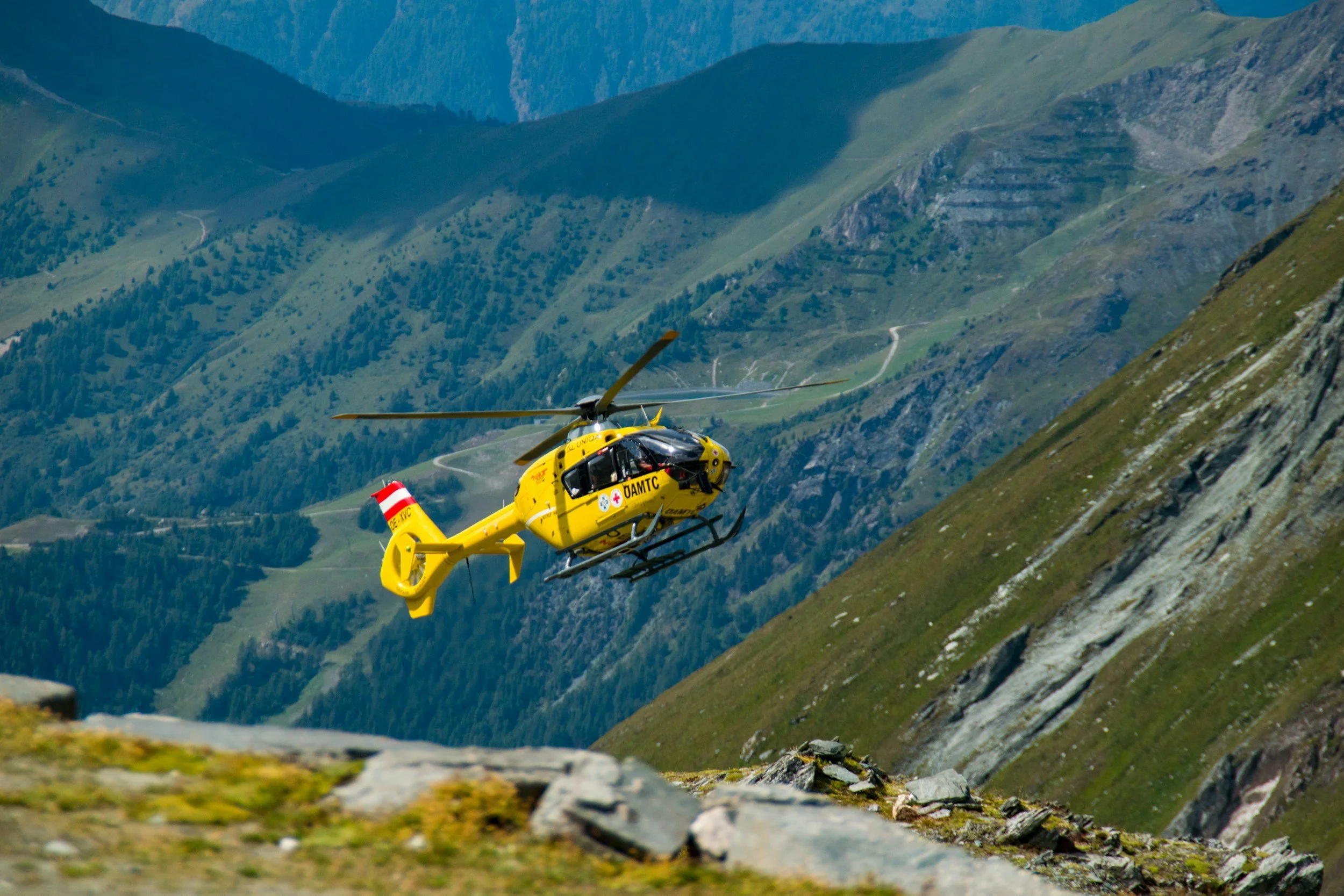
While leading one of our workshops recently, we happened upon a situation where a participant on a workshop with another photographer needed immediate medical help. The third-party driver had no training or education in how to respond and the photographer himself was in no position to help either.
I’ve prepared myself as a Wilderness First Responder so I can, to the best of my ability, help my clients and fellow travelers in case of emergency. That training plus my own experiences have underscored the necessity of a risk management partner that goes beyond mere reimbursement after-the-fact, and instead provides immediate, practical assistance in real time. This is why both Jared and I use and recommend Global Rescue as our travel risk management company, and their travel insurance supplement for traditional travel insurance needs.
Unlike traditional travel insurance providers, Global Rescue offers comprehensive field rescue, medical evacuation, and security extraction services. These services are essential not just for high-risk travel but also for seemingly safe locations where infrastructure may not support swift emergency response. Also unlike traditional travel insurance, with Global Rescue, we don’t have to worry about coordinating our care and paying for it upfront before waiting on reimbursement. They take care of it all, and it’s surprisingly affordable and comparable to what most people already pay for insurance with half the coverage and options.
Here are some of the reasons we use Global Rescue as our partner and recommend them to our fellow wildlife photographers and travelers.
No Activity Restrictions – Essential for Adventure Travelers
Travelers who engage in activities such as rock climbing, scuba diving, mountaineering, or backcountry skiing often struggle to find insurance policies that will cover incidents related to these pursuits. Many providers outright refuse coverage for accidents occurring during what they classify as "risky" activities.
Global Rescue imposes no such exclusions. Whether scaling a granite wall, scuba diving at any depth, or trekking at high altitude, members can rest assured that their coverage remains intact. This alone makes it an indispensable resource for adventure and expedition-based professionals and the people who travel with them.
Field Rescue from the Point of Injury or Illness
One of the most significant shortcomings when relying on traditional travel insurance for medical evacuation is the requirement that travelers first reach a hospital before coverage takes effect. This stipulation is often impractical, particularly in remote, high-altitude, or off-grid locations where self-rescue is impossible. It’s challenging enough when you or someone you love is going through a medical emergency, even one that isn’t life-threatening. Trying to also navigate care on top of that is extra stressful.
Global Rescue eliminates this barrier by deploying personnel and transport to the traveler’s exact location, whether that means dispatching a helicopter, a four-wheel-drive vehicle, or even a rescue team on foot. This level of responsiveness is particularly vital in cases where delayed evacuation could mean the difference between life and death.
Last year, a friend of mine was on a trip to the Galapagos when she slipped and suffered broken ribs and a partially collapsed lung. The workshop leaders had no plan and left her on the beach to wait while they took the others in the field to continue photography. My friend could have died with one wrong flinch or move.
Once her family back home was finally able to learn what happened, they had to figure out a way to get her to medical care and then get her home. Long story short, she ended up hospitalized for a few days after arriving back in the States. If she had a Global Rescue membership, one call via phone or satellite and they would have coordinated her evacuation and care, and they would have consulted and helped her while she waited for the arrival of help in the field.
Her example wasn’t anything ultra-risky or a situation where the risks are obvious. She is otherwise fit and healthy (a marathon runner!) and just happened to have an accident in a remote, but often visited, place.
Medical Evacuation to a Hospital of Choice
Even in well-developed regions, travelers may find themselves in medical facilities that lack the resources necessary for proper treatment. Most insurance providers will transport individuals only to the nearest medical center, regardless of its quality or specialization.
With Global Rescue, members have the option to be transported to their hospital of choice. This means access to trusted care providers and specialists, ensuring continuity of treatment and a significantly better chance of full recovery.
I’ve spent my share of time in regions that are still developing their infrastructure and may not have the best facilities in case of an emergency, and I have been in situations where I haven’t wanted to accept even basic medical care in unhygienic conditions. Now that I have better personal training, I feel more equipped than I did back then. As the saying goes, “when you know better, you do better,” and that’s why I also recognize that if it hits the fan and I need help, I’d like to retain a modicum of control over how my health is managed.
PRE-TRAVEL REPORTS, MEDICAL CONSULTATIONS AND ADVICE
One of the essential parts of my pre-travel planning, especially when I’m going out of the country, is making sure I’m aware of any medical and/or security threats ahead of time. Global Rescue has reports for 215+ places so that I know what needs to be considered. For example, I carry satellite communications with me on every trip. But, as a foreigner, me carrying a satellite phone in India is illegal. Thus, I need to ensure that my travel partner there has a satellite phone that is registered with the right authorities so that I don’t create a problem that could have been prevented.
Sometimes, I might have a medical situation that isn’t an emergency, but requires some additional help. Say you develop a rash while photographing in Masai Mara. It isn’t life-threatening and certainly doesn’t need an evacuation, but I may not be privy to knowing all of the threats within the country that I should consider. I can simply call Global Rescue and get that information immediately. Similarly, they also have travel professionals to answer everything from visa and passport questions, along with other advisory services.
Why Global Rescue is My Trusted Partner
We like to say that we “are risk managers, not risk takers.” This is especially true when I am leading a group of other photographers on a trip. There is an inherent risk to the kind of work that I do and the kinds of trips that we go on, but part of managing the risk is having a plan in place.
Whether I’m in the Amazon or backcountry of Alaska, covering humanitarian stories or simply exploring regions where infrastructure is unpredictable, I want a company I can trust to help me manage that risk. Global Rescue offers true risk management help, not just reimbursement after-the-fact. Global Rescue is my team for immediate, life-saving action when it matters most, whereas travel insurance is primarily a financial tool.
In an unpredictable world, preparation is everything. If your travels take you beyond the safety of familiar roads and hospitals, the question is not whether you should have coverage—but whether your coverage is enough. With Global Rescue, I know that when I need help, it is already on the way.