Unmediated Wildness and Other Fictions We Maintain
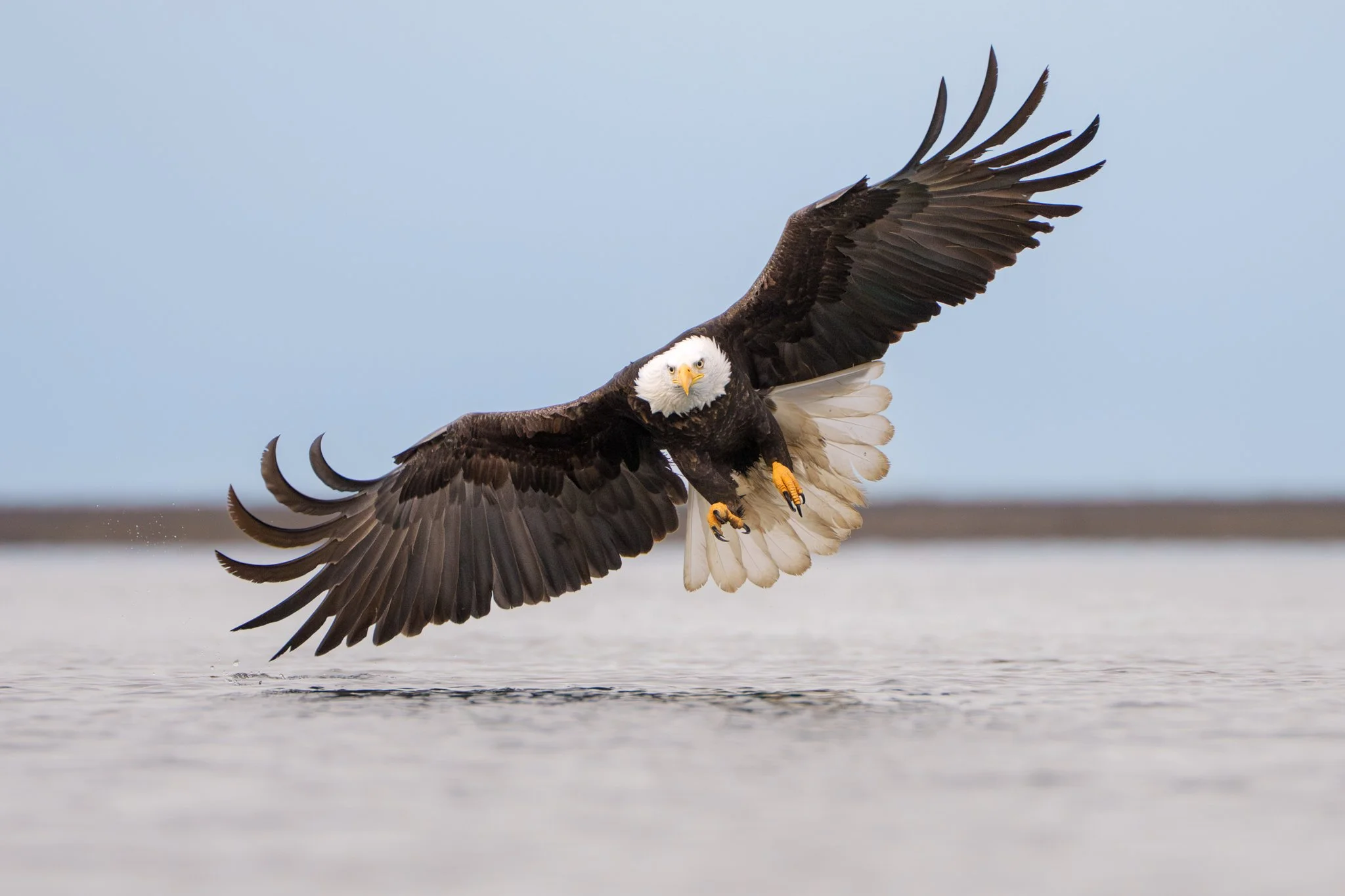
Right now, as you read this, there are dozens of wildlife photographers on Kachemak Bay in Homer, Alaska.
At the end of February and the beginning of March, the bald eagles arrive there in numbers that most people will never see in their lifetimes, let alone in a couple of boat trips. Having spent winter apart, these bald eagle pairs are reuniting before breeding season and enjoying the abundance of food available in the open water of the bay.
And with the arrival of the eagles, comes the arrival of the photographers.
A boat captain or their hired hand reaches into a cardboard box, machetes in half some frozen herring, and starts tossing the pieces into the water. The sky breaks open. Bald eagles, sometimes dozens at a time, drop from the spruce-lined shores from as far as a mile away and come screaming toward the gaggles of photographers on the gravel bar or the back of the boats.
Wing spreads up to seven feet.
Talons outstretched.
Eyes locked on the fish.
In that moment, as long as you have prepared for it, you can make an image that looks, for all the world, like the wildest thing you’ve ever seen. The image will get hundreds, maybe thousands, of social media reactions. It will anchor your portfolio. It might even end up in a gallery. And the workshop leaders and most of the people posting these images over the next few weeks won’t tell you a single thing about how they made the photo. About the herring.
I know this.
I know this because I was one of those people.
Several years ago, and then once the winter after, I co-led eagle workshops in Homer. For the year leading up to those workshop dates, I was resolute in not participating. I had a lot of feelings about the entire situation. I am staunchly in the “I don’t bait or lure animals” camp. But, by the time the workshop grew near, I was in the middle of suing another business, which is an ungodly expensive endeavor. I had spent the last two years with my checking account almost never seeing a number north of $500 in it and all too often seeing it dip below zero.
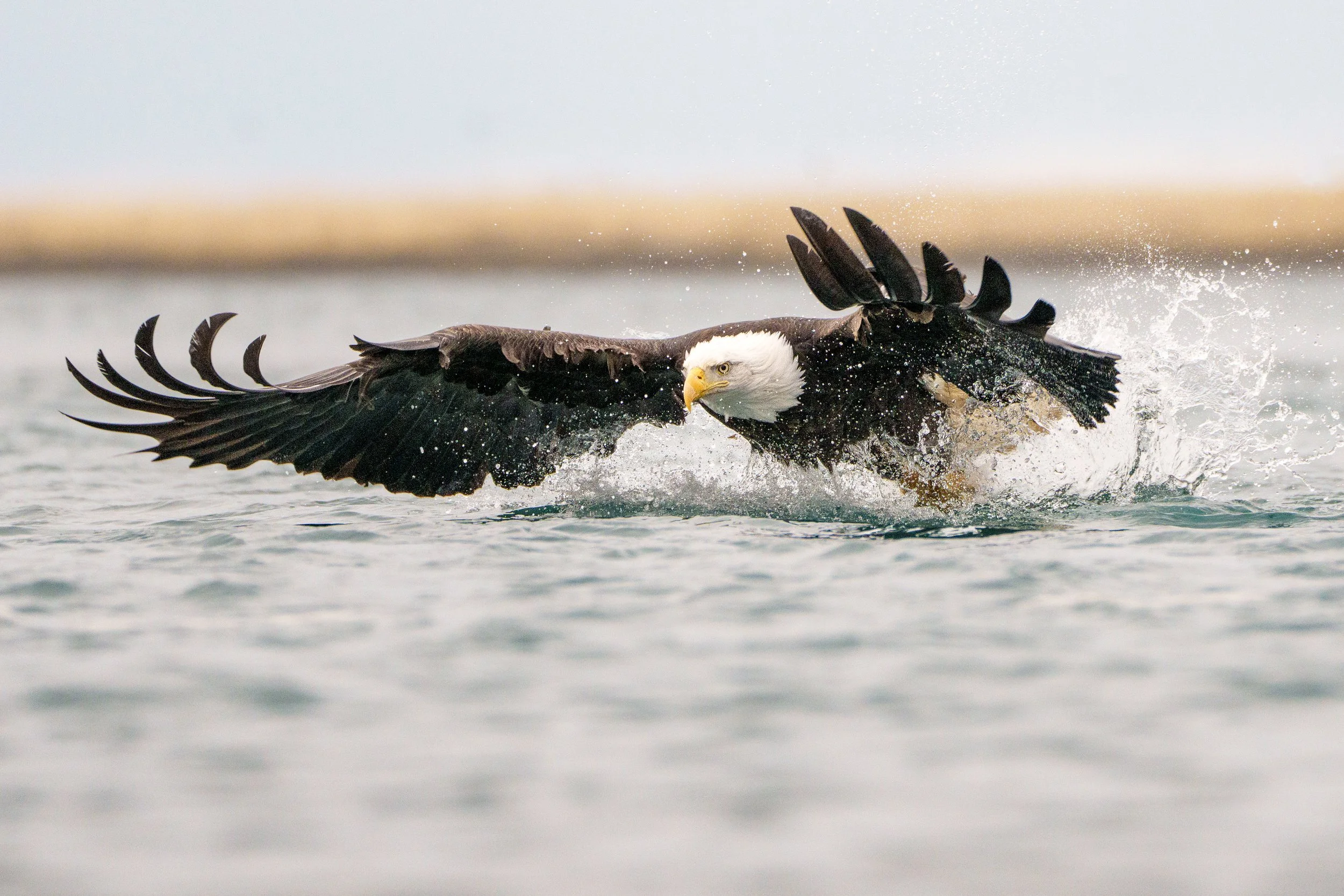
Careful positioning means you don’t see the fish that was thrown to entice the eagle in for the action shot.
I needed every dollar I could count on. Backing out wasn’t an option for me. So I did the workshop. I still had feelings about it, but I did the workshop. I stood on the gravel bar in Kachemak Bay in the February cold while a hired hand tossed herring into the water and the eagles came, magnificently and entirely on cue.
And I didn’t disclose a word of it in the images I shared afterward. I’ve regretted it ever since.
That silence didn’t sit well with me then, and it hasn’t left me since. There was something nagging and persistent about the gap between what those images looked like and what actually produced them.
I went along with the unspoken understanding that I couldn’t talk about it. The financial pressure was real, it wasn’t my workshop, and there was a local legacy story that seemed to be the way everyone else soothed their conscience about the situation. So, I just sort of… well, capitulated to that.
To understand why the silence about the herring and the eagles exists, you need to know about Jean Keene. Keene was a former rodeo trick rider from Minnesota who arrived in Homer in 1977. She took a job at the Icicle Seafoods processing facility on the Homer Spit, and in her first winter there, began offering surplus and freezer-burned fish pieces (salmon heads, cod, herring, etc) to the pair of bald eagles she’d noticed near her motorhome on the beach.
Word spread in the way that reliable food sources always do among opportunistic feeders, and the number of eagles multiplied. What started as just a pair of eagles that lived nearby soon became dozens of eagles. Which then became as many as 300 eagles gathering on the Spit each winter day. At her peak, Keene was distributing an estimated 500 pounds of fish daily, much of it paid for out of her personal social security check.
She became, genuinely, a beloved figure. The Eagle Lady. Celebrated in National Geographic, Reader's Digest, People, and The Washington Post. When she died in January of 2009 at the age of 85, the photography community mourned her. She was the kind of eccentric, generous, and stubbornly singular person that Alaska seems to produce. She was someone who decided to give herself over to something larger than her own comfort and she never looked back.
But even within her lifetime, the story had layers worth examining. The city of Homer passed an ordinance banning eagle feeding in 2006, prompted in part by concerns that concentrating hundreds of eagles in a single location was pulling them from natural wintering behaviors and creating disruption to other species in the area. Keene herself received a personal exemption to continue the practice until 2010, a deadline she didn’t live to see. To this day, jurisdictional confusion prevents several law enforcement agencies from regulating the practice.
Photographers who built their careers on the images they made from Keene’s work on the Spit were documented as framing their shots to appear as though they had been taken in the wild. Some made enough money from the resulting work that they collectively bought Keene a new house!
Nobody intended harm. Nobody thought of it that way. That is, almost entirely, the point.
When Keene died, the feeding migrated to boat captains and photography workshops, the practice now wrapped in the warm mythology of the Eagle Lady’s legacy. That origin story became the permission slip for wildlife photographers, “This has always been done here, by someone who was loved and admired and celebrated, so it isn’t really baiting the eagles.”
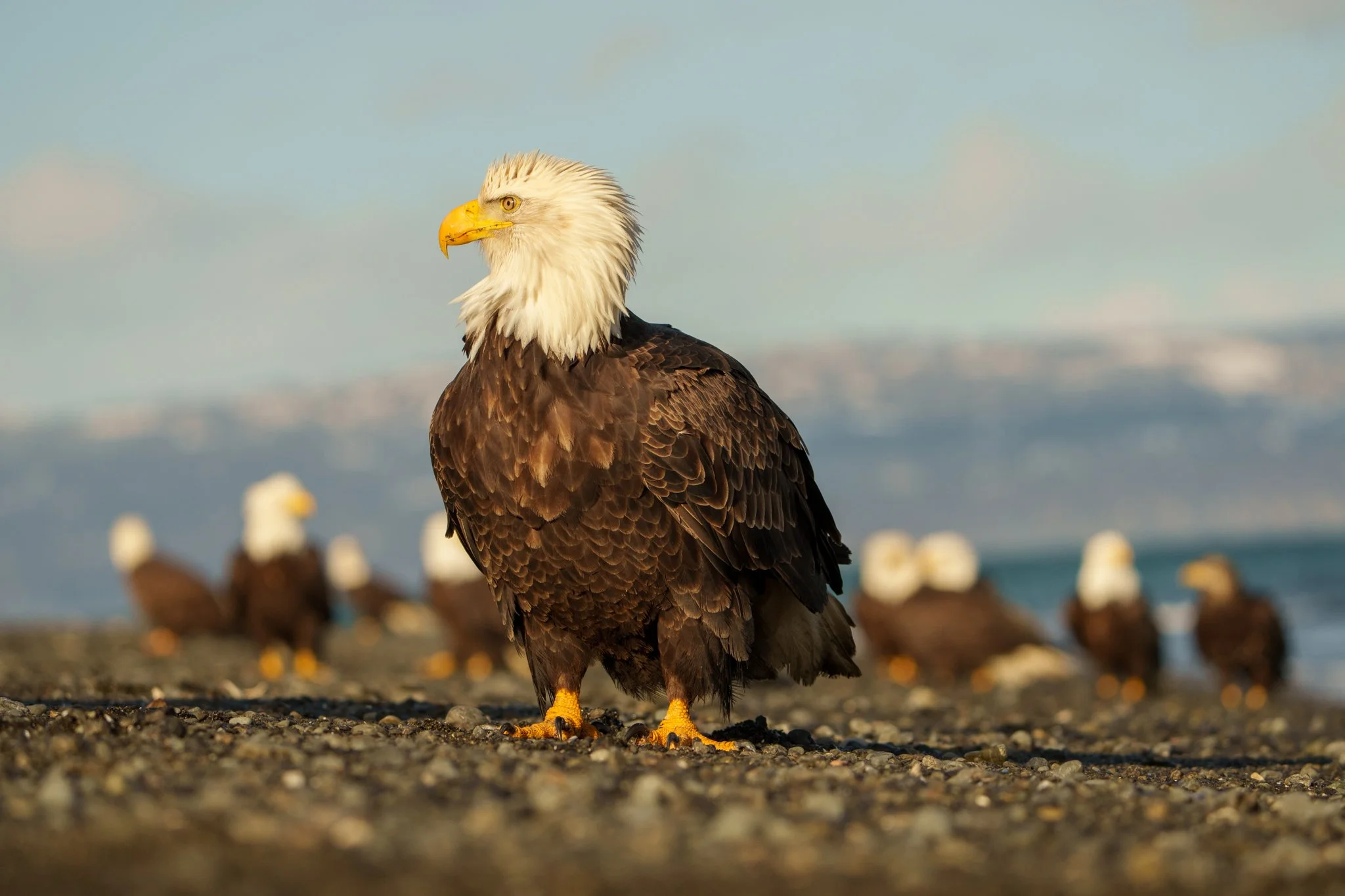
The eagles are so in abundance when this fish start being tossed in Homer, they congregate on the gravel in between attempts for fish.
Workshop leaders and boat captains still lean on this story today. I’ve heard versions of it repeated with genuine conviction time and time again. And yet, not once have I seen the feeding of the eagles put plainly on a workshop website, in full disclosure. Some of the most famous names in bird photography operate their workshops and tours here, and they do it without so much as a hint that you’re photographing baited birds.
Here is where I want to slow down, because I think the easy version of this critique is not the most honest one.
Attend almost any songbird or hummingbird photography workshop and you will find that they are built around what photographers call a “setup.” There is a photogenic perch, something like a mossy log or a lichen-covered branch, or pretty flowers for the hummingbirds. And that curated perch or bunch of flowers has been perfectly placed in front of a carefully chosen, often manicured background. Just outside of the frame, close enough to do its work, sits at least one bird feeder, but often many more, a couple dozen or so.
The workshop participants position themselves just right for the curated perch or flower cascade and everyone waits for a wild bird to do what wild birds do: land on a perch and survey the scene before heading to the feeder for a bite to eat. So when the bird pauses on that photogenic landing spot, the photographers click away until the bird departs for a nibble. And the shutters fire over and over and over again as the birds repeat the process.
The resulting images look, to any viewer who hasn’t done this kind of photography themselves, like a perfectly natural moment in a perfectly natural setting. I can’t count on two hands how many times a photographer has asked me how people “find such pretty and wide open branches where the birds like to land.”
This technique is so normalized within wildlife photography that you will find it demonstrated on YouTube with millions of views, walked through in workshops without a moment’s hesitation, and discussed as smart compositional fieldcraft rather than disclosed as an assisted situation.
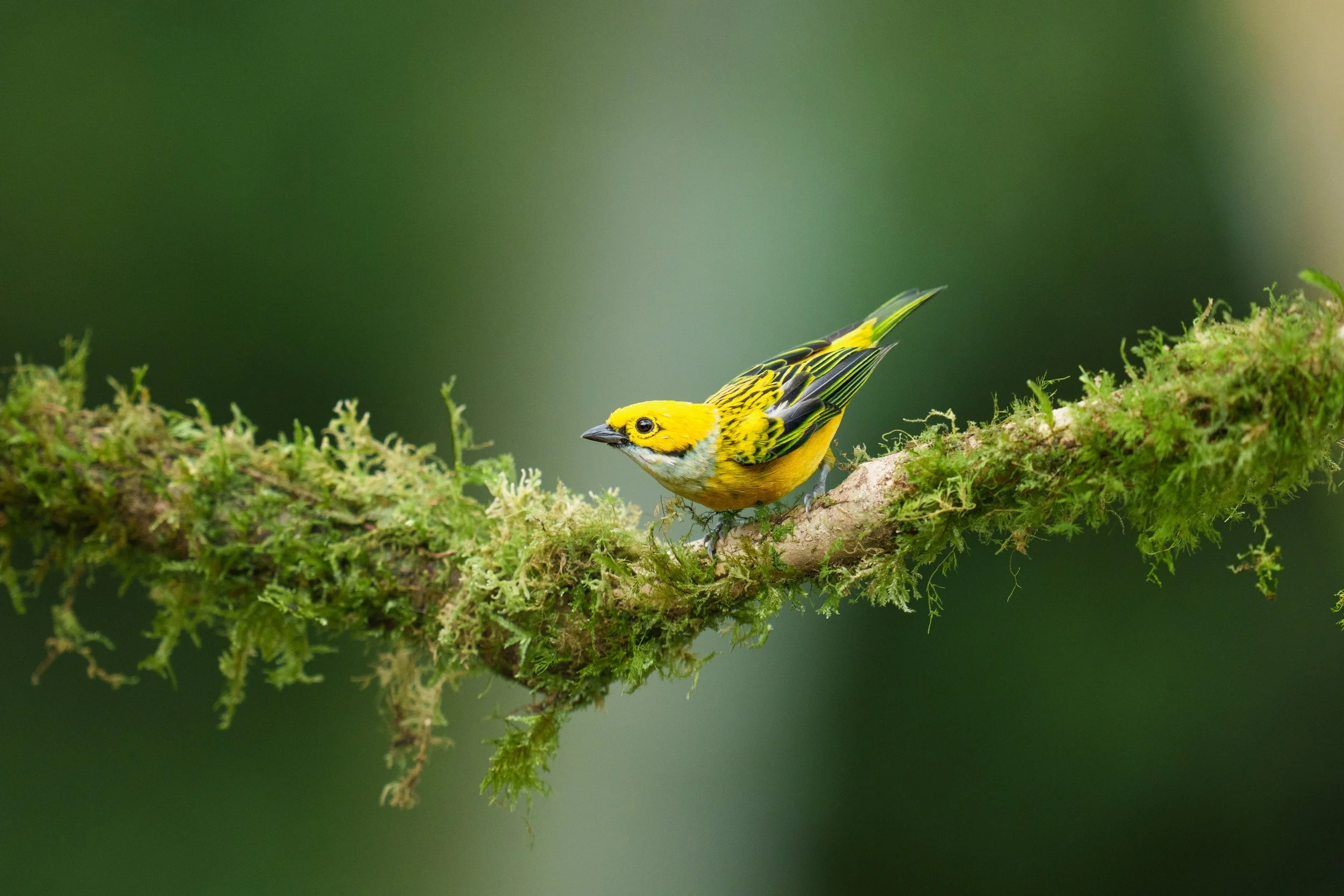
Example of the kind of bird photography setups that are commonly used.
I’m a birder. Bird nerd to my core. I freakin’ love birds. I have had feeders at almost every home I’ve lived in as an adult. Like tens of millions of people in North America, I find genuine joy in watching species come and go through the seasons, even without my camera tagging along.
I thought nothing of the feeders. Almost no one does. They’re sold at every nature center and home store in the country. They carry the moral weight of something wholesome and connective, and feeding backyard birds is about as culturally uncontroversial as anything in our relationship with the natural world.
But here’s the thing. Whether it happens at a professional workshop with a constructed perch and a paying audience, or in a backyard on a Sunday morning, or off the back of boat in the cold water of Kachemak Bay, what we’re actually doing is identical: we are concentrating a wild bird at a human-provided food source to create our photographs.
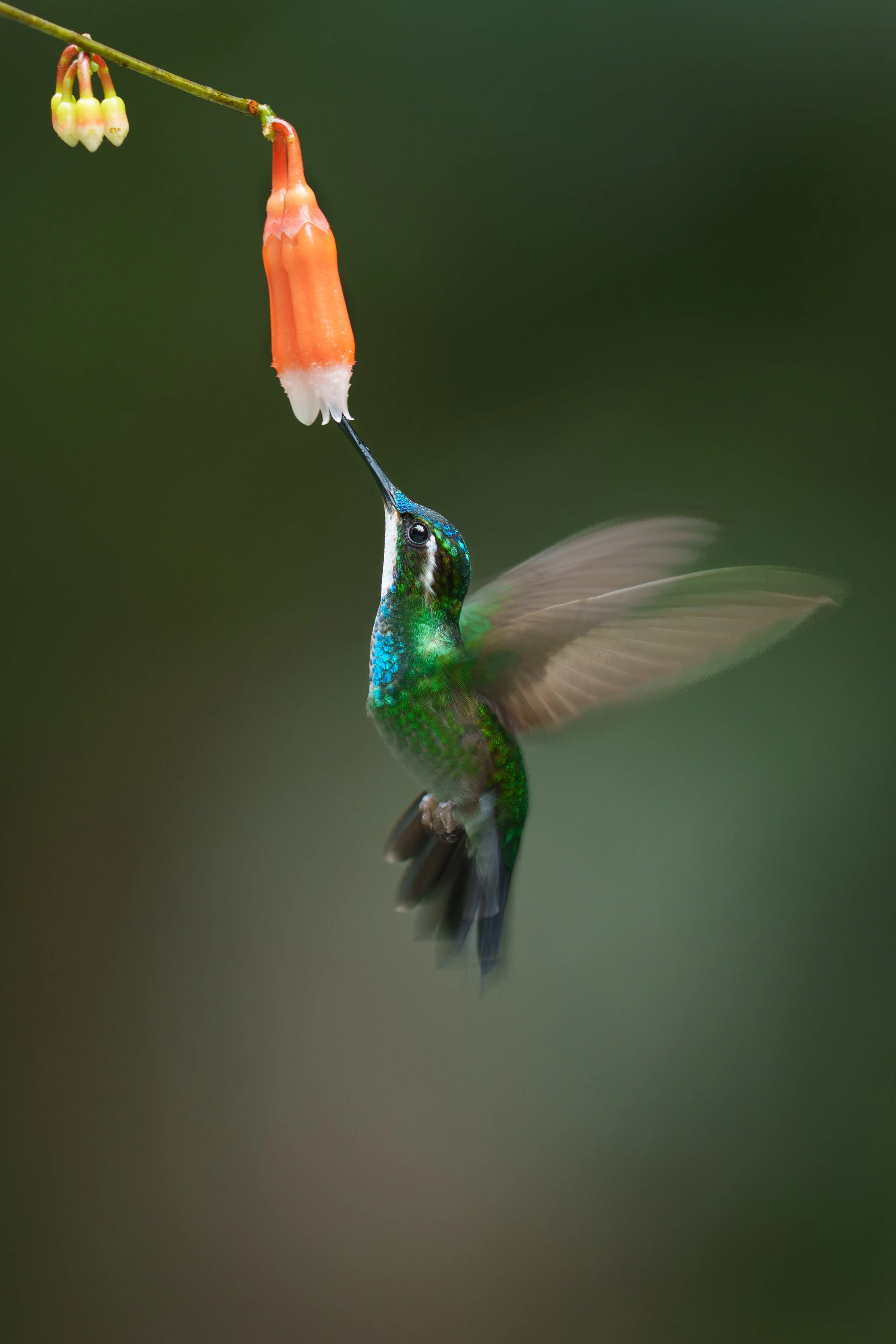
Example of a hummingbird setup. The feeders that were up were removed to make it easier for the bird to go to the flower instead.
Now bring that same lens to the silence of the wildlife photography community around disclosure, because I think it explains exactly what is happening.
The bird feeder setups don’t raise our ethical hackles because the feeders are culturally normal. Backyard bird feeding is wholesome. It’s intergenerational. Nobody’s grandmother ever felt conflicted about why they hauled 50-lb. sacks of black oil sunflower seeds home from the feed store. And the workshop version, with its carefully placed and manicured perch, the feeders just off-frame, inherits all of that cultural permission simply by being adjacent to something so universally accepted.
No one calls it baiting. Nobody refers to their feeders as “lures,” even when the raptors home-in on the fact that with all the songbirds now coming to the feeders to eat, those feeders are now a feeding station for them, too. Nobody thinks they need to disclose their use of feeders, because the entire cultural apparatus around feeding birds has been pre-cleared as fine. But maybe we need to disclose that, too.
The bald eagle on Kachemak Bay is a different animal, literally and culturally. It’s now our national bird, and it carries symbolic weight. An image of a bald eagle in dramatic flight over Alaskan waters, talons extended toward the camera, carries an implicit claim: I was there, in wild Alaska, and this happened.
The drama is the product. The wildness is the point.
And so the herring in the box on the boat becomes the thing no one mentions, because admitting the herring is admitting that the drama was, to a significant degree, arranged. The scale is larger. The commerce is more visible. The species is loaded with meaning. And so the silence is more aggressively maintained.
But strip away the scale, the species, the symbolic weight, and ask what is actually happening in both scenarios: a human is introducing food to attract a wild bird to a pre-determined position for the purpose of photography. In one case it happens on a charter boat on an Alaskan bay with a raptor. In the other, it happens at a workshop in Costa Rica or Arizona or a backyard on a Sunday morning with a beloved backyard species.
The cultural permission is different.
The ethical logic underneath is the same.
I want to be clear about something before it gets away from me: I am not suggesting that because we feed songbirds, feeding eagles is therefore fine. Quite the opposite, actually. Avian conservation organizations are increasingly more communicative about birds not needing our feeders, especially with avian flu these days, and that planting native plants is the better option when possible. It provides natural foraging, better food diversity, and better cover. The feeder comparison isn’t a defense of the herring, but rather a mirror held up to our inconsistency.
So why does one type of bird photography get advertised and shared and talked about without a second thought, while the other must be wrapped in a story about a woman who died in 2009? Why does one methodology get a YouTube tutorial while the other stays mostly quiet, hidden in the shadows?
The answer, I argue, has everything to do with us. With what we need the images to say about who we are and what we do.
Wildlife photographers, and I include myself in this fully, have constructed an identity built substantially on the idea of a hard-won image. We are, in the cultural imagination we have helped create, the people who go to wild places and find wild things through skill and patience and knowledge and endurance. I do live that life, genuinely, when I’m not running a workshop. I drive thousands of miles tracking wildlife, studying habitats, reading landscape and weather and animal behavior until I can put myself in the right place at the right moment. That’s real work, and I’m incredibly proud of it, even though that reality is far different from the romanticized version of my career that people think I live.
But the vast majority of wildlife photographers do not live that life, and they’re not expected to. That’s not a judgment or a criticism. People attend workshops precisely because they want access to the images and experiences that the accumulated knowledge of a professional wildlife photographer like me makes possible. They want to learn it and feel it and be immersed in the experience in the way they can. That’s what a workshop or tour is, plain and simple. Sharing my archive of knowledge with other genuinely curious photographers, helping them learn skills to do even more of what they love, is one of the best parts of my job.
But this is where I think we need an honest reckoning with ego.
The “Nat Geo dream,” as I’ve come to call it, lives in almost everyone who thumbed through those pages as a kid, and the calling of that dream doubled the first time they picked up a lens and pointed it at something wild. The lone photographer in the field, earning images the hard way. It is a seductive fantasy, and I say that as someone who allowed that fantasy to carry her all the way to a career. But when we share an image made with an assist from a box of herring and allow the viewer to assume we were simply there, in wild Alaska, through skill and patience alone, we are performing the identity rather than inhabiting it. And we are doing it, because the alternative requires a level of confidence that is harder than it looks.
Much of that fear is related to ethics, or perceived ethics, perhaps. Ask almost anyone in wildlife photography circles in North America whether baiting or luring animals for photographs is an acceptable practice and the answer is nearly universal: no. It is one of the few things about which the wildlife photography community has consensus.
Baiting and luring animals is widely condemned by photography organizations, conservation groups, in photo competition rules, and in the unwritten code of the genre. And the workshop leaders operating in Homer know this. Which is precisely why the Jean Keene origin story is so reliably invoked. Not as history, but as insulation. The story of the Eagle Lady is leaned on as a permission slip because the people leaning on it understand, on some level, that they need one. Because without that inherited justification, what’s left is simply: we are baiting eagles for these photos.
Which makes the silence on the websites all the more telling. If the Jean Keene legacy genuinely makes this an exception to the consensus, if the history and location and the species and the scale of it all adds up to something “acceptable,” in a way that you believe aligns with your ethics and the way you want people to perceive your ethics?
Then just say so.
Put it out there.
Stand by it.
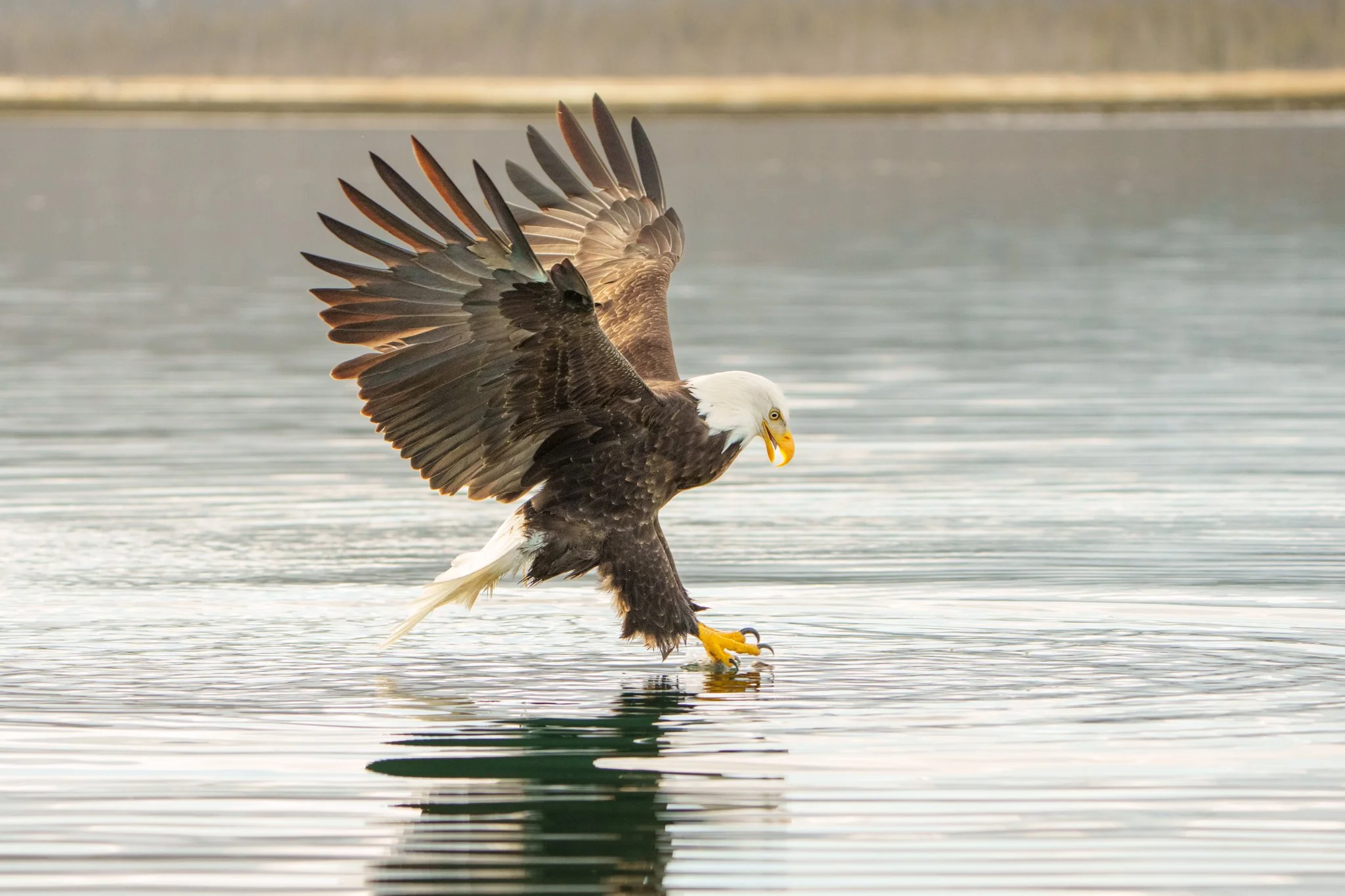
You’ll never see an image like this on a Homer eagle photography workshop page. The concentric circles show that the fish had just been tossed right before the eagle came for it.
I have seen some owl workshops disclose they use mice, by simply including it in the description of what the fee covers. It’s a terrible practice that can spread disease and it contributes to more owls being hit by vehicles. But at least the people who buy into that workshop were told ahead of their investment what they were getting into.
If tossing herring during the Homer eagle workshops were a neutral detail, then it would be no more ethically loaded than sharing the name of the hotel where the group will be staying. There would be no lies by omission and it would be mentioned in the details of the workshop like everything else. Photographers would mention it in their captions on social media the way they do location and light.
The silence here isn’t the absence of anything to say. It’s the sound of perceptions being actively managed. The permission slip is something that quiets the conscience, like I allowed it to quiet mine, but isn’t something they’re prepared to defend in front of the community.
The same logic applies to the feeder setups in every bird photography workshop, but no calls out those practices as baiting operations. And that asymmetry is something I think we should be sitting with. The feeder setups don't require active suppression because cultural normalization has already done most of that work. Nobody actively chooses to omit the feeders in the workshop details because the feeders never feel like the kind of thing that would change how the workshop leader is perceived.
That comfort is the product of cultural bias rather than ethical clarity. Again, the mechanics of what is happening in the two examples is the same. Our feelings about them are different, though. Our feelings, it turns out, are doing a lot of the moral heavy lifting that we mistake for principled reasoning.
But if ethics were the only driver of the silence, you would expect the same hush-hush behavior around the feeder setups. But it’s not there. Which brings me back to our egos, and specifically, the fear that being open about our approach makes the photograph somehow less than. Less impressive. Less earned. Less worthy of the likes and the loves on social media.
There is a particular kind of currency in wildlife photography that is built entirely on perceived difficulty. The remote and exotic locations, the pre-dawn wake-ups, the days of waiting in a blind, the specialized knowledge, the physical endurance — they are all a part of that.
An image of a bald eagle dropping out of an Alaskan sky with her talons extended earns an enormous amount of that currency immediately when viewed. The viewer assumes the story behind it. The photographer knows that assumption is doing significant work, and stating “actually, a boat captain threw a fish to help me photograph this eagle” feels like handing the currency back. It feels diminished. This fear reveals something uncomfortable about the fragility of our egos as wildlife photographers.
If the photograph’s value depends entirely on the viewer not fully knowing how the image was made, then it was never really about the photograph at all. It was about the story the photographer needed to tell about themselves.
The images made are no less beautiful. The only thing that changes is the size of the “perception pedestal,” and the fact that we guard that pedestal so carefully tells you exactly how much of this has always been about us. About the photographers.
Are our egos so fragile that we need our images to carry more than they actually contain? For some photographers, the honest answer is yes.
The performance of that Nat Geo identity, the rugged, remote, endurance-tested image-maker returning from places most people will never go — is a significant part of what they are selling and a significant part of why people follow them. This identity is why there a kajillion influencer-style photographers who have recently popped up.
I’ve spent countless hours in the field working alongside another photographer whose articles and social media described experiences so outsized, so cinematically poetic, that I sometimes had to genuinely wonder whether we had been in the same place at all. We had been. I was there. Our lenses were inches apart from one another. And what I witnessed was good, genuinely good, interesting wildlife work in compelling scenes. But by the time the experience had been publicly shared, the photographer had alchemized those experiences into something else entirely: a feat of endurance and access and almost mythological-level encounters that bore only a passing resemblance to the actual morning we’d had. The cold became brutal. The distance became extreme. The brief encounter became an hours-long interaction.
I don’t think that photographer set out to deceive anyone. I think those stories needed to be true and got told often enough that they became true, if you will. But whatever the intention behind them, they are still quietly, consistently inflated narratives that perpetuate an ideal that just isn’t realistic, and that’s standard fare in the world of wildlife photography.
This kind of outcome is the logical endpoint of a culture that has decided the performance of the identity is as valuable as the identity itself and has never been asked to account for the difference. It’s the outcome of the expectations placed upon you when you’re one of the handful of people who manage to eke out a living as a wildlife photographer. That performance depends on a certain constructed image of the work, and the herring being tossed by a boat captain complicates that construction.
I understand that pressure, because I have felt it. My identity as a photographer and naturalist is inextricable from my identity as a whole. But I am trying to be clear-eyed about the fact that it’s a pressure generated by ego, exacerbated by imposter syndrome, and largely one of my own making. Which means it’s also one I can manage more thoughtfully.
The people who follow us as wildlife photographers love the natural world genuinely. They are capable of understanding that beautiful images are sometimes made with skilled and thoughtful curation of conditions, much the same way they understand a documentary film still requires editing. The same way people devour reality television, despite knowing upfront that it’s highly edited to heighten the drama and create entertainment.
The fiction of pure, unmediated wildness is a fiction we are maintaining for ourselves, not for our viewers. And when we perform rather than inform, we are also shaping what our audiences believe is possible. What wild Alaska looks like, what it costs to get there, what skill is required to experience eagles that way. We are, in other words, quietly promoting a version of wildlife photography that doesn’t fully exist. And along those same lines, misinforming our viewers about the wildlife in our images, too.
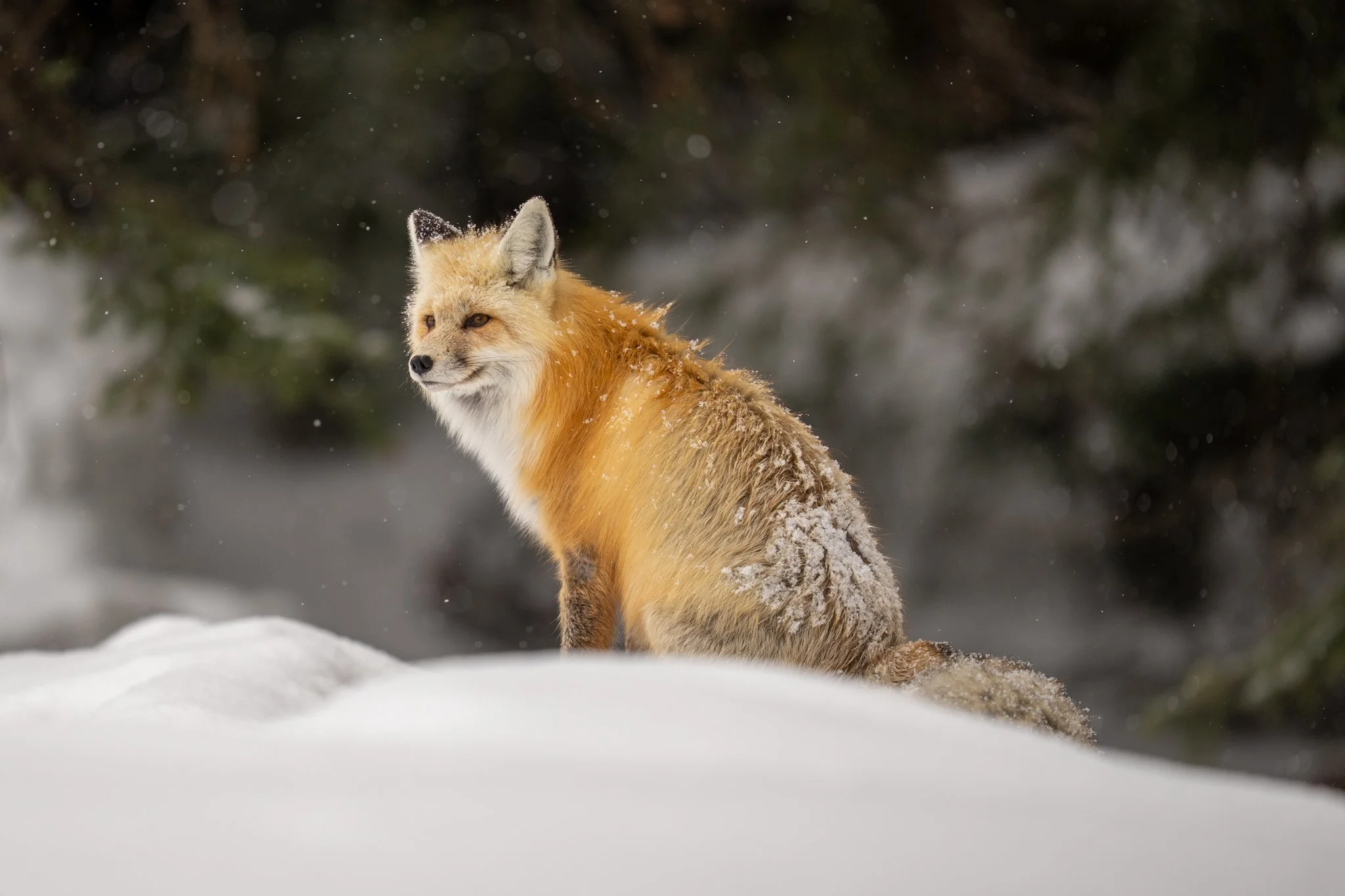
This fox is wild, but habituated, making for easy photography that appears more wild than it is.
The Homer eagles and the setup photography with feeders are not isolated examples. They are simply the most instructive because they sit at opposite ends of the cultural permission spectrum. In between, the genre is full of situations that get passed off as wild encounters when the full picture is considerably more complicated.
There is a red fox in Cooke City, Montana, immediately outside the northeast entrance to Yellowstone. She is fed by the residents of a house she frequents there. She is arguably the most-photographed fox in the greater Yellowstone ecosystem in the winter, appearing in portfolios and social media feeds week after week, almost never with a word about the house or the habituation that makes photographing her such an easy option.
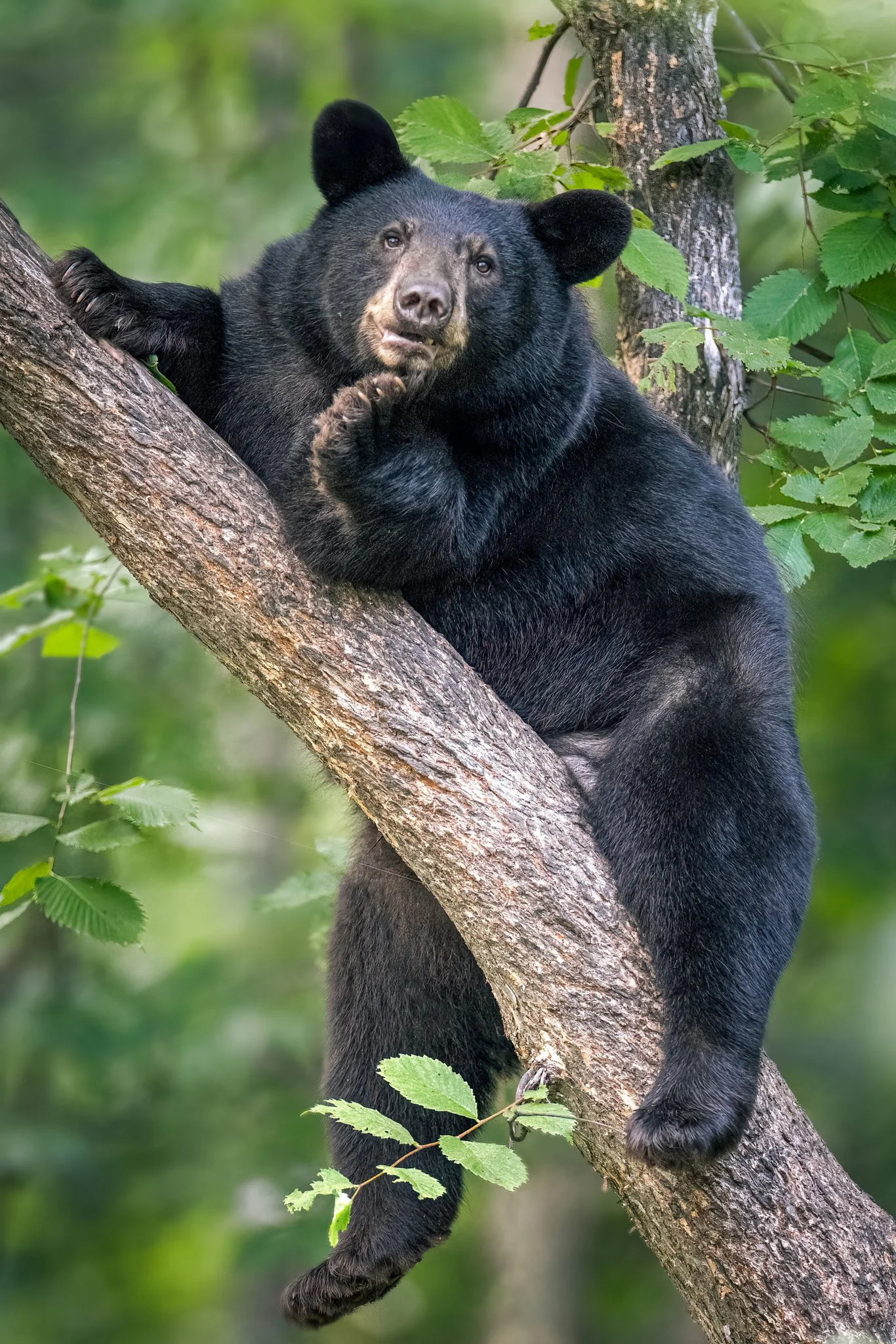
Though this bear is entirely wild, this photo was made at Vince Shute, in Orr, Minnesota, where the American Bear Association operates a feeding site for the bears in the summer, leaning on an old local history as their reason for doing so.
There are the black bears of Orr, Minnesota. Completely wild, but drawn to a specific location by a feeding operation that, much like the eagles in Homer, comes with a long local history. Now it’s a place for wildlife photographers to create intimate bear portraits that are usually shared as wilderness encounters.
Technically, they are wilderness encounters. The bears are wild, they come and go as they please, and there is myriad evidence that shows the majority of those bears still forage naturally and often visit just the feeding station for a few days each year. But the omission of the full story of those bears when the images are shared, says a lot. The site is managed by the American Bear Association. That association, with a stated love for and advocacy on behalf of these animals, becomes the permission slip.
The logic is circular and familiar: good intentions confer ethical clarity.
The list could go on.
I’m not writing this to burn down the workshops or condemn photographers who make images in Homer or who photograph the Cooke City fox or who enjoy setup bird photography. I have done all of those things, though I’ll never be involved, even ancillarily, with baiting or luring again. I am writing this because I think the managed silence around some of these particular approaches and places has calcified into something we’ve stopped examining. And anything we stop examining eventually starts to examine us.
The eagles I’ve photographed on Kachemak Bay were real. The talons were real. The sky that broke open when the herring hit the water was real. The cold and the light and the sound of a seven-foot wingspan buzzing my head — all of it was real. Nothing about those images are lies in the way that a composite or an AI alteration would be a lie. What they are though, are lies of omission. What they are is incomplete. And I let them stay that way because of what completeness would cost me.
Every photographer in this genre carries their own private permission slips. Their own internal accounting of what counts as acceptable, what requires a story, and what can simply go unmentioned. The question I’m sitting with isn’t whether those private calculations are right or wrong. It’s whether the permission slips we write for ourselves in private would survive being read aloud, in front of the people who follow our work and trust our eye.
I think some of our quieter calculations would survive that test. I think some of them would not. And I think most of us already know which is which. This is a different kind of reckoning than most of us are used to having with ourselves.
My personal mission with my work has always been to “guide the heart to move the mind.” The power of wildlife photography to move people, to build the kind of connection that actually changes behavior and funds conservation, runs on trust. Especially so now, in the era of AI and the general public being even more removed from nature.
We spend down that trust, slowly, and quietly, every time we let a viewer believe something that we know isn’t quite right. Isn't quite whole. I’m no longer allowing for those assumptions, and I’d like you to consider doing the same. You will lose almost nobody, and you will gain something harder to quantify and considerably harder to replace: a reputation of telling the truth about what this work actually is.
The photograph doesn’t need the pedestal.
The eagle certainly doesn’t.
Maybe we don’t either.