UPCOMING DEPARTURES
2027
July 28 - August 10
$17,500
SOLD OUT
2028
July 28 - August 10
$18,700
Registration Now Open
Make the ultimate Africa safari and join our Masai Mara to Samburu workshop, too!
The price includes single-occupancy lodging and each departure is limited to just six photographers to maintain a small-group experience.
Every photographer will enjoy their own row in our safari vehicles for an unobstructed field of view in every direction.
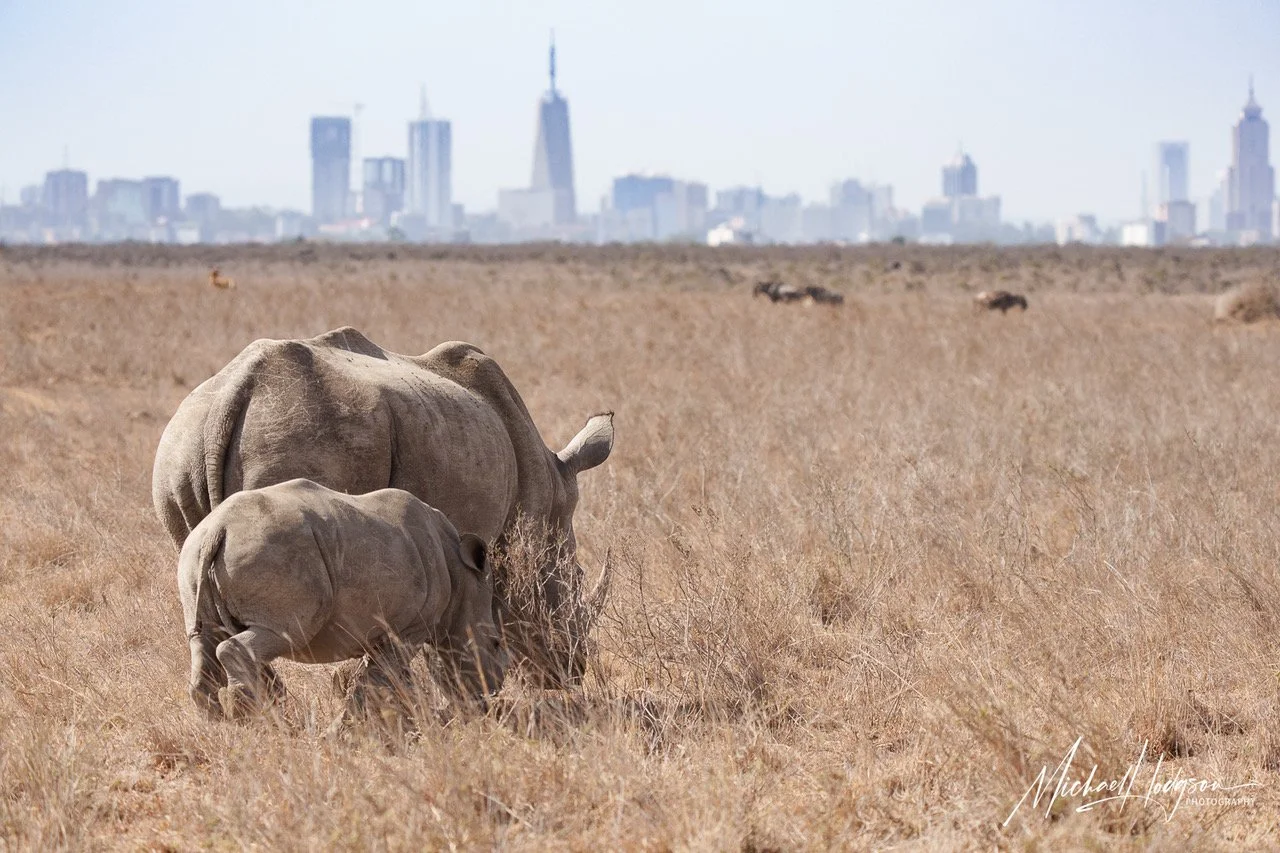
Kenya is a country of staggering ecological range. Within a span of a two-week trip, you can photograph rhinos against a modern city skyline, wade into a herd of elephants with the silhouette of Kilimanjaro rising behind them, sit concealed in a waterhole in a conservancy with exclusive, front-row access, and finish the journey watching red-dusted elephants move through lava rock and thornbrush in one of Eat Africa’s most geologically dramatic landscapes. Each one of the locations we’ll be photographing has its own light, its own particular cast of characters, and each one will keep you in awe behind the viewfinder.
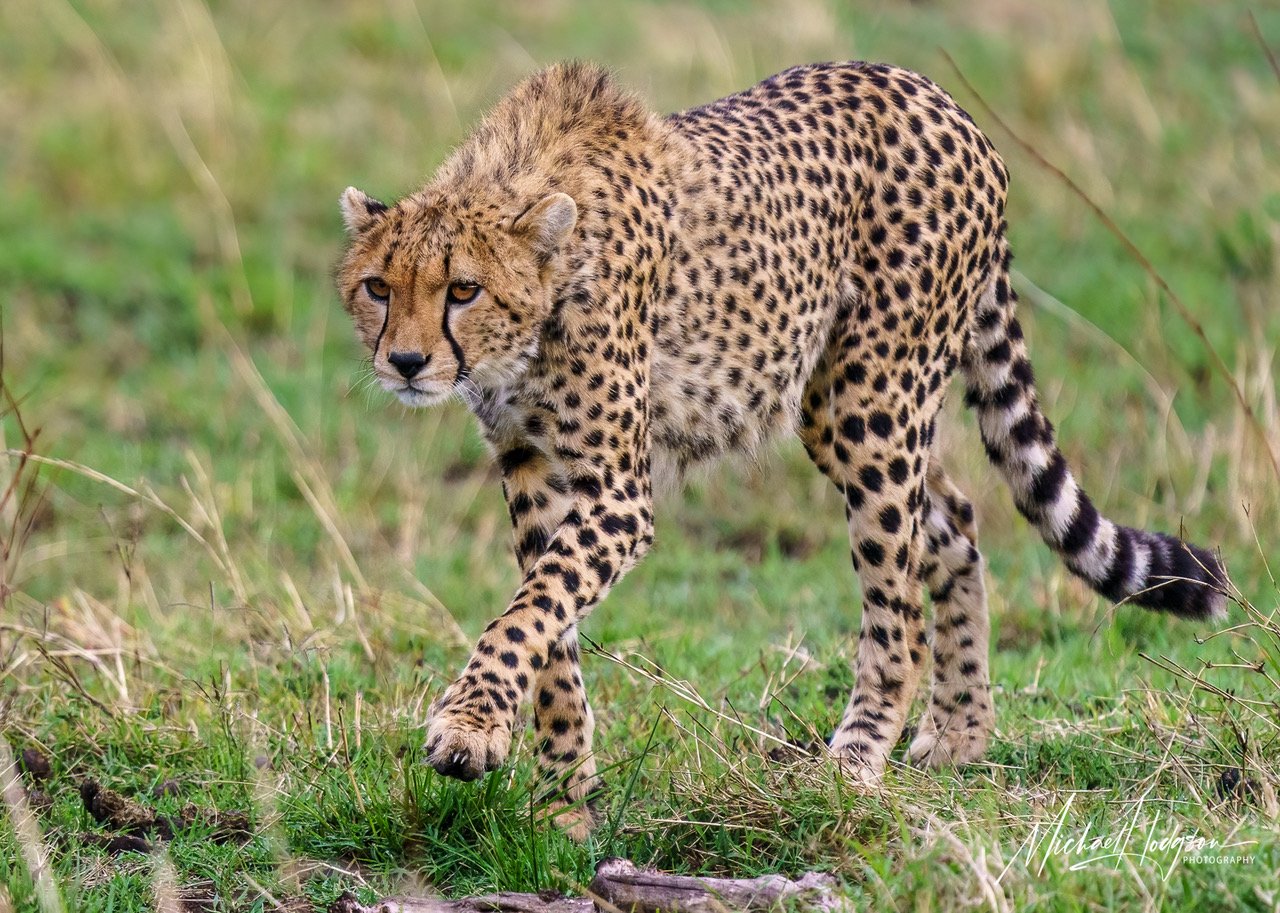
Kenya has occupied a place in the imagination of wildlife photographers for generations, and for a very good reason. The diversity of megafauna here is matched only in a handful of places on this great planet of ours. The landscapes shift dramatically over short distances. The interplay between conservation and community has produced some of the most thoughtfully managed wildlife areas anywhere. This workshop is designed around those realities, and built in partnership with photographers and travel journalists Michael Hodgson and Therese Iknoian, and structured to take you into places and situations that many itineraries never even reach.
Our workshop begins at one of the more ecologically improbably places on earth: Nairobi National Park. The unfenced southern boundary of this park allows wildlife to move freely between the open plains and the city just beyond the fence line, creating a landscape where critically endangered black rhinos, lions, leopards, buffalo, giraffe, zebra, and more than 500 species of birds operate in the shadow of a metropolitan area of five million people. This is a photographic situation that exists nowhere else on earth: genuine, unfenced African wildlife with a modern skyline as a backdrop. That juxtaposition isn’t incidental to the photograph. It is the photograph.
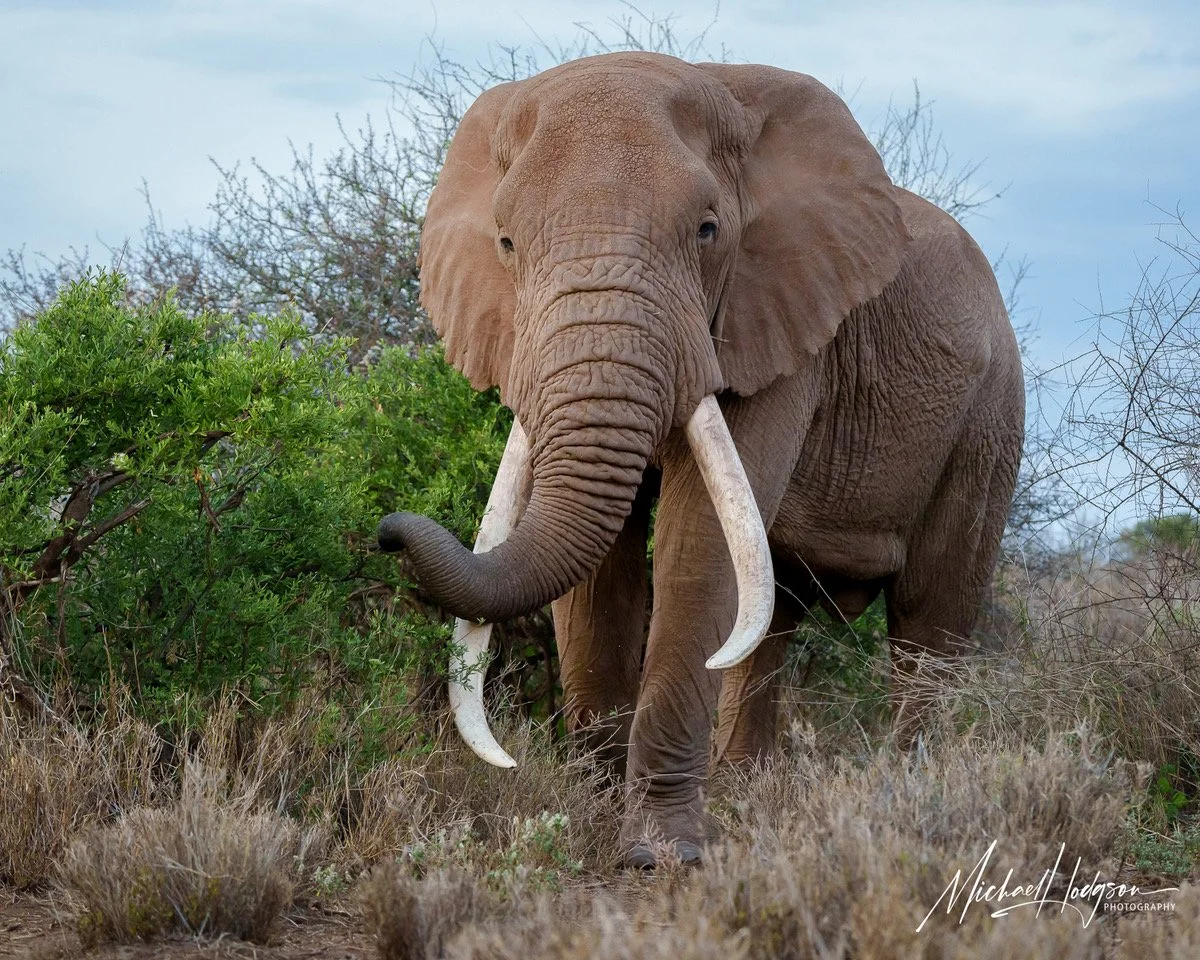
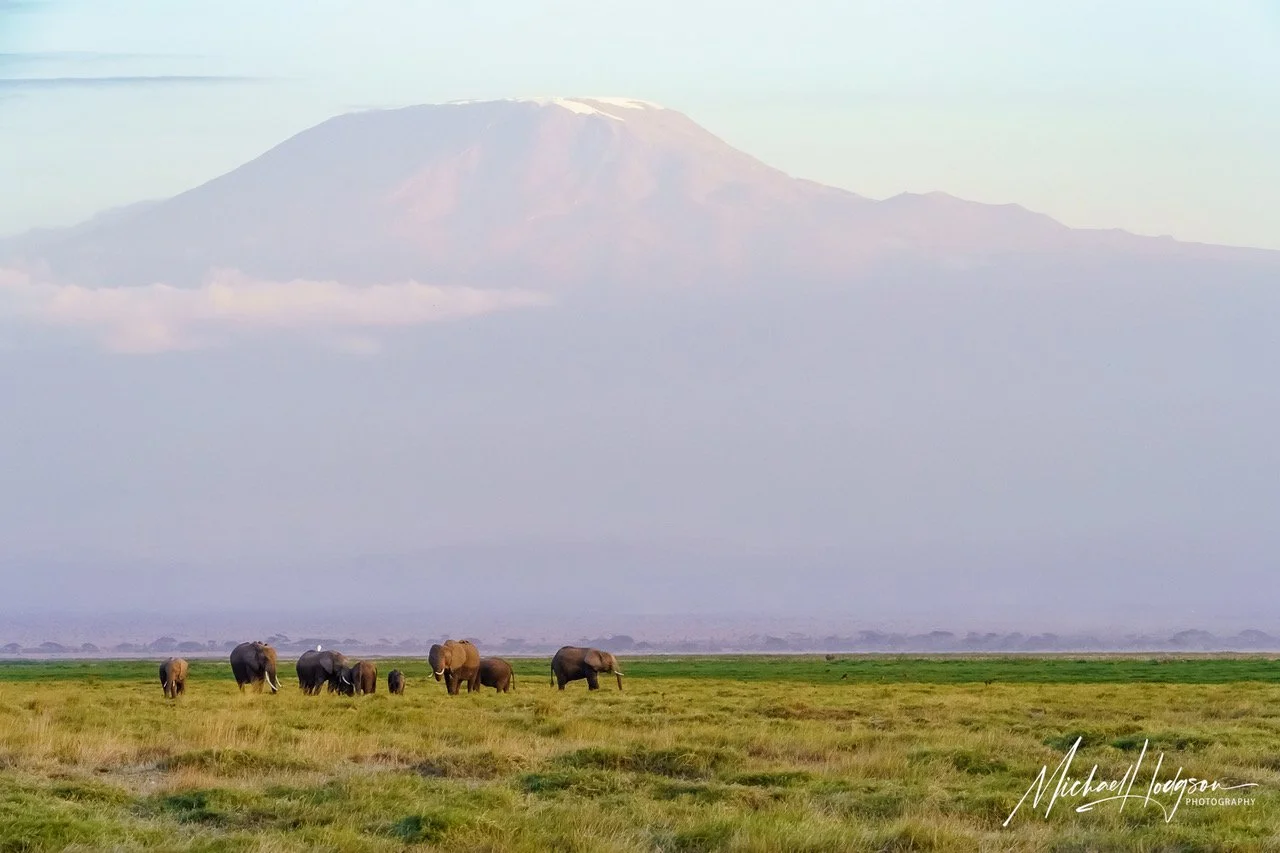
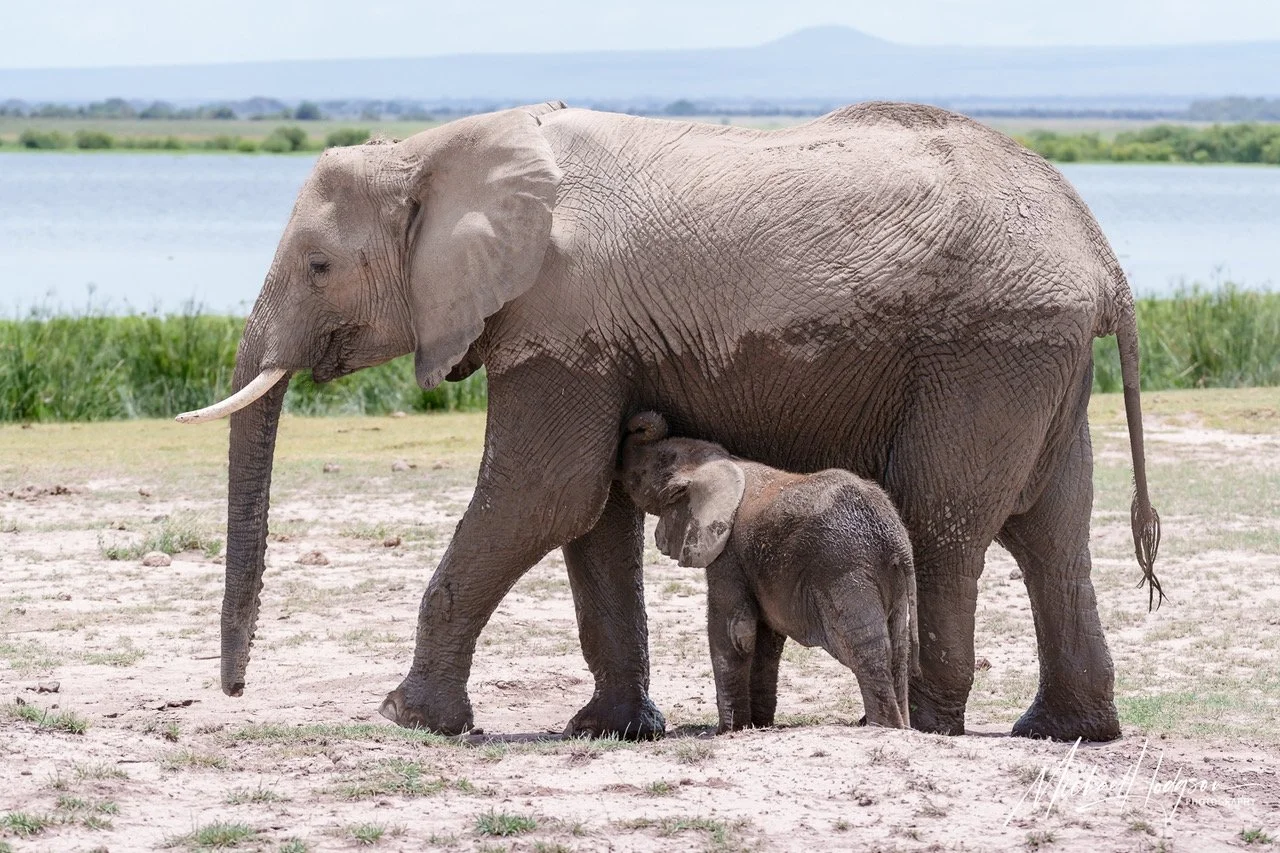
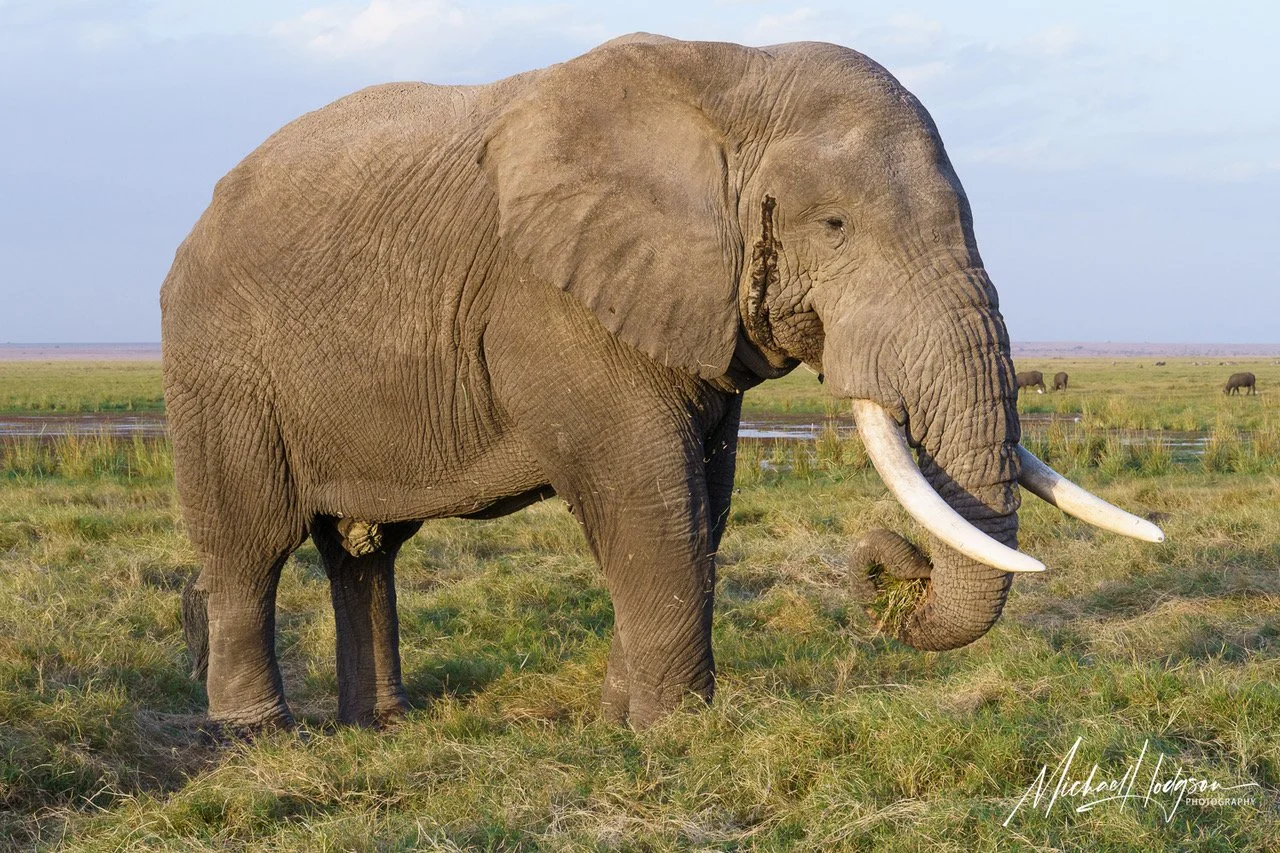
From Nairobi, we’ll travel south to Amboseli, where the itinerary’s most iconic visual comes into focus: elephants beneath Kilimanjaro. The Amboseli Elephant Research Project is one of the longest-running large mammal research programs in the world, and the elephants that move through the park’s wetlands and floodplains are among the most extensively studied in the world. With Africa’s highest peak rising 19,341 feet on the southern horizon, the photographic conditions here are close to ideal as wildlife photography gets. Three full days, with morning and evening drives calibrated to the light rather than a scheduled, gives us time to work this incredible landscape properly.
The heart of the trip is a place most Kenya itineraries never visit. The Lumo Conservancy is a community-run wildlife area managed in partnership between the local Taita people and conservation stakeholders on the border of Tsavo West. The wildlife is genuine, the experiences is intimate, and best of all, the crowds are not here.
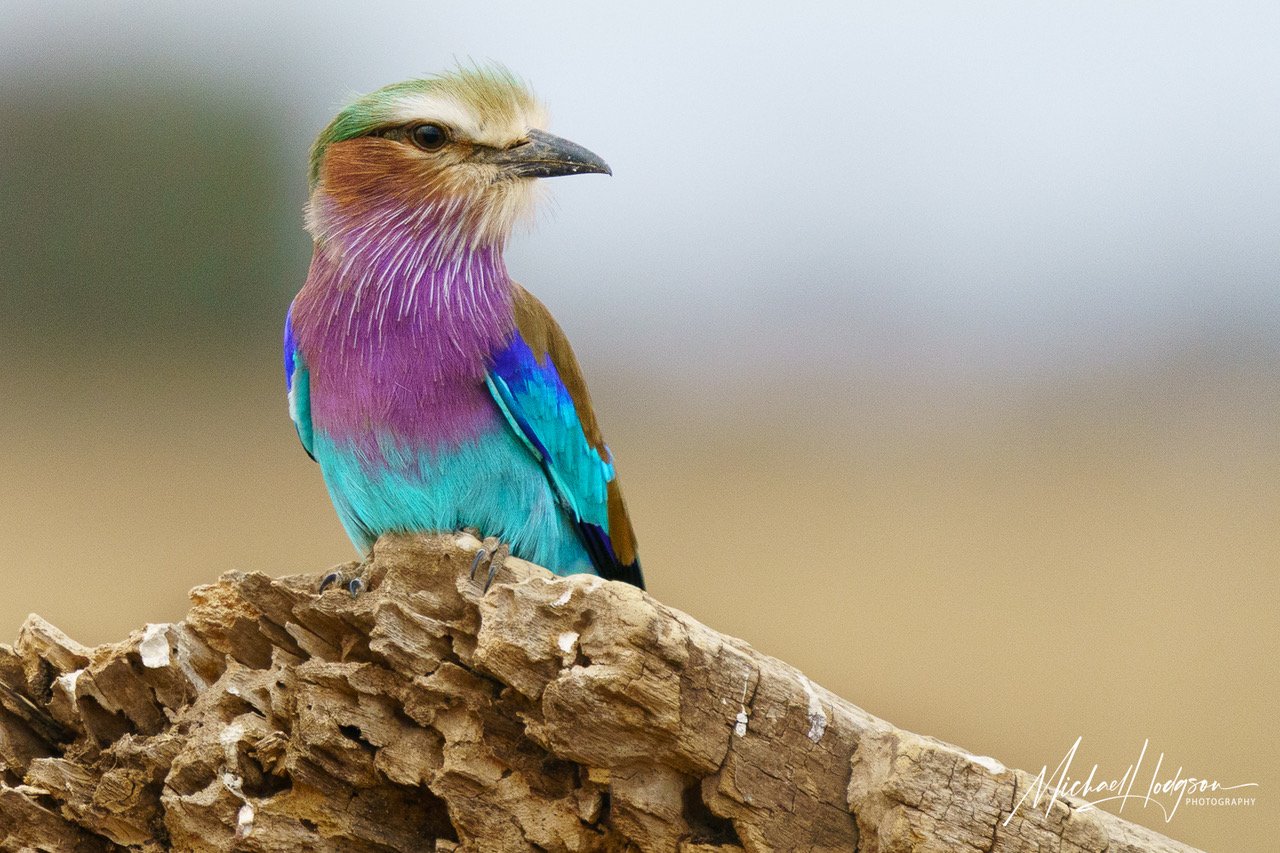
For three consecutive nights, we have exclusive use of a dedicated photography hide overlooking a waterhole deep inside the conservancy. This kind of access is genuinely rare, and the hide changes the photographic dynamic completely. Animals approach on their own terms. Predators hunt. Prey animals drink without alarm. Birds land close enough to fill the frame. The images made from a well-placed hide are categorically different than anything we’ll make from the vehicles. What shows up on any given night is unknown, and that uncertainty is half the gift.
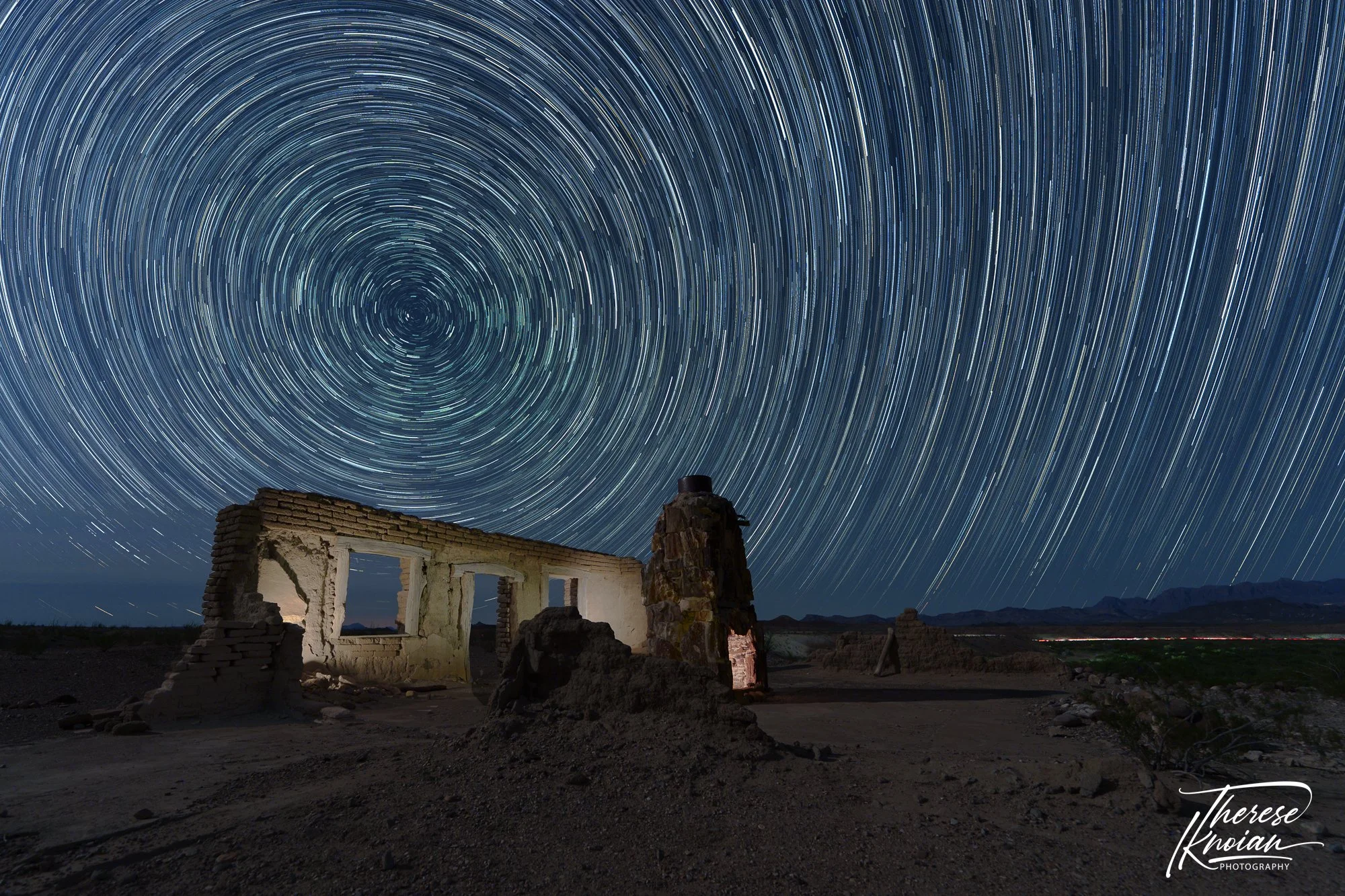
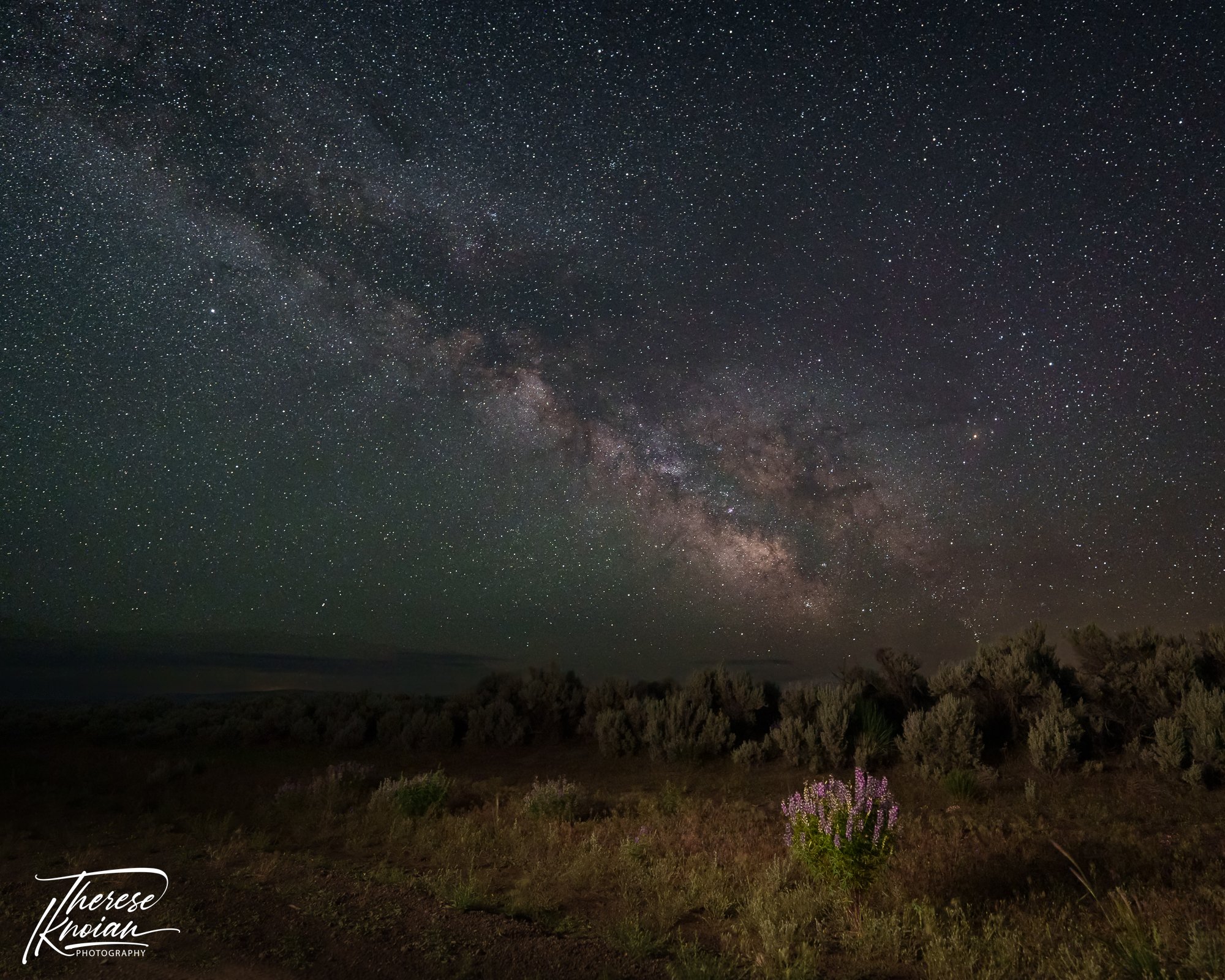
While half the group works the hide each night with Michael Hodgson, the other half is outside with Therese Iknoian under some of the darkest skies in East Africa. The Lumo Conservancy sits near the equator, and that geographic fact changes what is available to a night sky photographer. Kenya's dry season keeps the air clear and the humidity low. The night sky program at Lumo is not a way to fill the hours between sessions in the hide. It is a serious and structured photographic opportunity led by one of the most accomplished night sky photographers in the field.
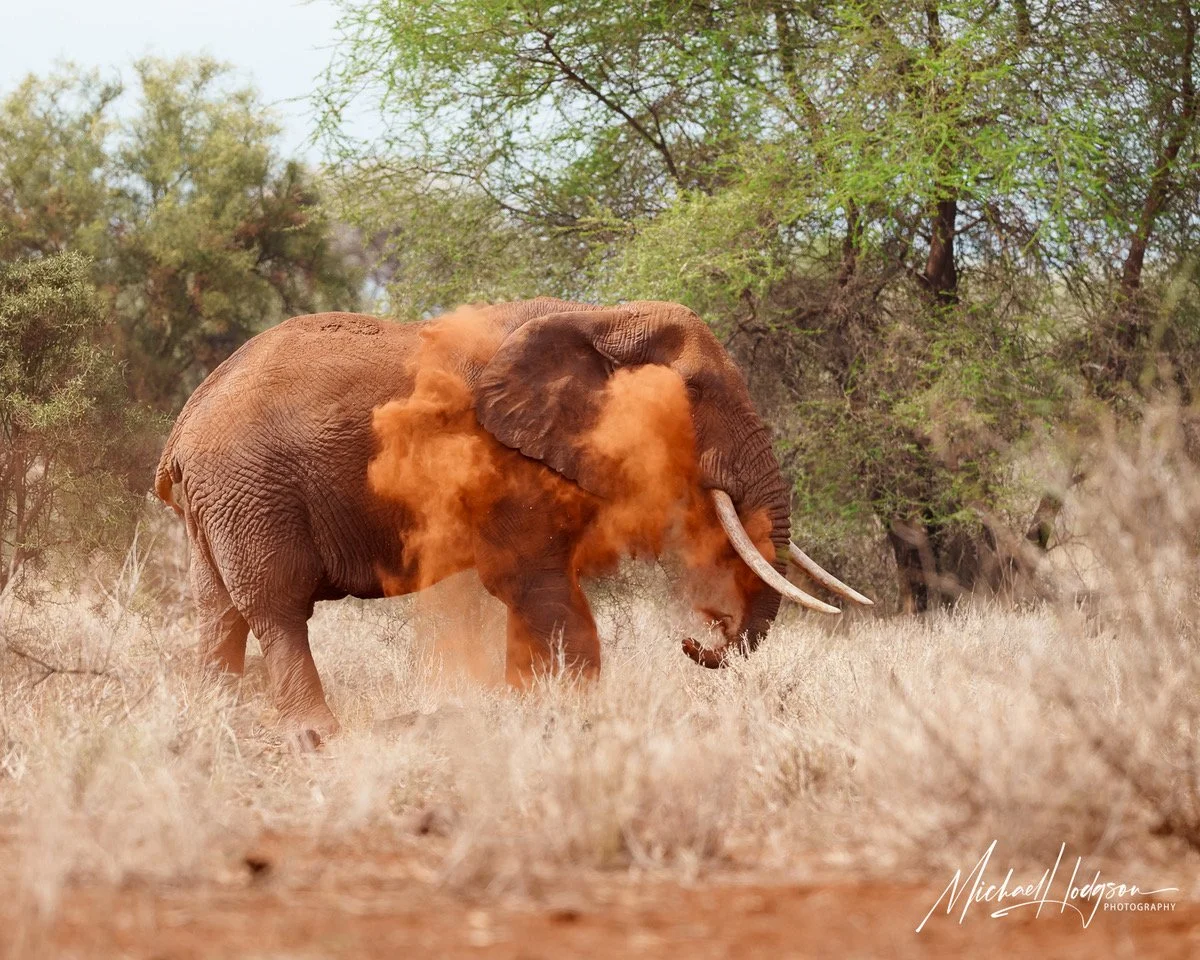
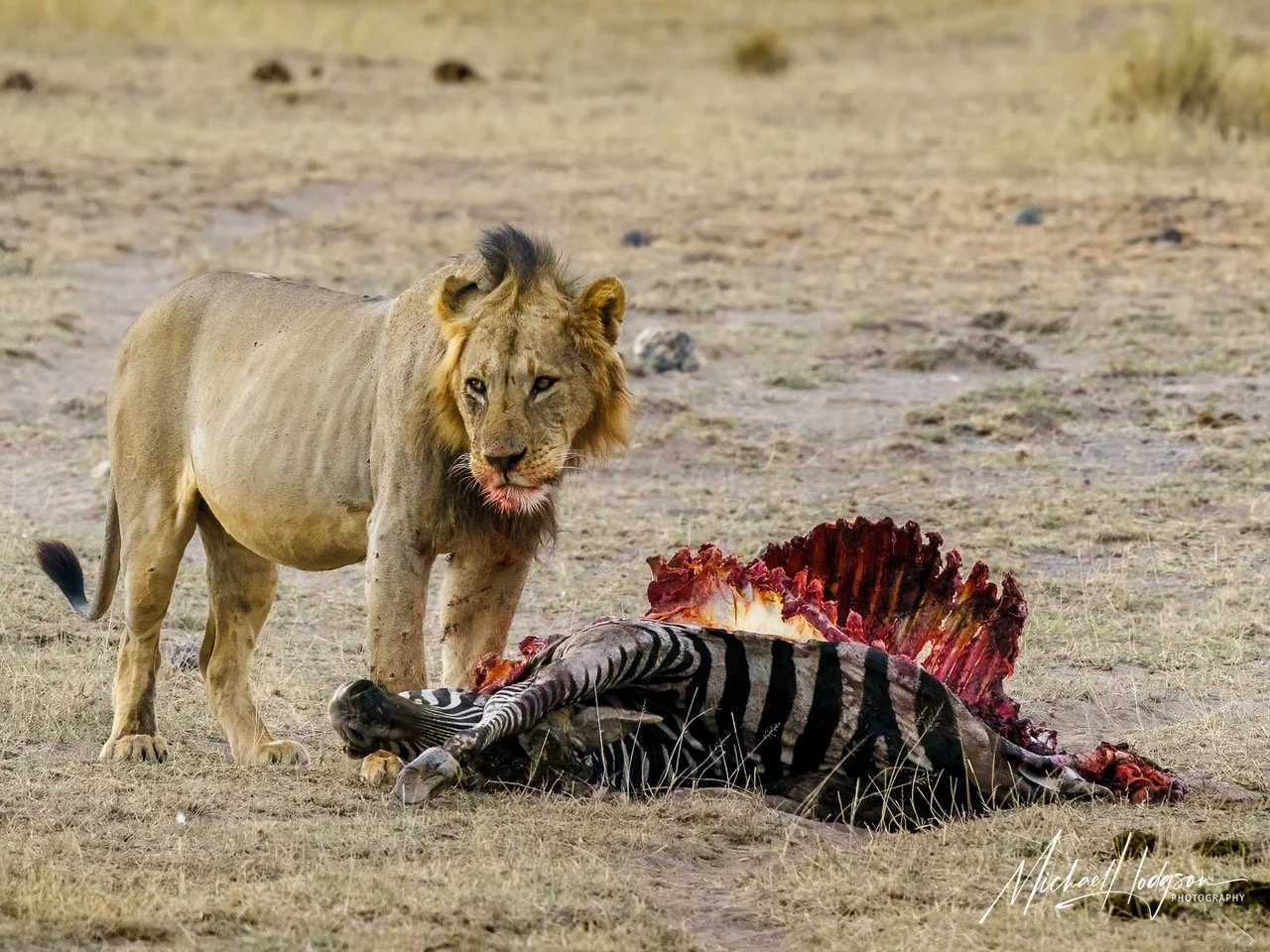
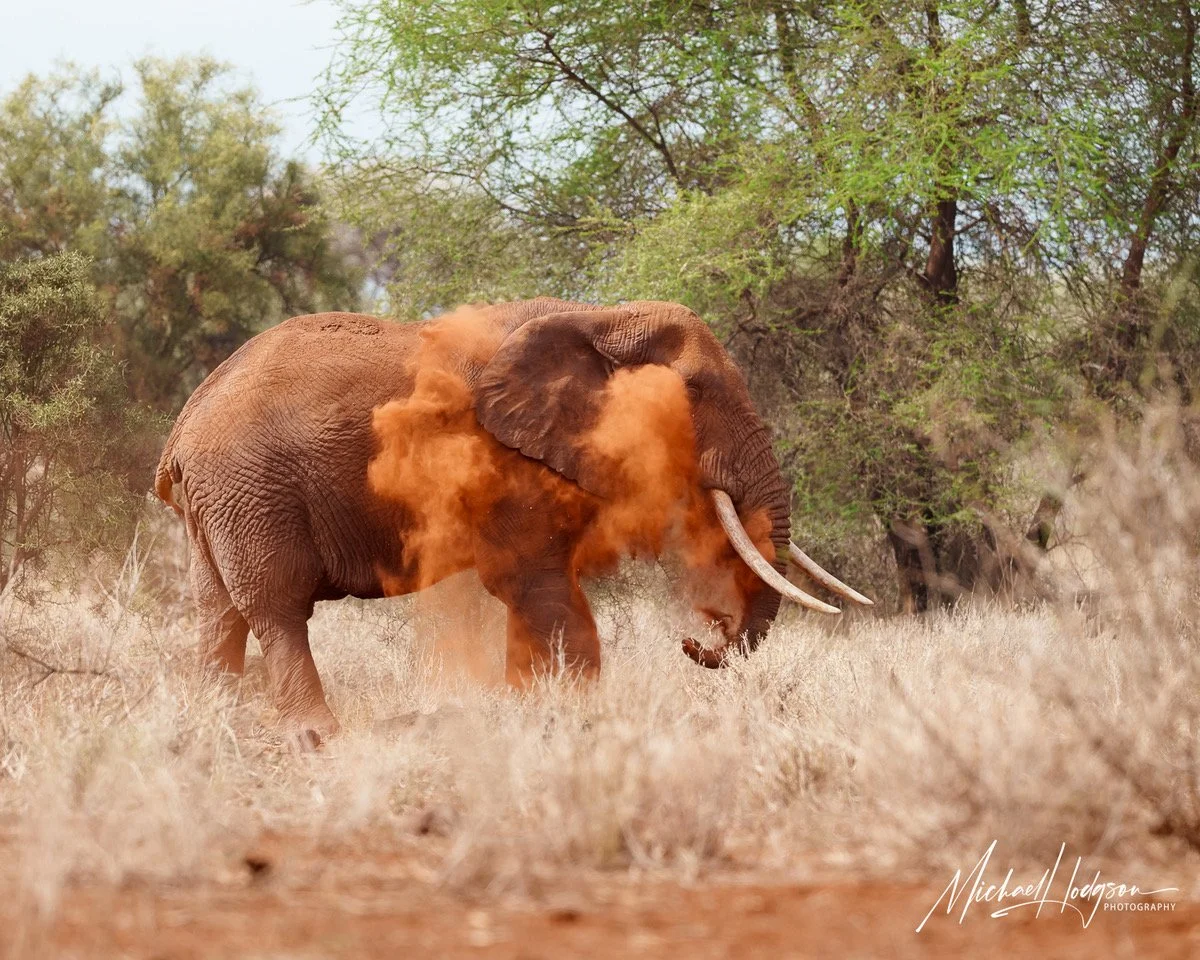
We close out this trip in Tsavo West, part of the largest national park complex in Kenya. Tsavo’s elephants are immediately recognizable: they roll in the park’s iron-rich laterite soil and turn a stunning burnt sienna color, unlike anything encountered in Amboseli. Lava flows, Chyulu Hills, and dense acacia thornbrush define a landscape that is visually and ecologically distant from every other part of our trip thus far. The park’s lion population is historically significant and well-documented. It’s a fitting final chapter to a trip that has moved through four completely different versions of Kenya.
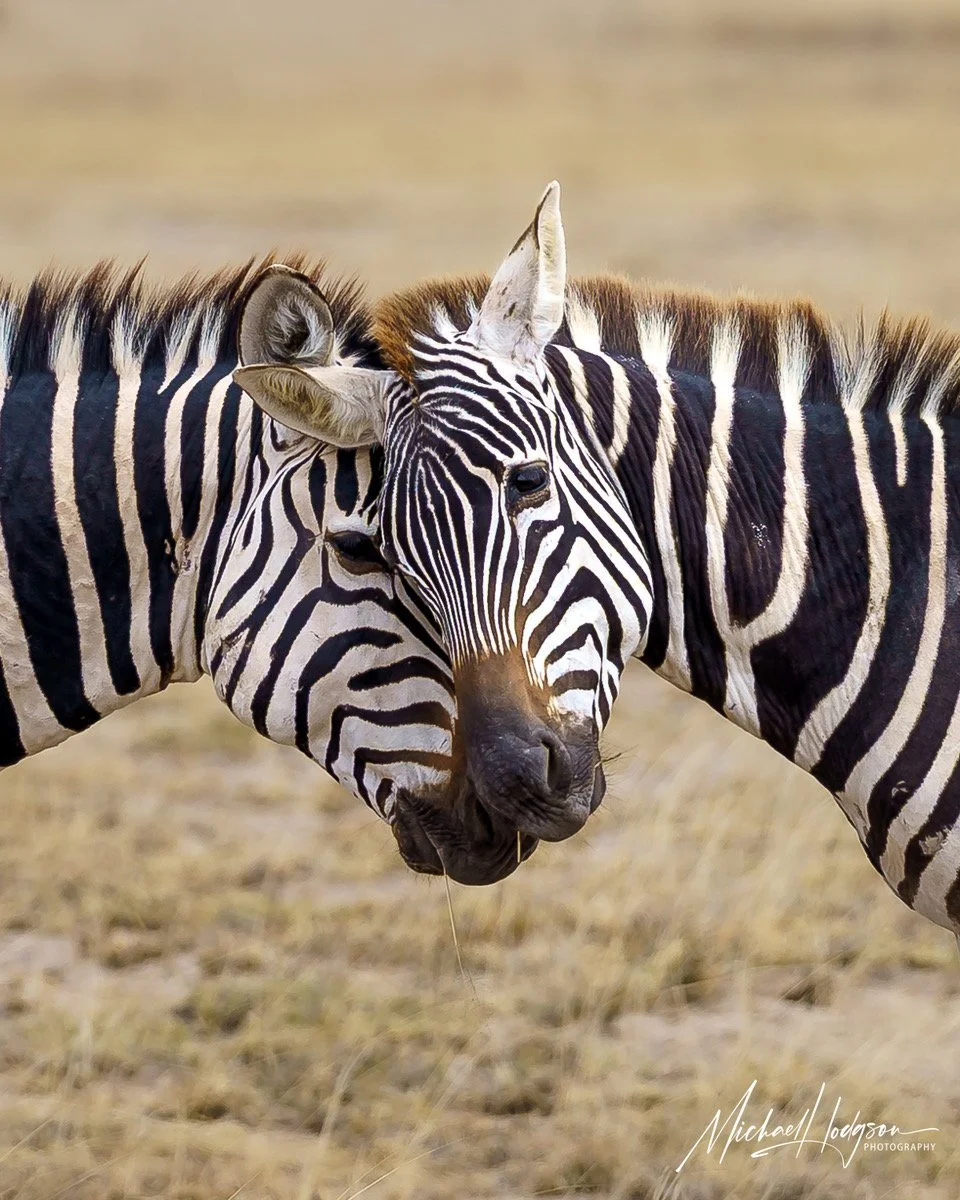
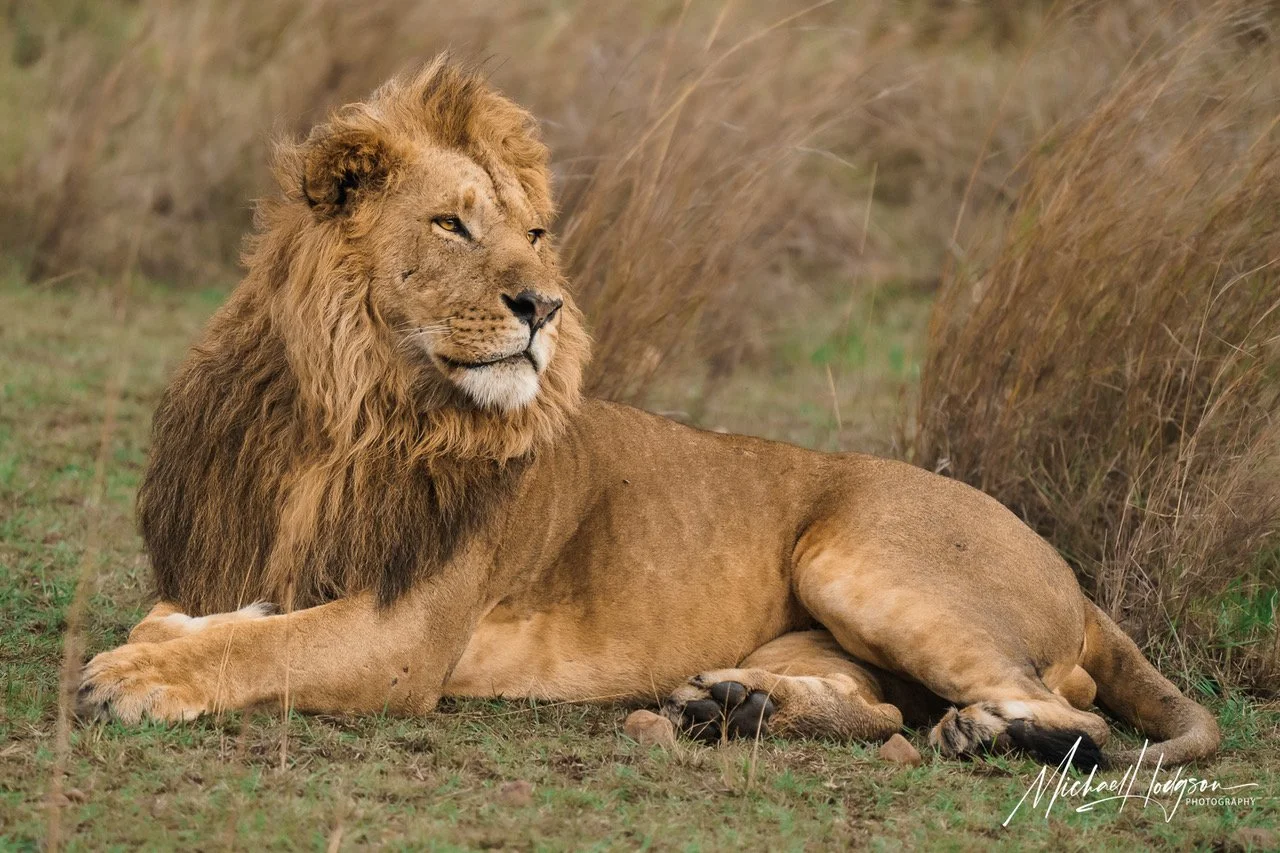
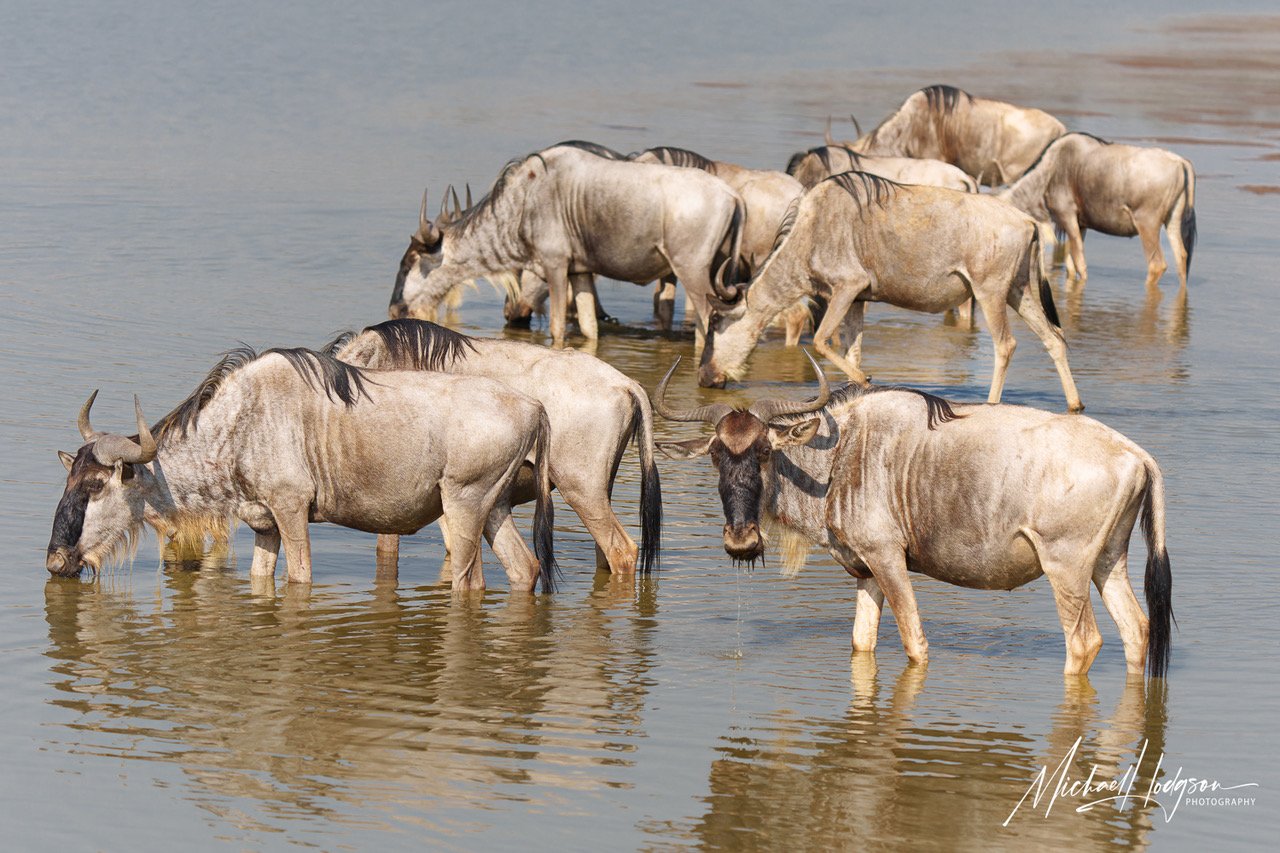
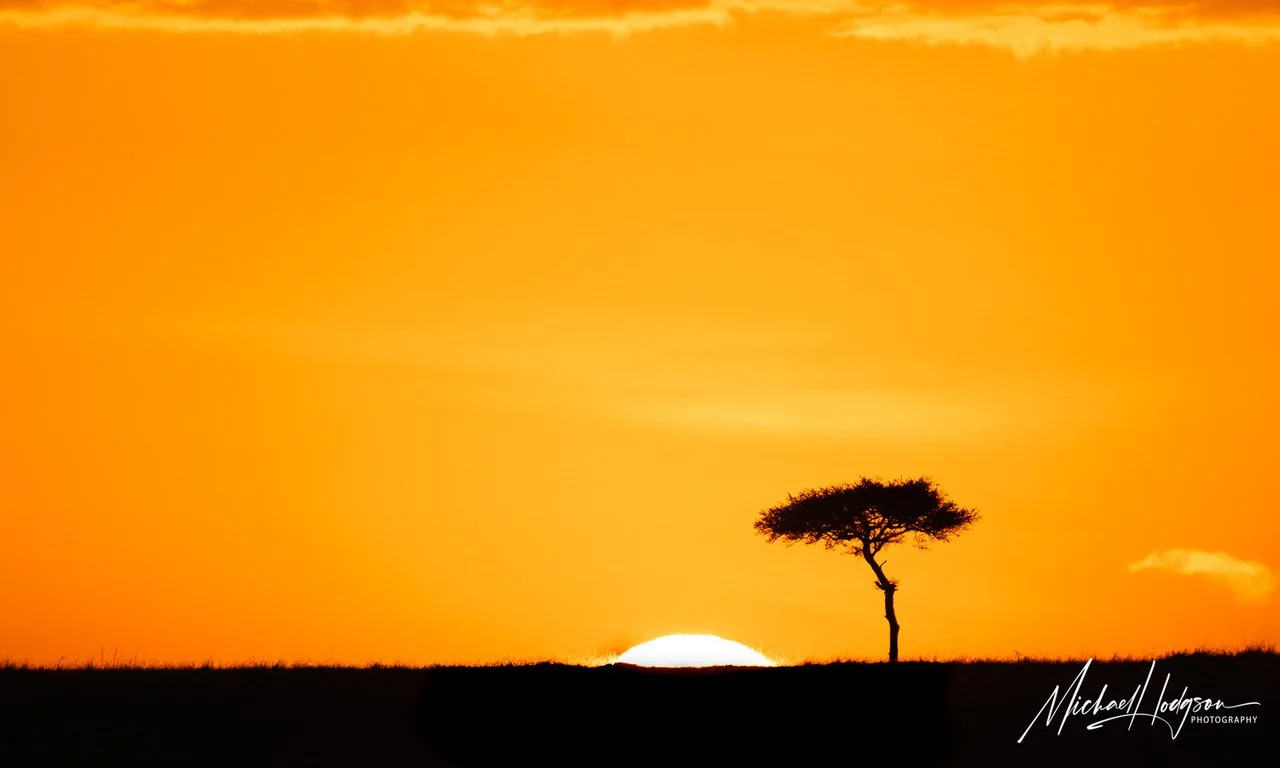
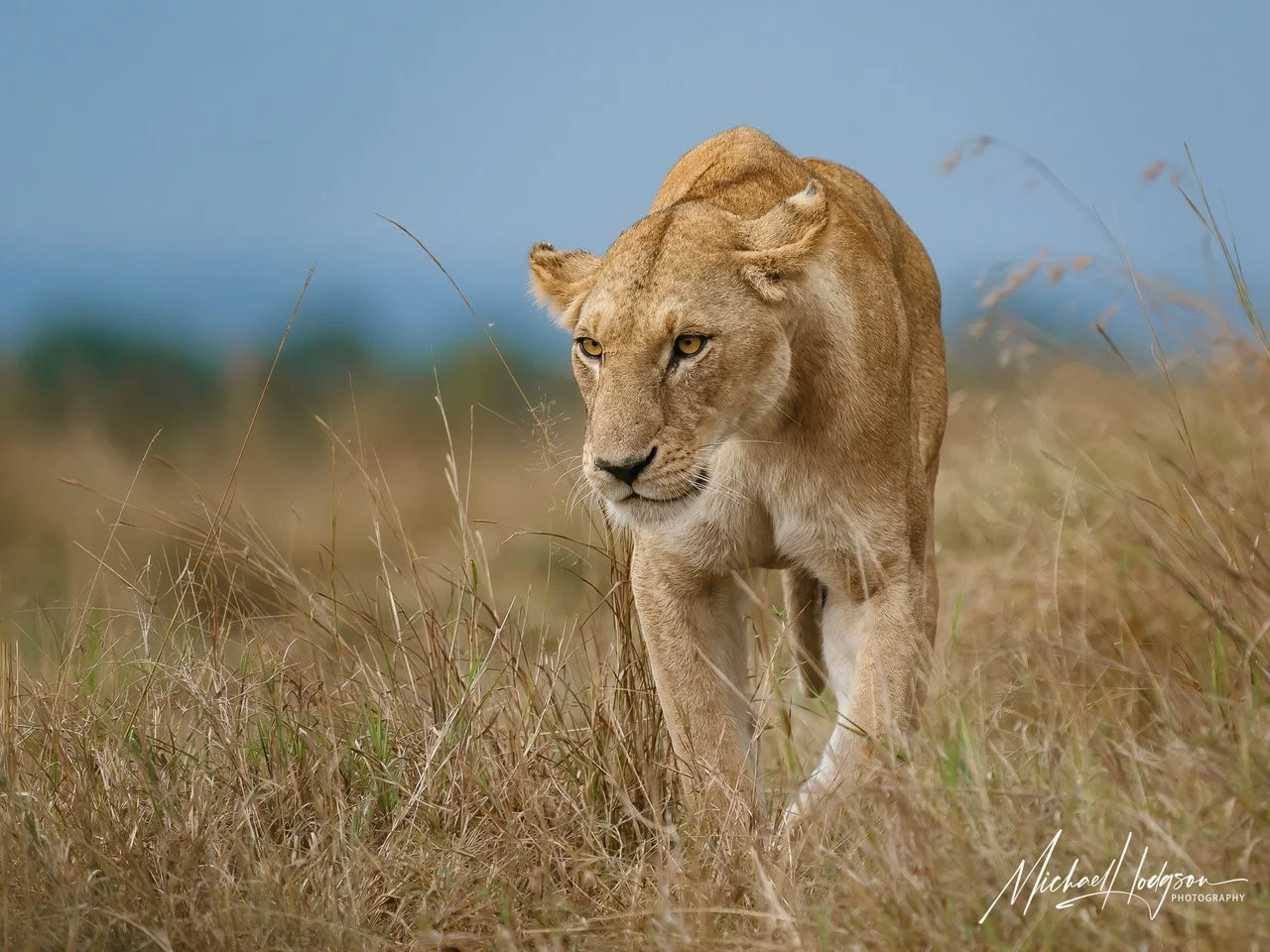
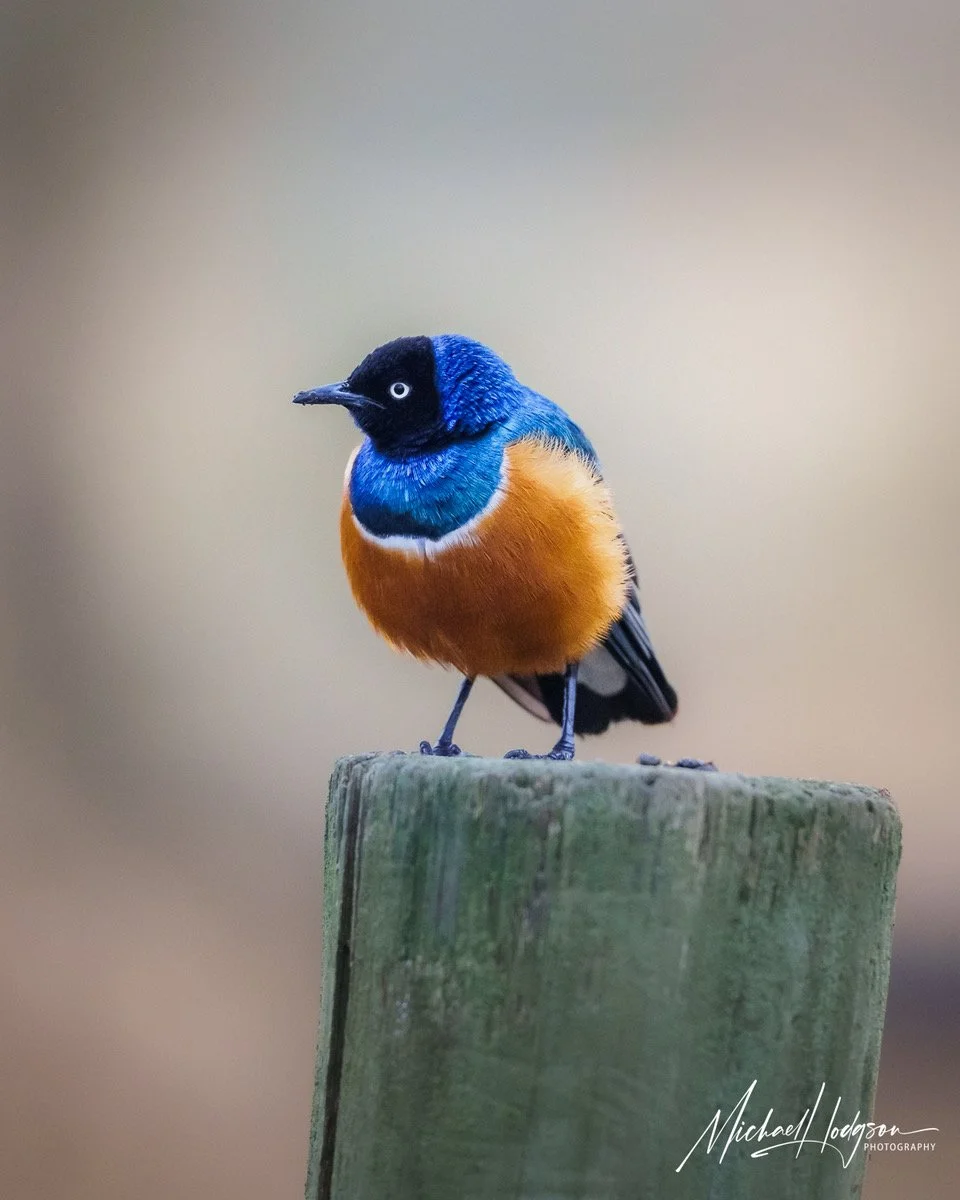
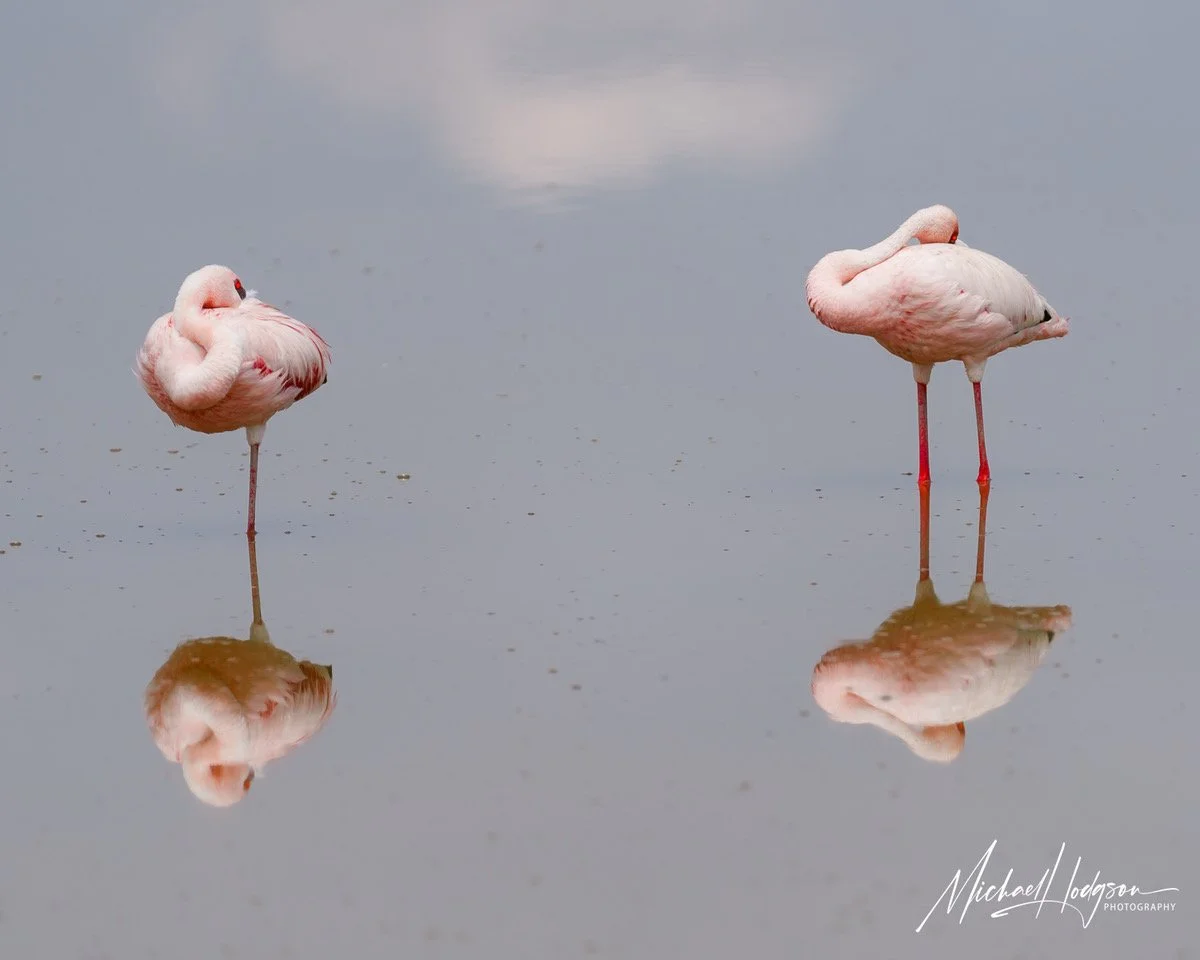
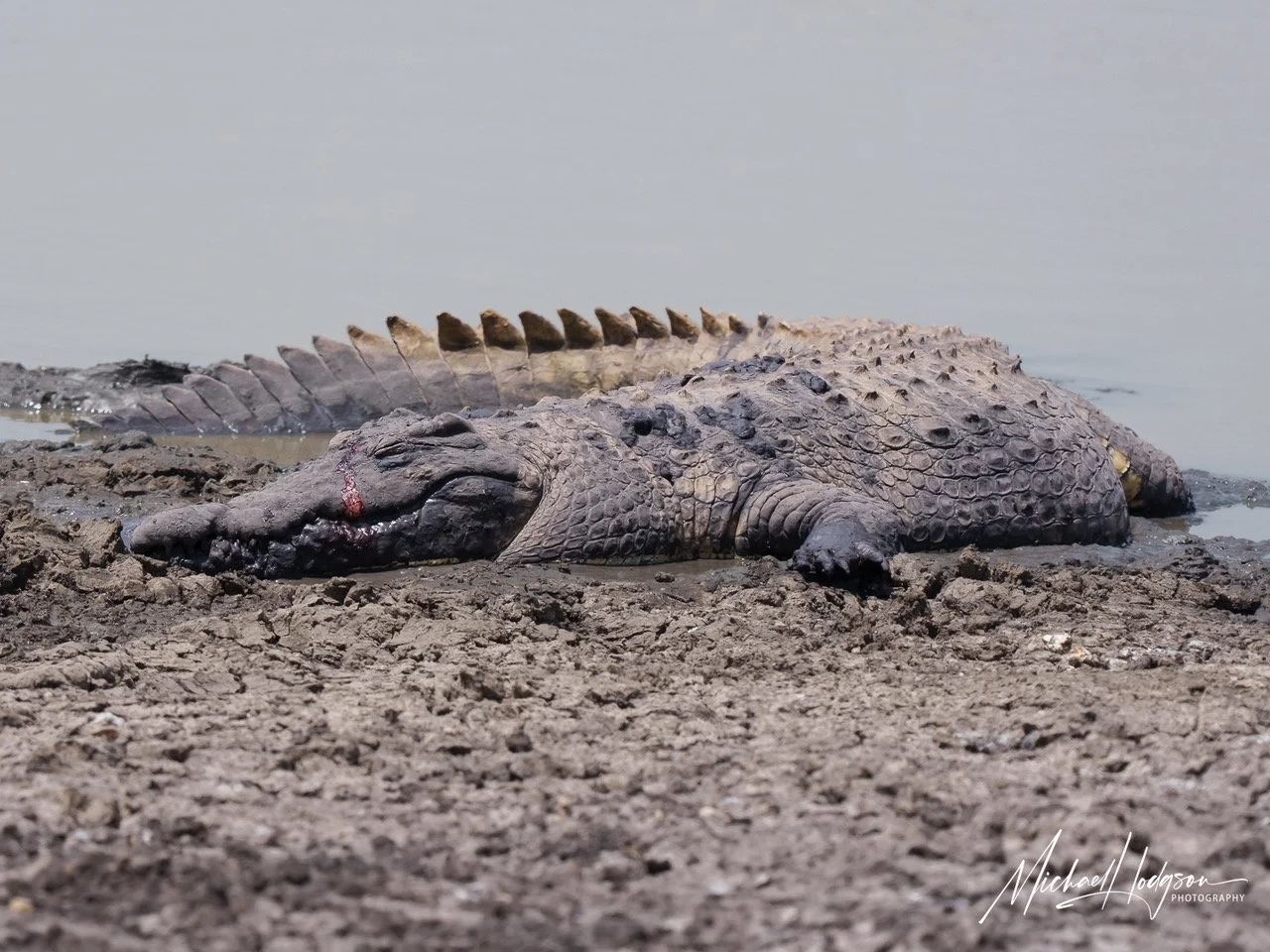
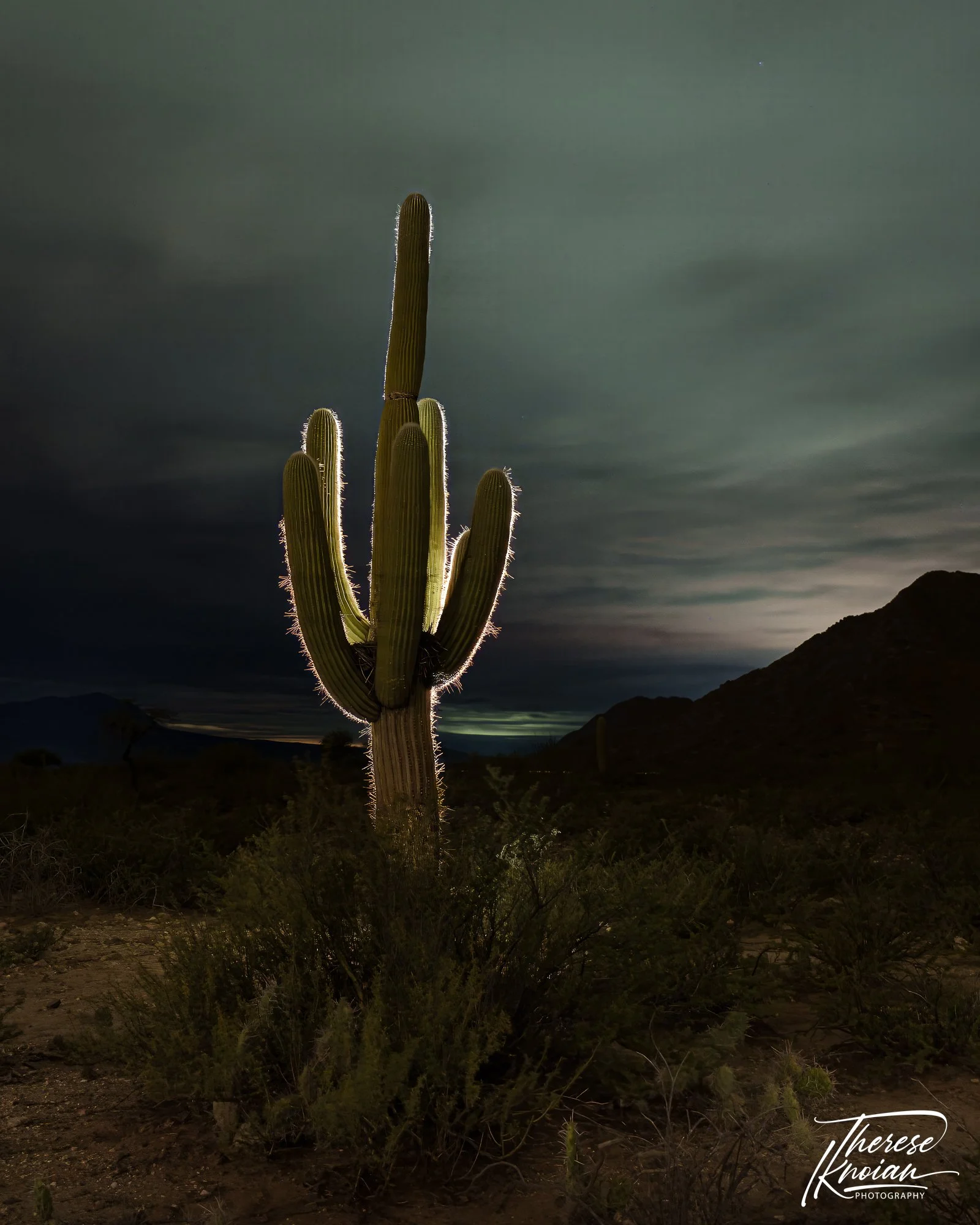
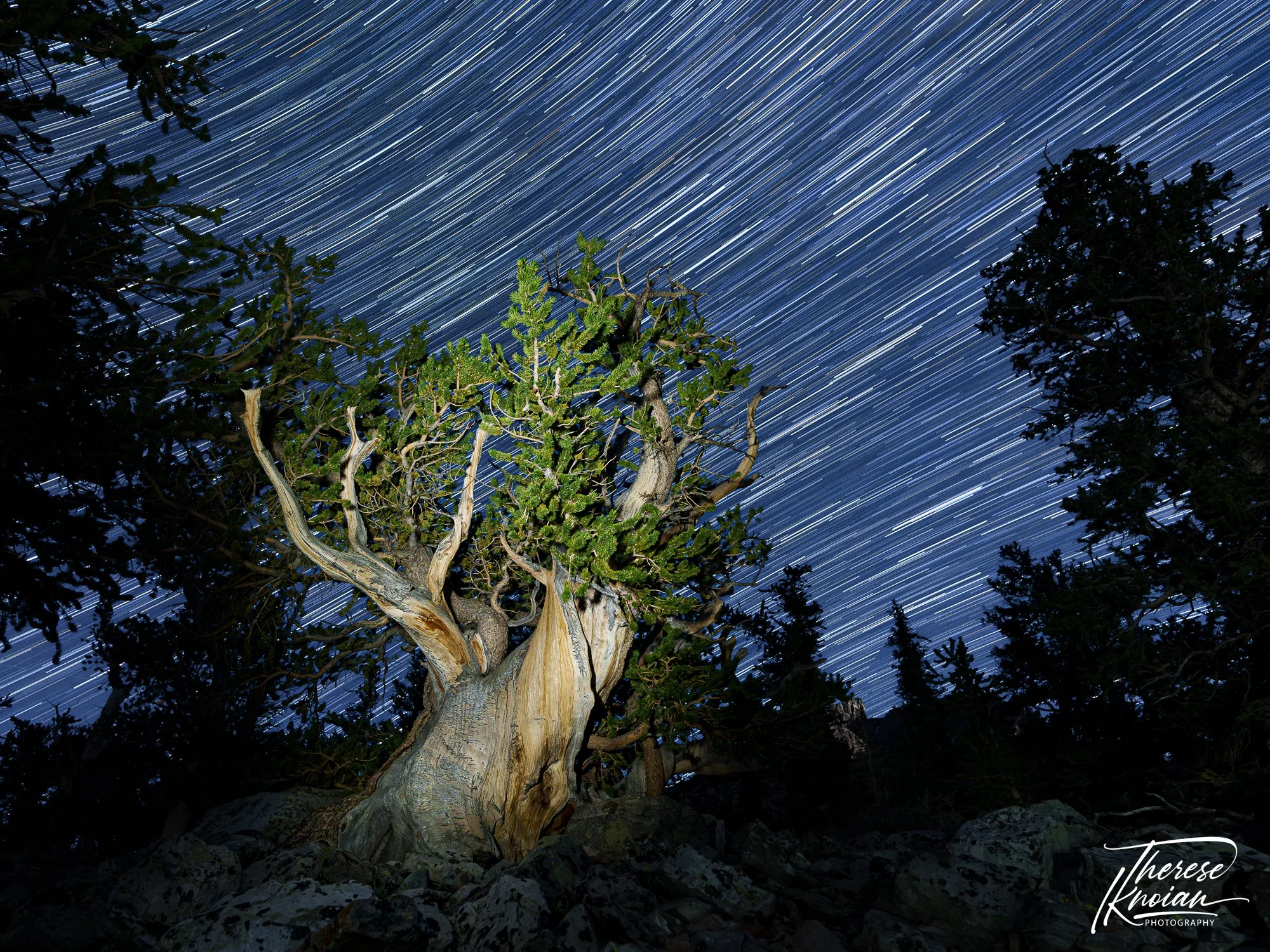
The wildlife images in the gallery have been provided by co-leader, Michael Hodgson. Night sky photography provided by co-leader Therese Iknoian.
WHAT’S INCLUDED
Single-occupancy lodging beginning on the first night of the workshop (arrival night)
All meals beginning at dinner on day two (breakfast included in lodging all days)
All park and conservancy entry fees
Park vehicle fees and driver-guide fees
All in-country transportation during the workshop
Exclusive use of the Lumo photography hide
First-class train ticket to Nairobi for departure
Private airport transfers for arrival and departure
Drinking water and tea/coffee in the vehicle during game drives
Bean bags in the vehicle for lens support
NOT INCLUDED
International airfare to and from Nairobi
Lunch in Nairobi
Visa and related fees, if necessary
Lodging before or after the scheduled dates
Items of a personal nature (e.g., laundry, souvenirs)
Travel insurance (highly recommended)
Medical evacuation insurance (required)
Gratuities for local guides and drivers
Incidentals incurred by participants at lodging
Other items not expressly listed as included
Frequently Asked Questions
-
Submit the form below to let us know that you’re interested in joining the workshop. Someone from our office will reach out to you with the registration paperwork and invoice for placing your deposit.
Both the registration paperwork and the deposit must be completed before you are officially “registered” for the workshop. Most of our workshops end up with a considerable waiting list, so we allot two business days to complete the process before we move on toward the next person in the queue.
Of course, we’re always happy to answer your questions before signing up, as well. -
While not overly physical in nature, this workshop takes place in medium-to-high elevations which adds a level of physical difficulty. Even the most fit individuals feel the effects of walking, hiking, and working at elevation if they are not already acclimated to it. This workshop takes place in elevations between 3,500-13,500ft.
Photographers should be comfortable walking up to half a mile at a time while carrying their own gear. -
Like many other outdoor photography trips, it’s helpful to have some layers and prepare for fluctuating temperatures. The mornings and late evenings can be a little bit cool, but once the sun comes up, temperatures swiftly climb. We recommend wearing lightweight and quick-drying clothing including long pants and long-sleeve shirts.
We send out a comprehensive workshop guide for each one of our trips, filled with information about what to expect for weather, gear recommendations, clothing recommendations, and other details that will help you feel completely prepared.
In addition, we do a group Zoom call about three months ahead of your trip. This allows you to meet everyone before you travel together and ensures that everyone’s questions are answered and we’re all on the same page. -
Absolutely! We welcome non-photographers, as well. However, please note that there is not a discounted price should they decide to join us, as they are filling a spot that would otherwise be booked by another photographer.
-
Because the areas that offer the best opportunity for photography are remote and wild, we require medical evacuation insurance. Your chosen independent insurance plan should include at least $250,000 in medical evacuation coverage.
The highest elevation we’re working at is 13,500 feet, which typically does not require a special “high altitude” evacuation, but check first with your provider.
We also strongly recommend general travel insurance, though this coverage is optional. Please feel free to reach out with additional questions. -
We understand that cancelling a long-anticipated trip is disappointing. But we, too, plan far ahead before each departure and continuously send non-refundable payments to hotels, other suppliers, and travel partners. Therefore, we must strictly adhere to the cancellation and refund policy. We strongly suggest that you purchase travel insurance in the event that your travel plans change or you need to cancel your trip. The following are the terms of our cancellation and trip change policy:
Cancellation & Refund Policy:
• Deposits are non-refundable after a 10-day grace period.
• If you cancel within the grace period, we will refund your deposit to the original form of payment, minus a $250 administrative fee and any payment processing fees incurred.
• After the grace period, no refunds will be issued unless we can fill your spot. If we can fill your spot, we will issue a refund minus a $250 administrative fee and any payment processing fees incurred. That refund will be issued when the payment for the replacement participant has cleared.
Final Payment Deadlines:
• U.S.-based workshops: Final balance is due 90 days before the start date.
• International workshops: Final balance is due 120 days before the start date.
By booking, you acknowledge and accept these terms. If you have any questions, we’re happy to help clarify before you commit to joining us.