
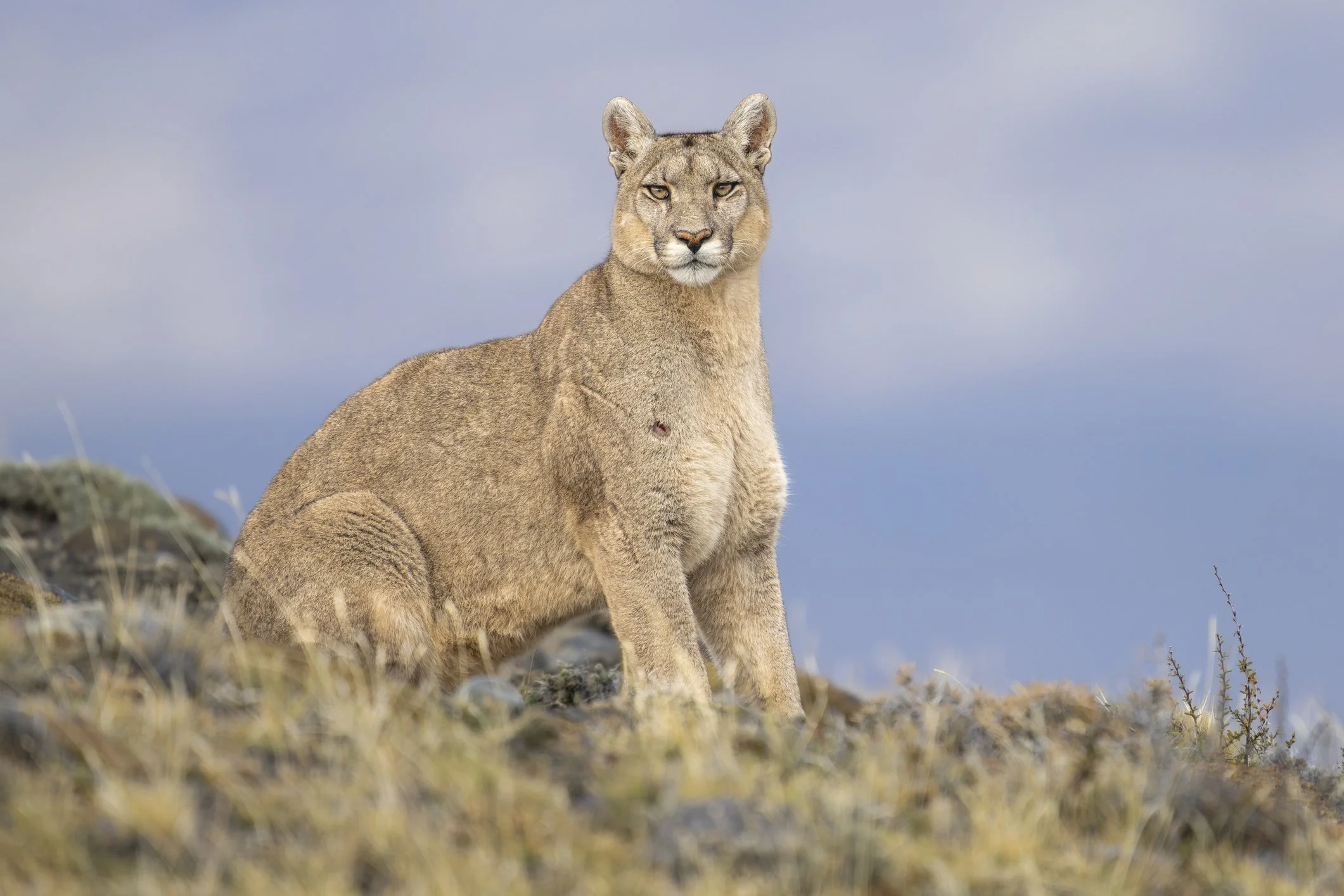
WILD PATAGONIA: Pumas and Penguins in the Southern Frontier
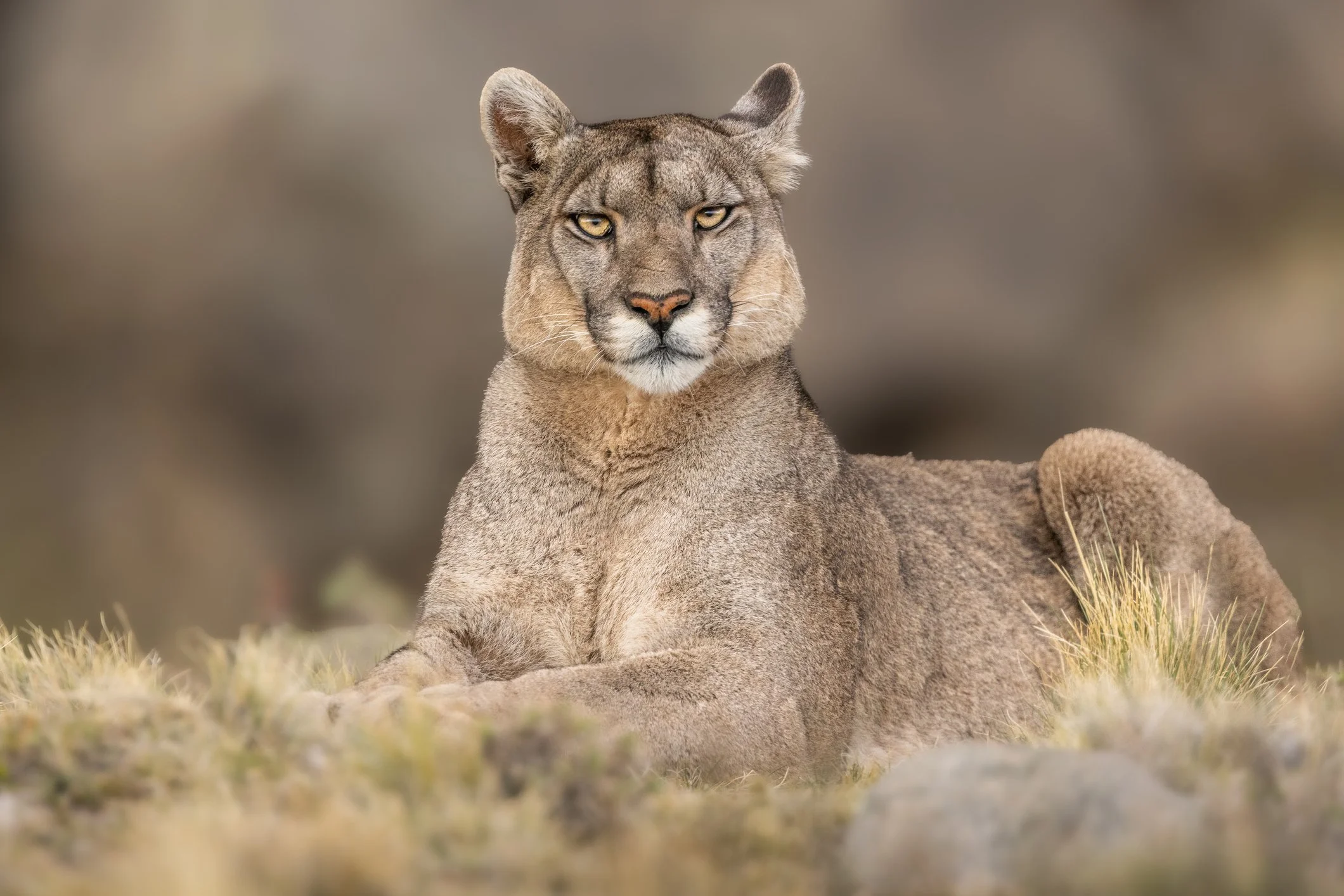
There are only a handful of places on Earth where a big cat still moves across the land on her own terms, and Patagonia is one of them. In the windswept expanse of Torres del Paine, the South American puma still traces ancient routed through grassland and rock, a shadow moving in broad daylight across a landscape that was built from ice, wind, and the slow patience of geological time.
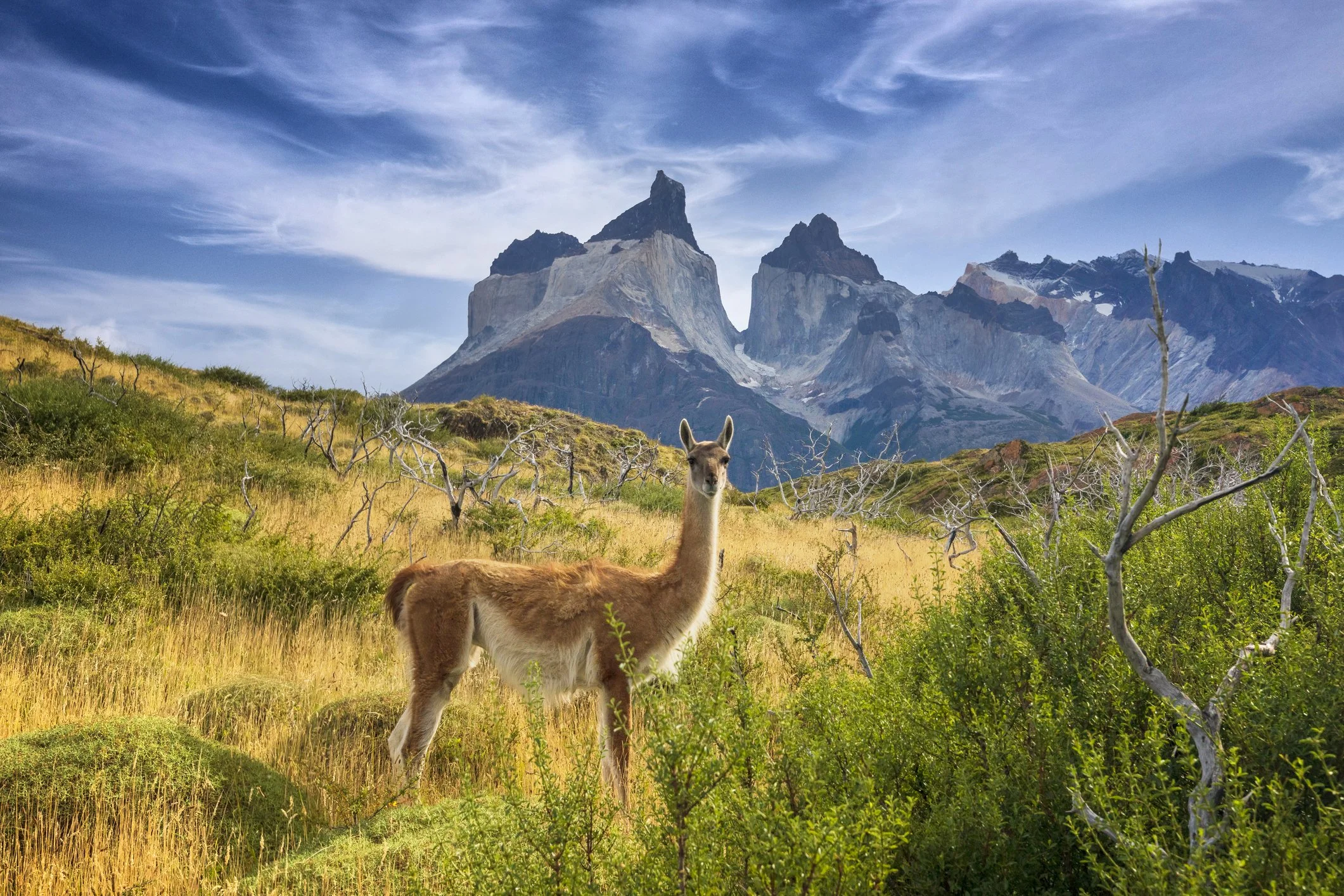
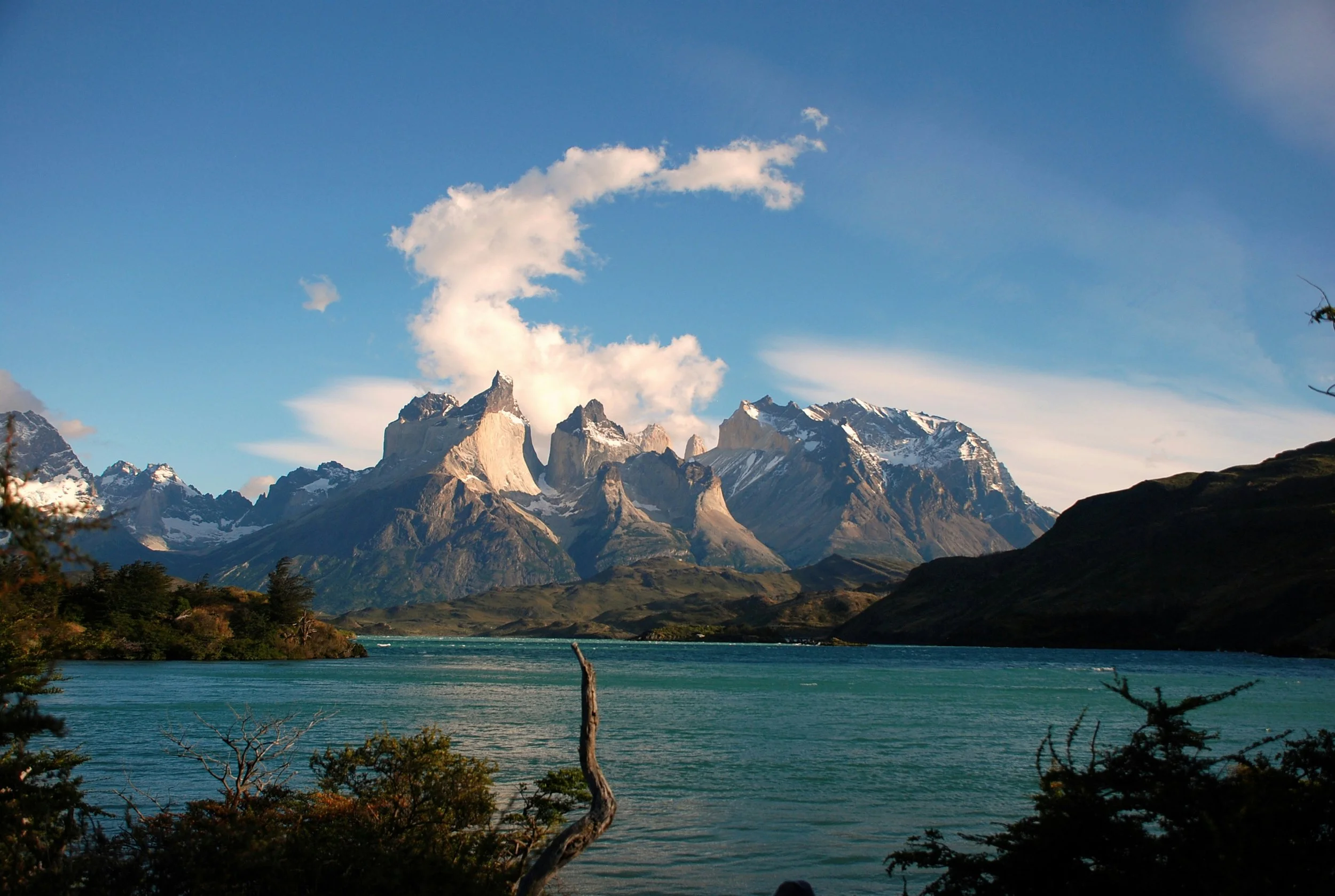
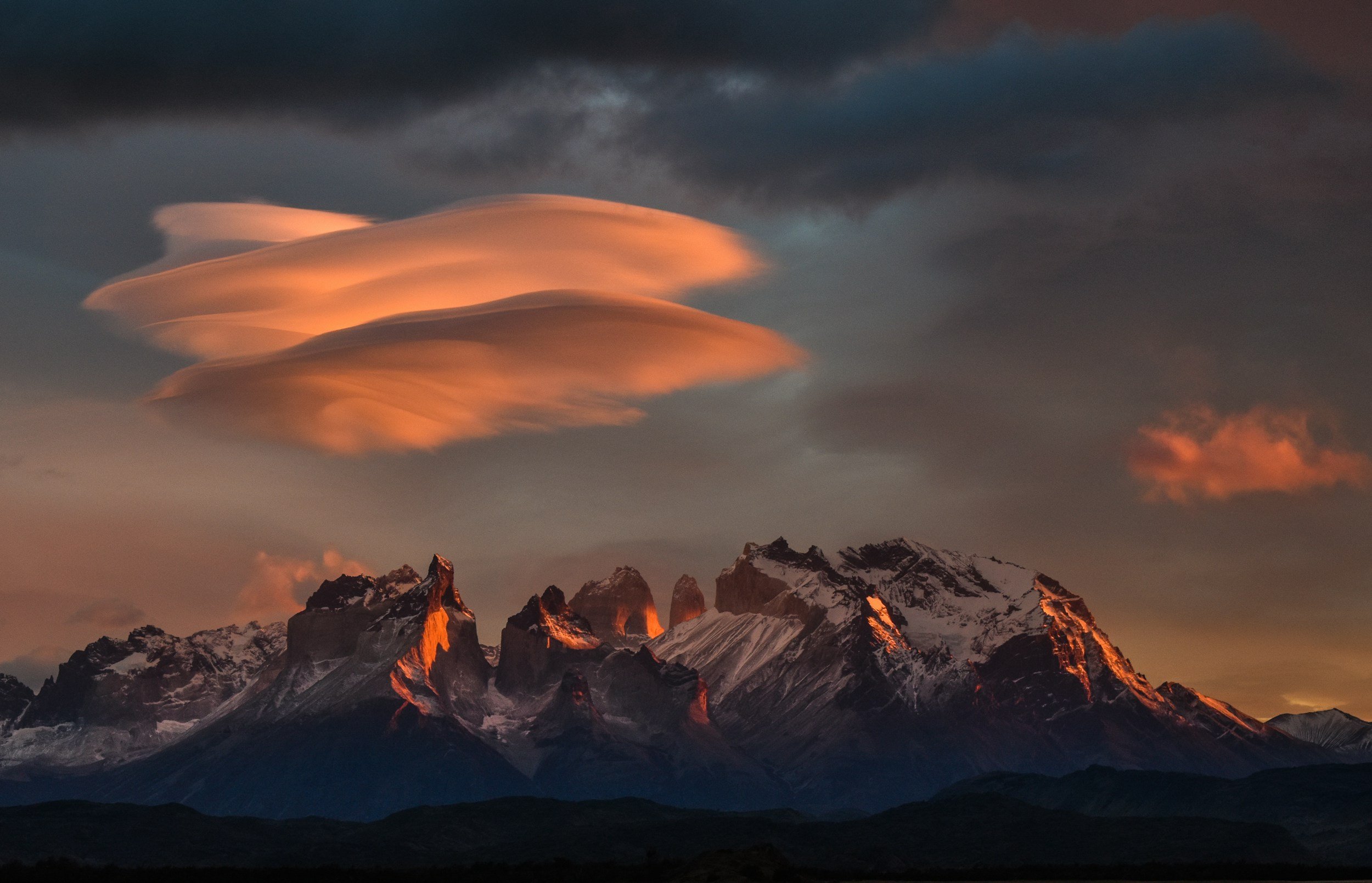
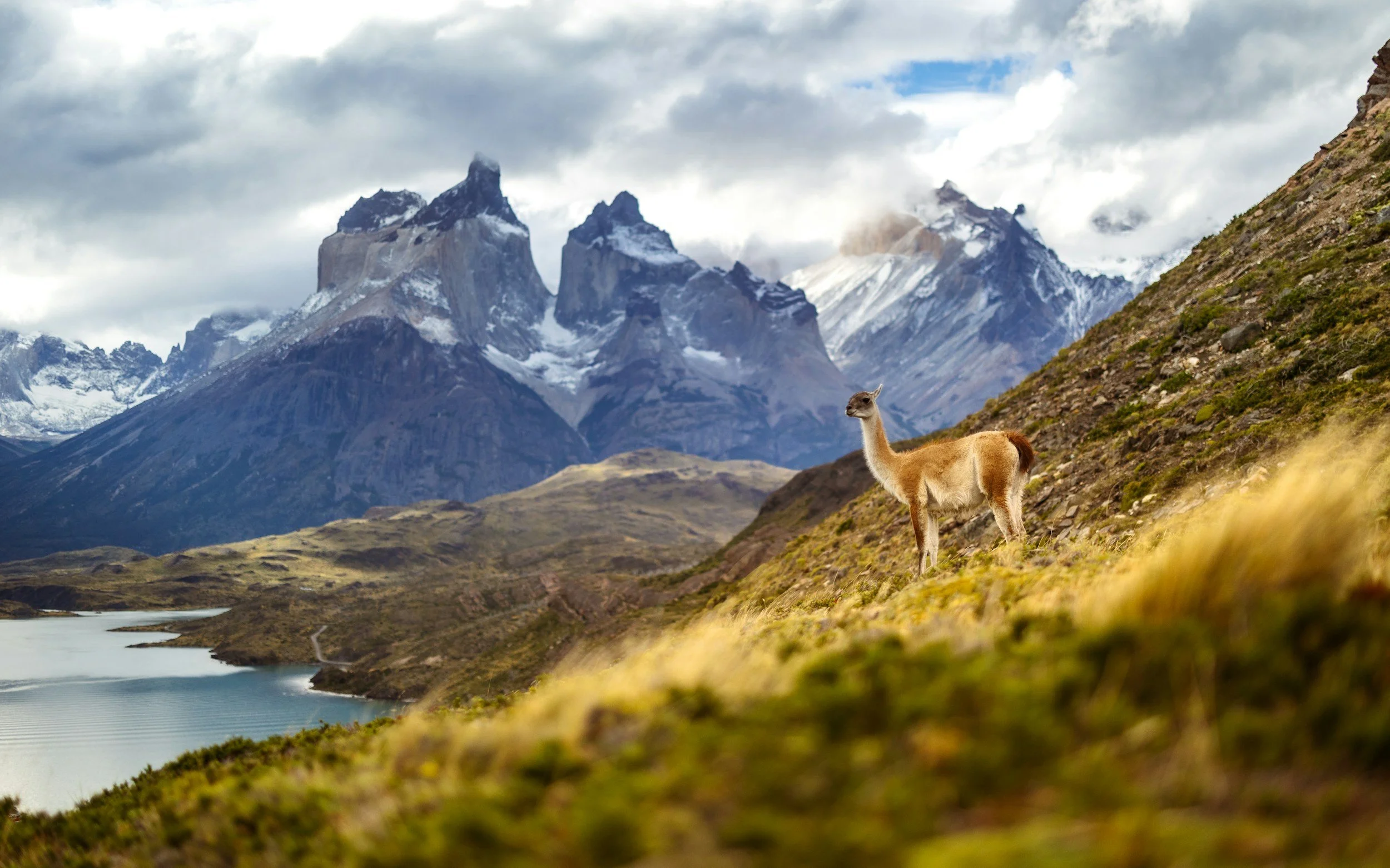
This is one of the few regions where the world of the puma intersects with ours in the open. Healthy populations of guanacos and hares — the prey that drives the pulse of this ecosystem — draw these cats into view. As we search the Andean steppe for signs of movement, the Cuernos del Paine rise in the distance, those unmistakeable horns of granite more than 6,000 feet above the plains and creating a view so incredible, it’s impossible to not feel both your own smallness set against the ancient mountains and the quiet, rising potential that only true awe can unlock.
This workshop is kept intentionally small, limited to just six photographers. Where many workshops rely on larger groups to cut costs, fewer people in the field means quieter tracking and approaches, getting closer without pressure, and the freedom to really work each sighting with the care it deserves — all of which translate into better opportunities and better images and a deeper connection to the wildlife we’re photographing.
On this 11-day expedition, we’ll walk quietly and reverently through two of the Earth’s wildest realms: the soaring peaks, glacial lakes, and open steppe of the Torres del Paine area, and the windswept, sea-salted coasts of Tierra del Fuego, where king penguins find home in the breath of the Southern Ocean.
Most puma tours in Patagonia stay inside Torres del Paine National Park, where regulations keep visitors on roads and designated trails. It’s an important system, but it also means there’s no true tracking, only scanning from the roadside and hoping a cat happens to be visible at distance.
This workshop is built on something far more intimate. We work on private land bordering the park, a place with highly limited permits and exclusive access. Here, we can move quietly on foot across open steppe and hillside, following the same terrain the pumas use, guided by signs, behavior, and experience rather than the constraints of a road. It’s the rare opportunity to practice real fieldcraft — to track, observe, and photograph these cats in a way simply not possible within the park itself.
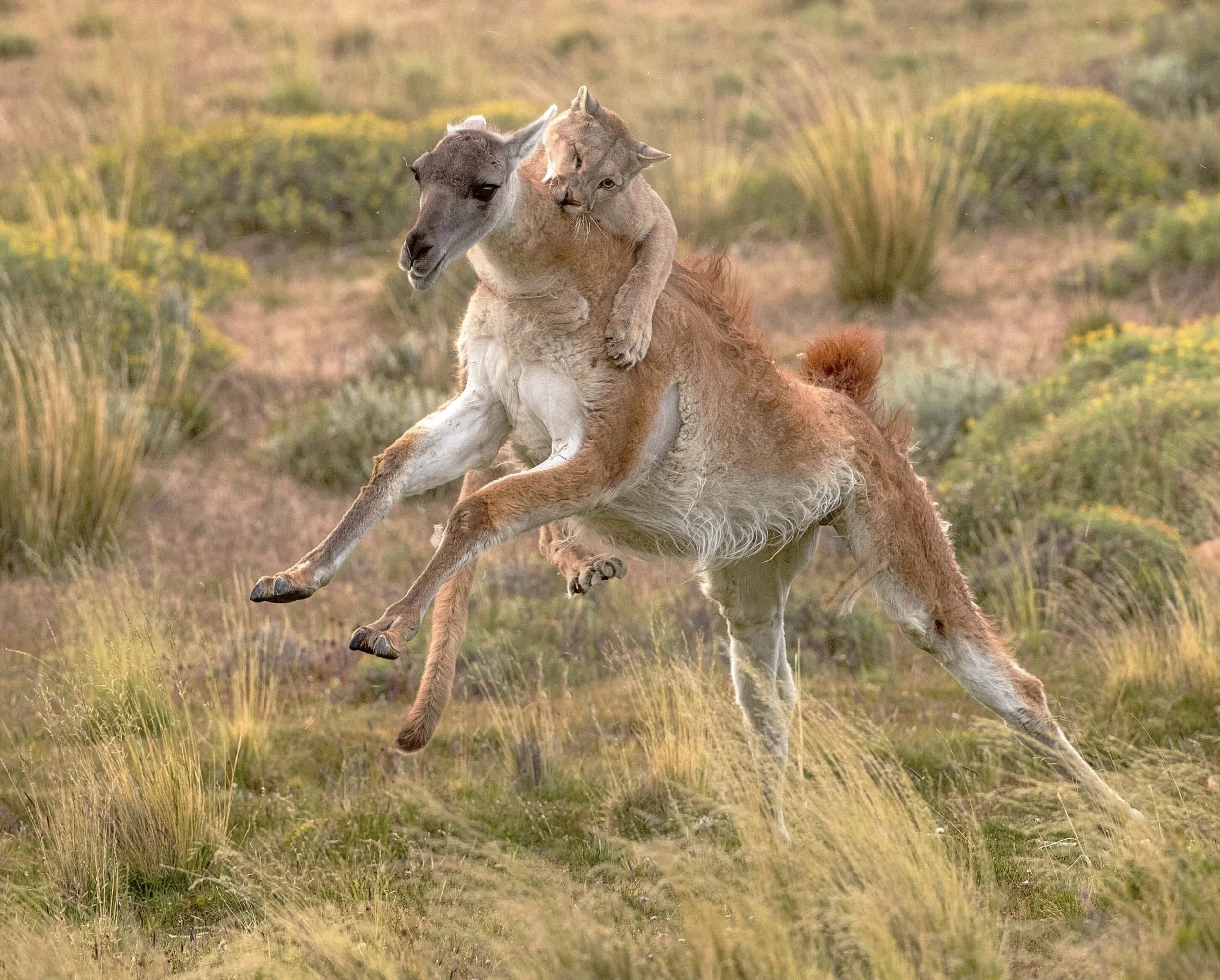
Searching for pumas in Patagonia is real wildlife photography in motion: less a chase and more a practice in observation and a patient attention to detail — a guanaco’s alarm call carried on the wind, a shift in the herd’s posture, the faint trace of fresh tracks pressed into dust. Dawn and dusk become their own kind of ceremony as the light thins across the steppe and every shape on the horizon begs for a second glance.
Hours can pass in silence, the kind that sharpens your senses rather than dulling them, until finally a form materializes from grass and stone that you didn’t see until you did. It’s a reminder that the puma allows itself to be seen, not the other way around — and in that moment, the vastness of Patagonia feels both humbling and electric, as if you’ve stepped briefly into the deeper rhythm of the place.
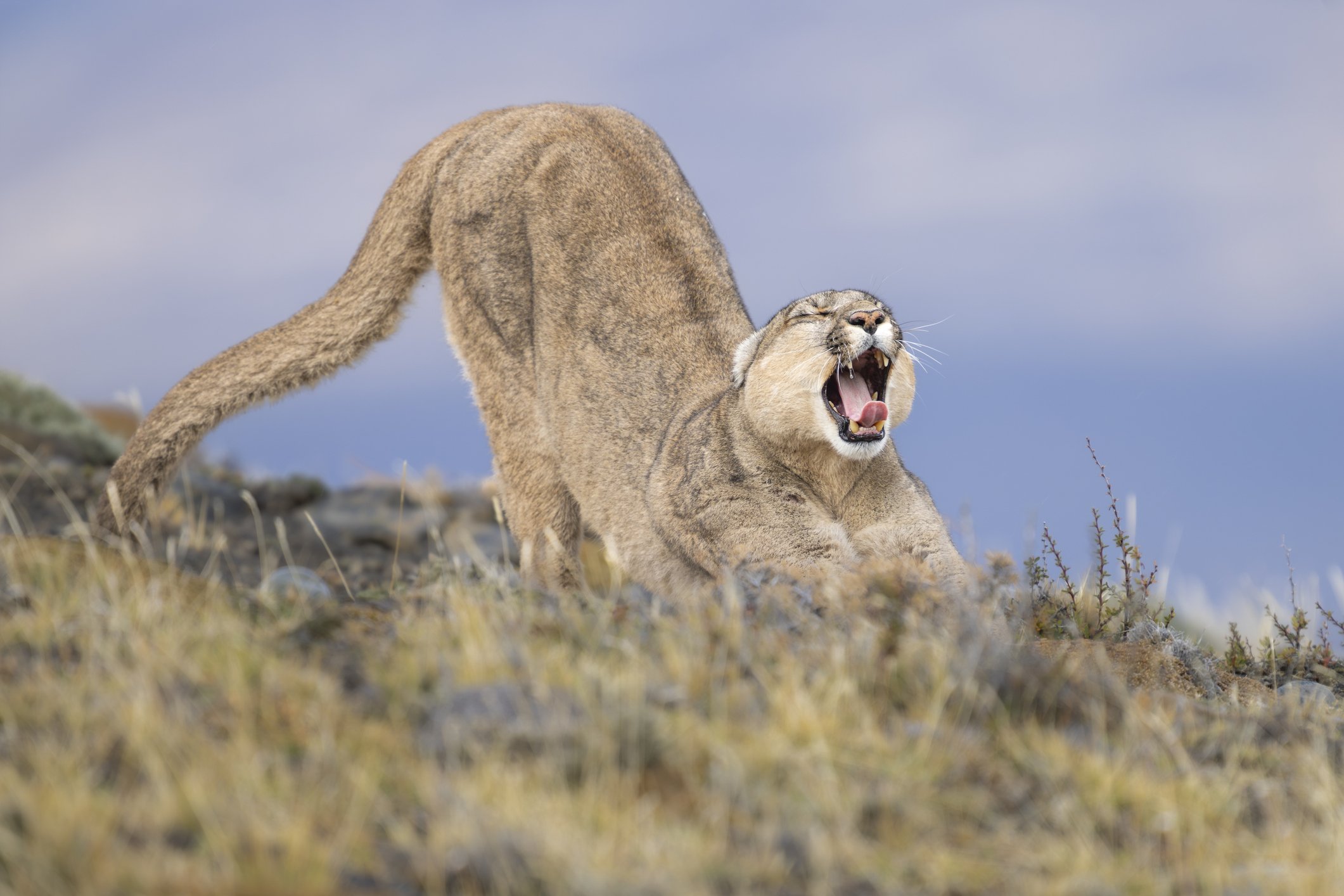
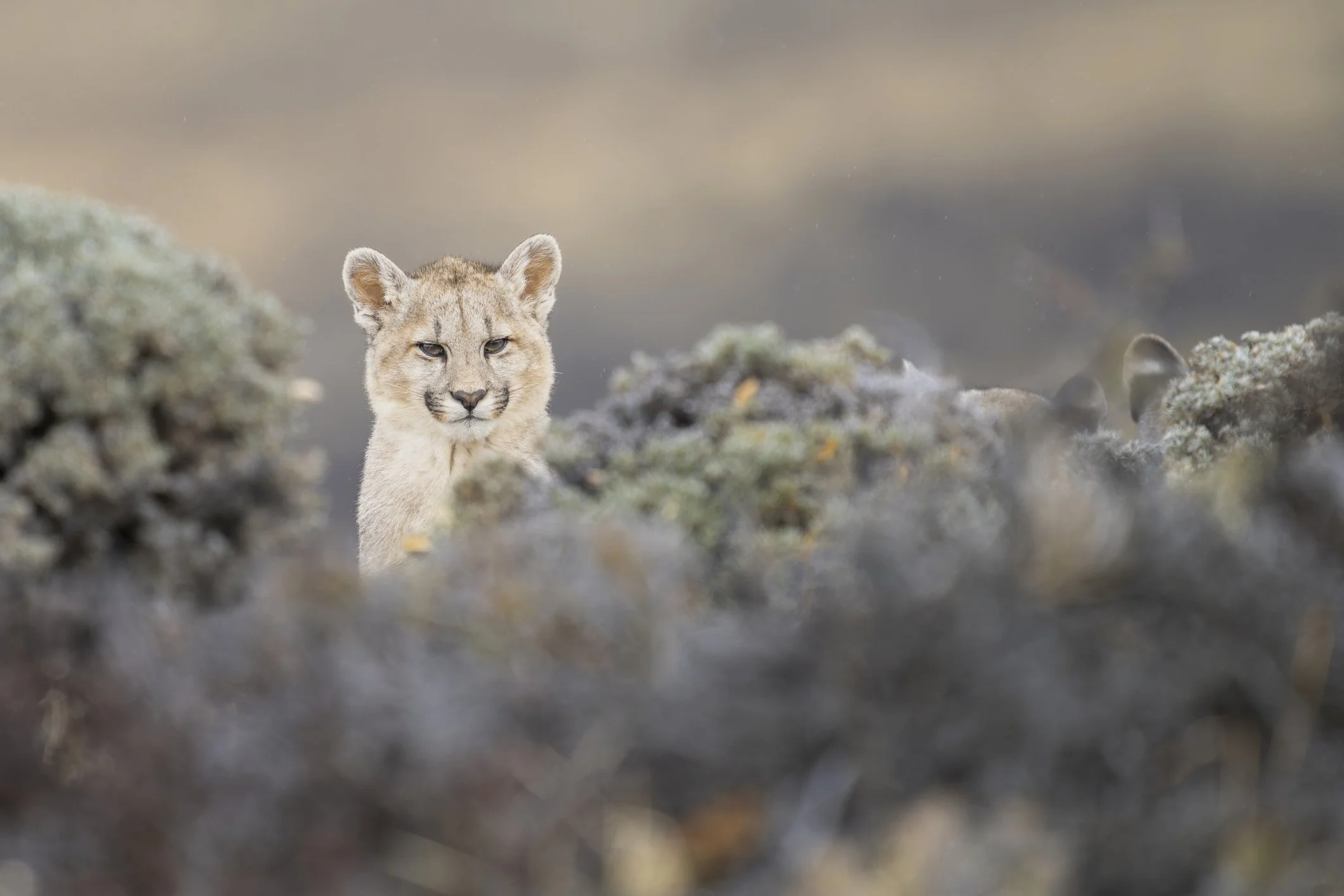
Then, of course, there is the moment everyone hopes for: a puma emerges from the tapestry of grass and stone. Muscular and built for the terrain they inhabit, these cats stretch nearly nine feet from nose to tail, built for the terrain of their kingdom. To witness one in their world, not behind glass or in a staged encounter, is to feel Patagonia in its truest form. It’s less a sighting and more an exchange. An unforgettable encounter with an animal and a landscape that still remembers how to be wild.
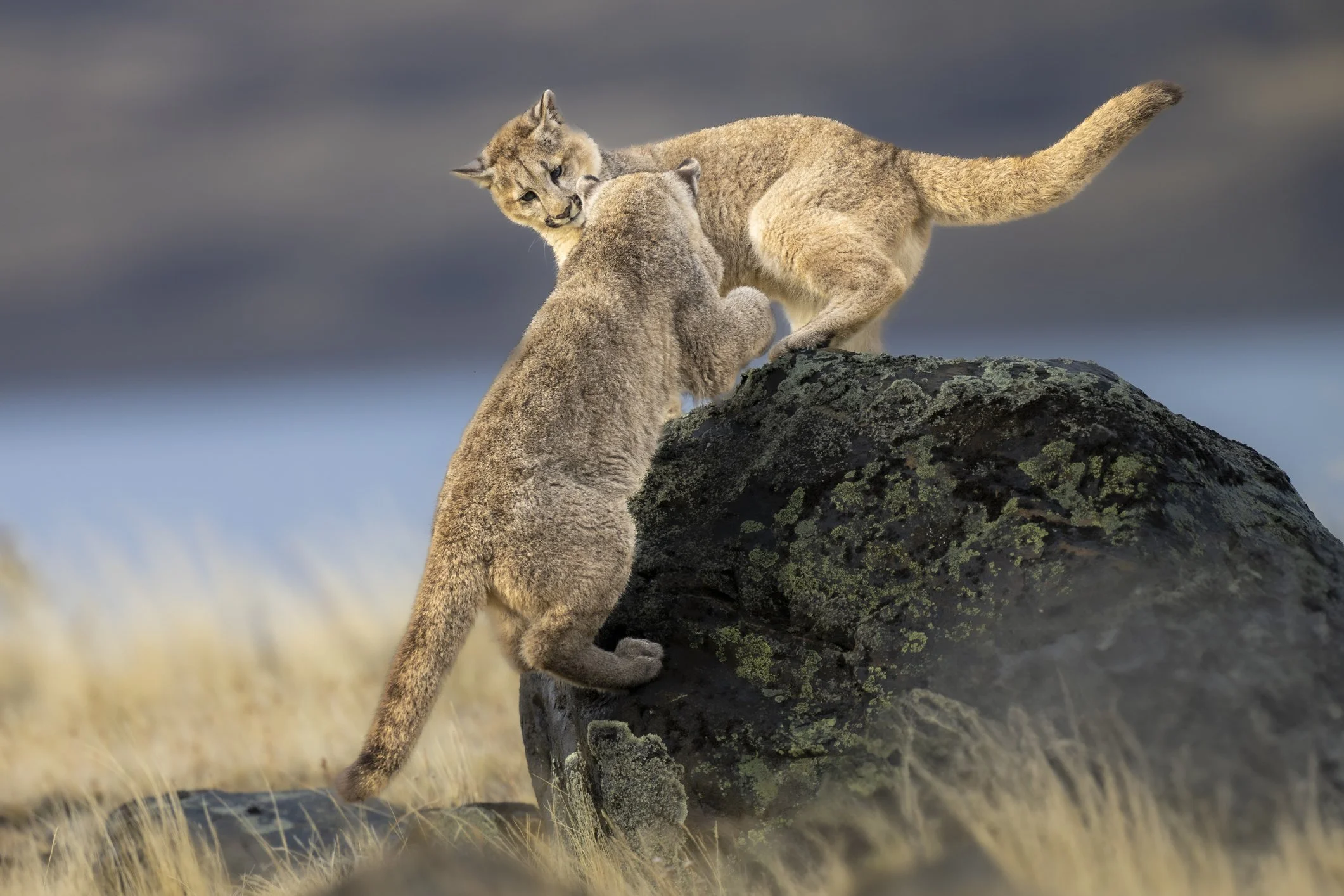
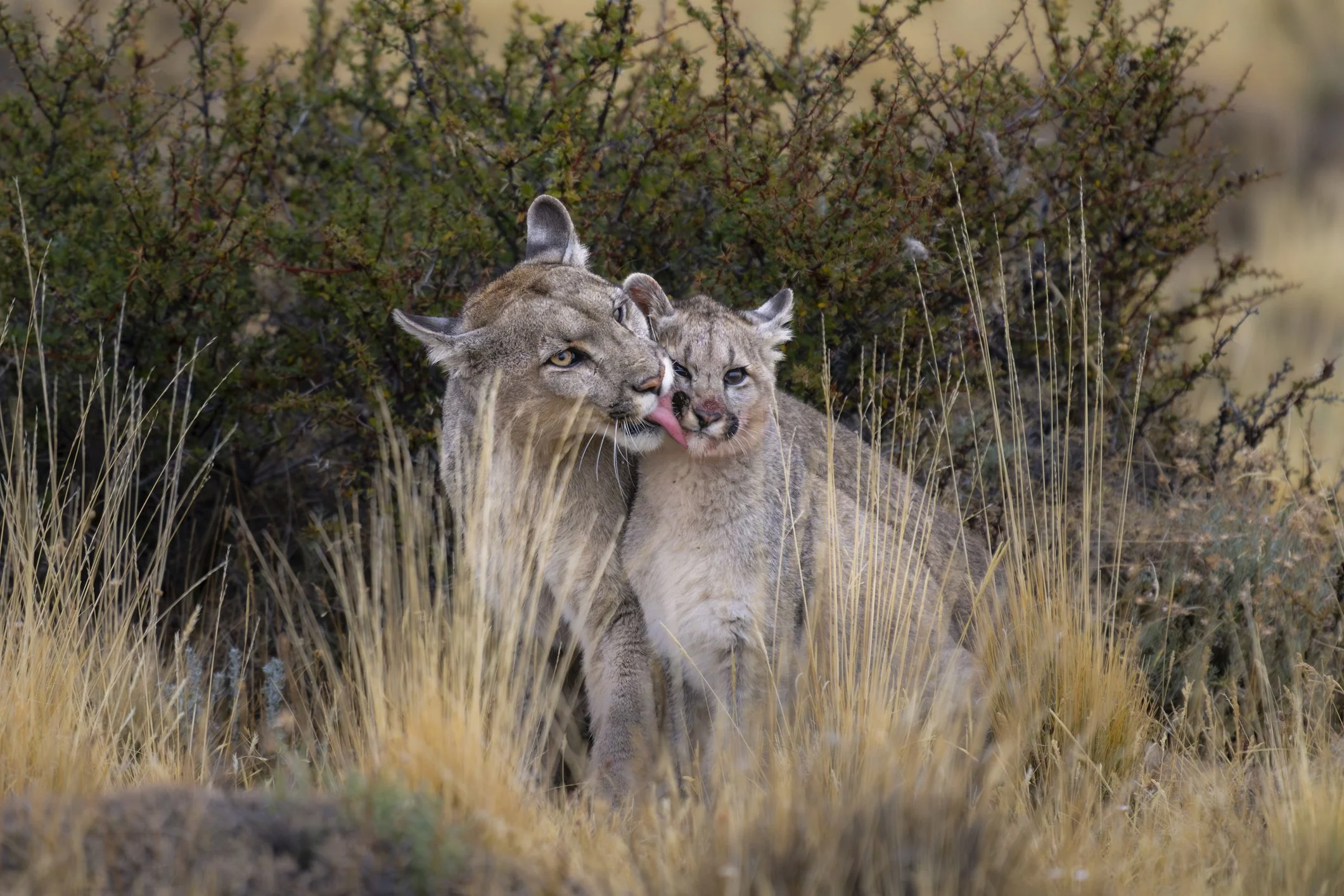
While the primary focus, this trip isn’t only about finding and photographing pumas. This trip is timed perfectly for when the Patagonian steppe comes alive with color and activity. Spring flowers surface across the steppe, and new life follows. Puma cubs emerge from hidden dens and curiously exploring their world with their mother, while the vulnerable young of their prey move unsteadily through the grass.
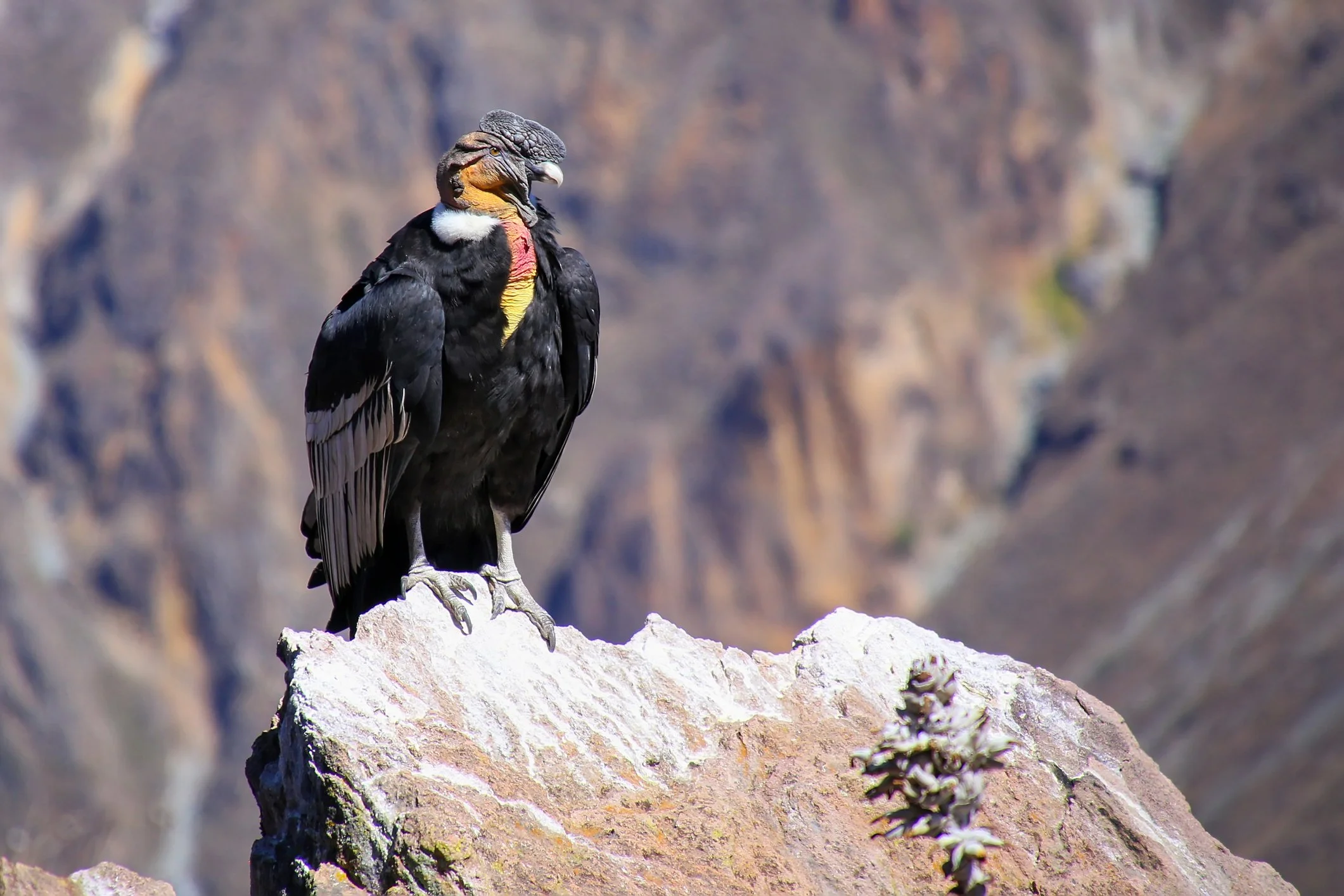
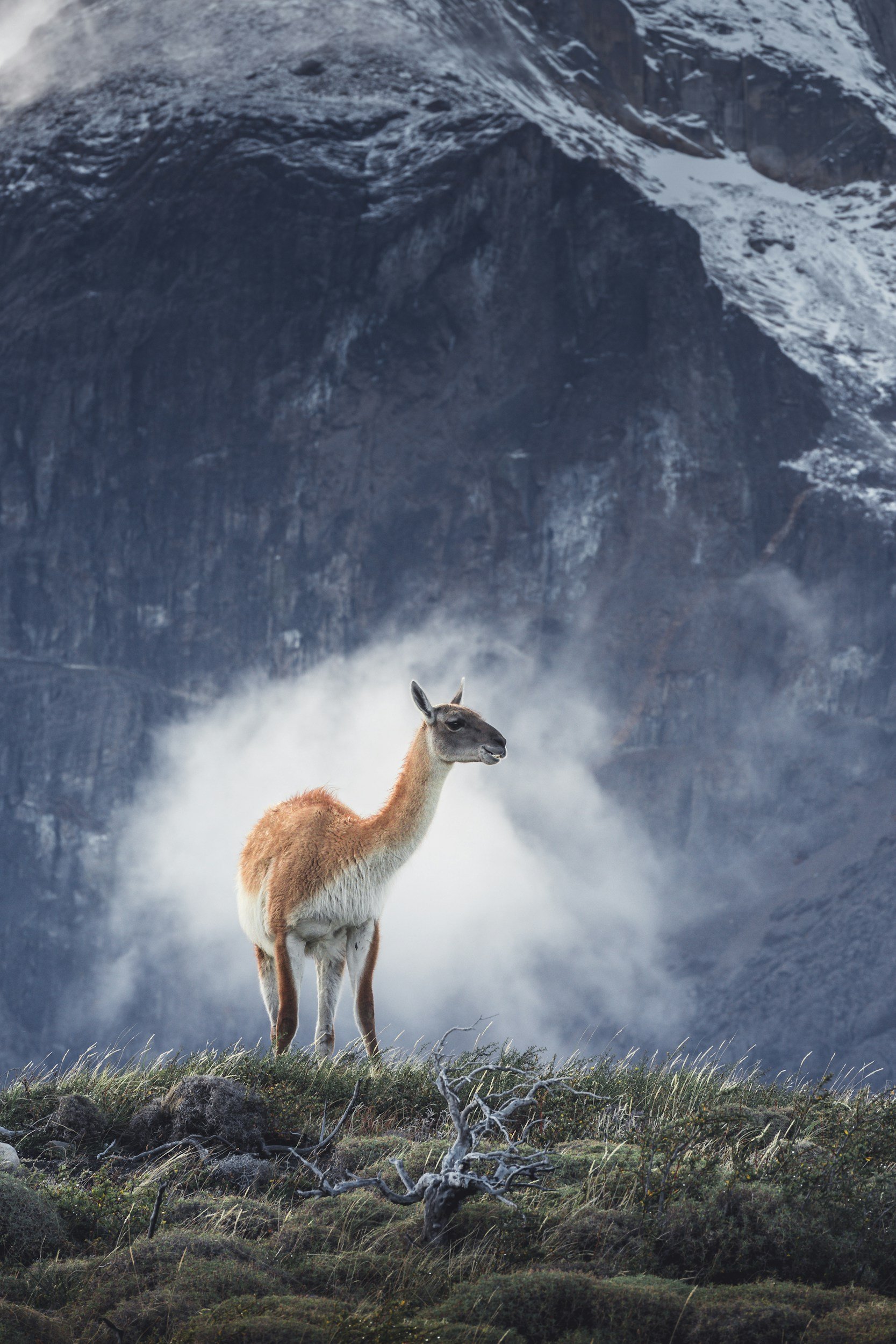
Andean condors riding thermals above us. Guanacos grazing on the wind-swept steppe. Grey foxes moving along their well-worn paths. Southern crested caracaras scanning for opportunity. Darwin’s rheas drifting through the grass like ghosts of the Pleistocene. Even the rare huemul deer sometimes steps quietly into view, a reminder of the fragility threaded through all of this beauty.
After days in the shadows of the Andes, we turn southward in search of a different kind of wildness, trading the quiet tension of the steppe for the salt and wind of Tierra del Fuego.
The road unspools across open country, where land seems to tilt gently toward the sea. We cross the strait by ferry, watching albatross and petrels arc in long, effortless lines above the water, and arrive on an island shaped by cold currents and relentless weather. It feels like the world is both narrowing and expanding at the same time. Fewer people, more sky, and a new rhythm driven not by predators on land, but by creatures who belong equally to sea and shore.
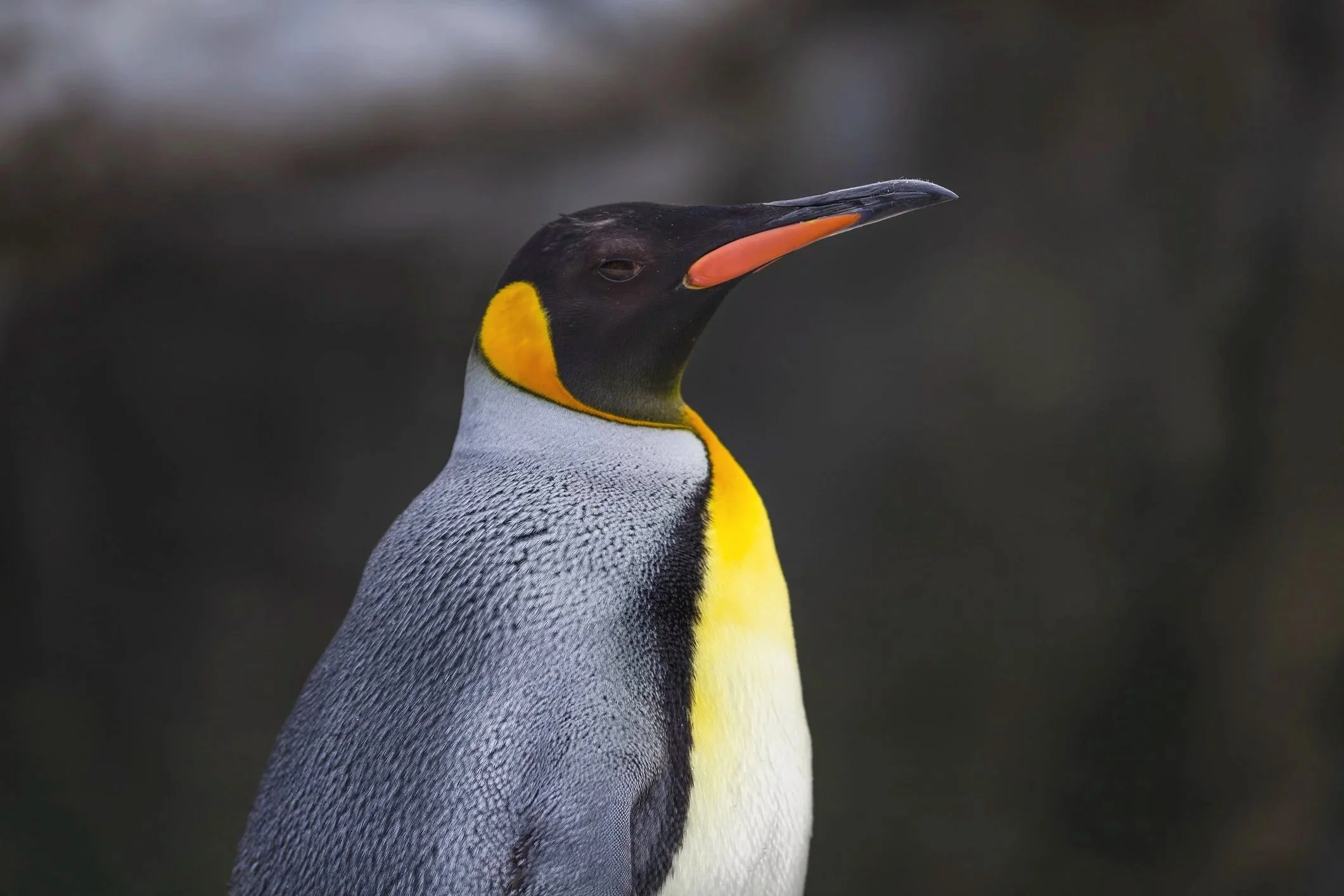
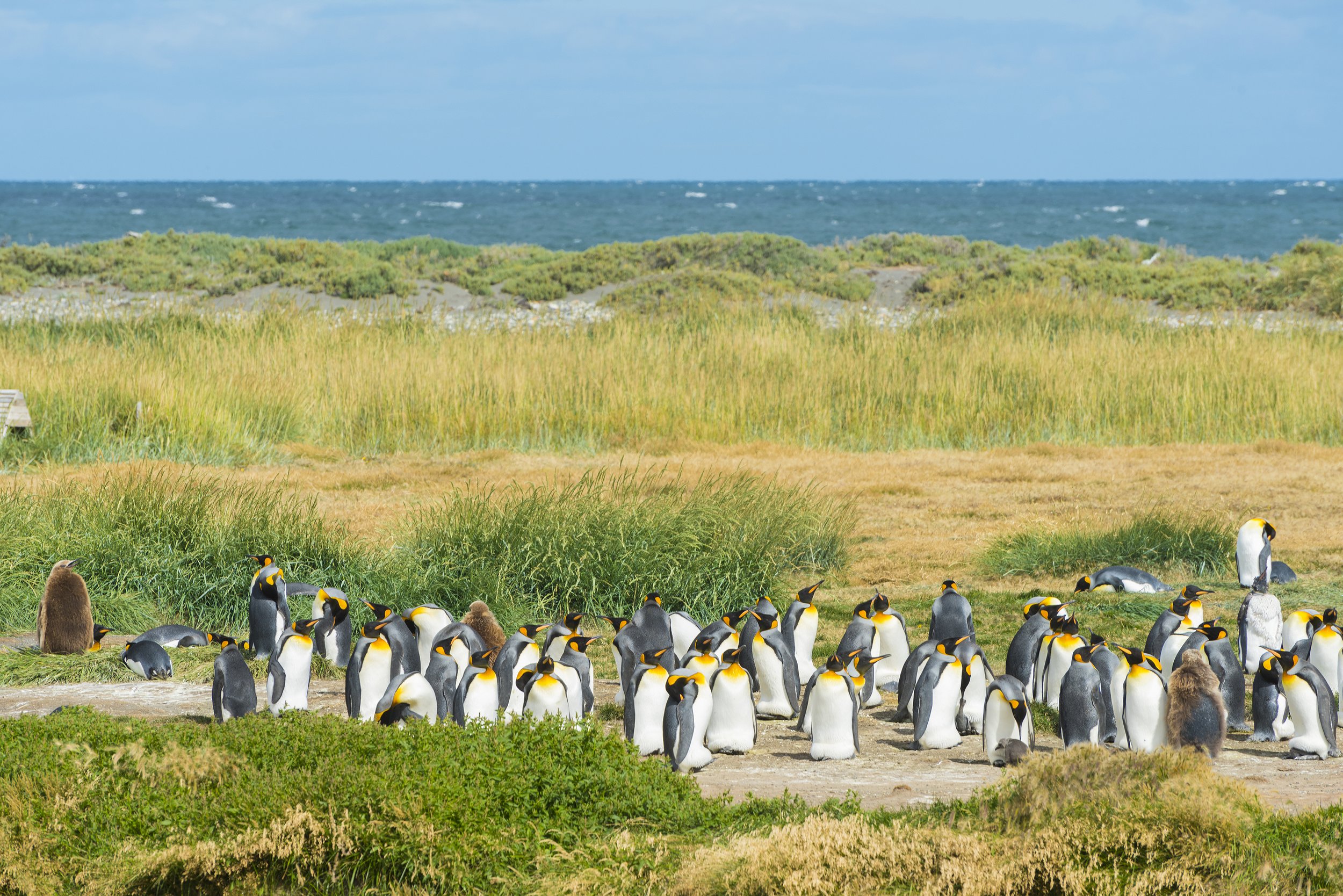
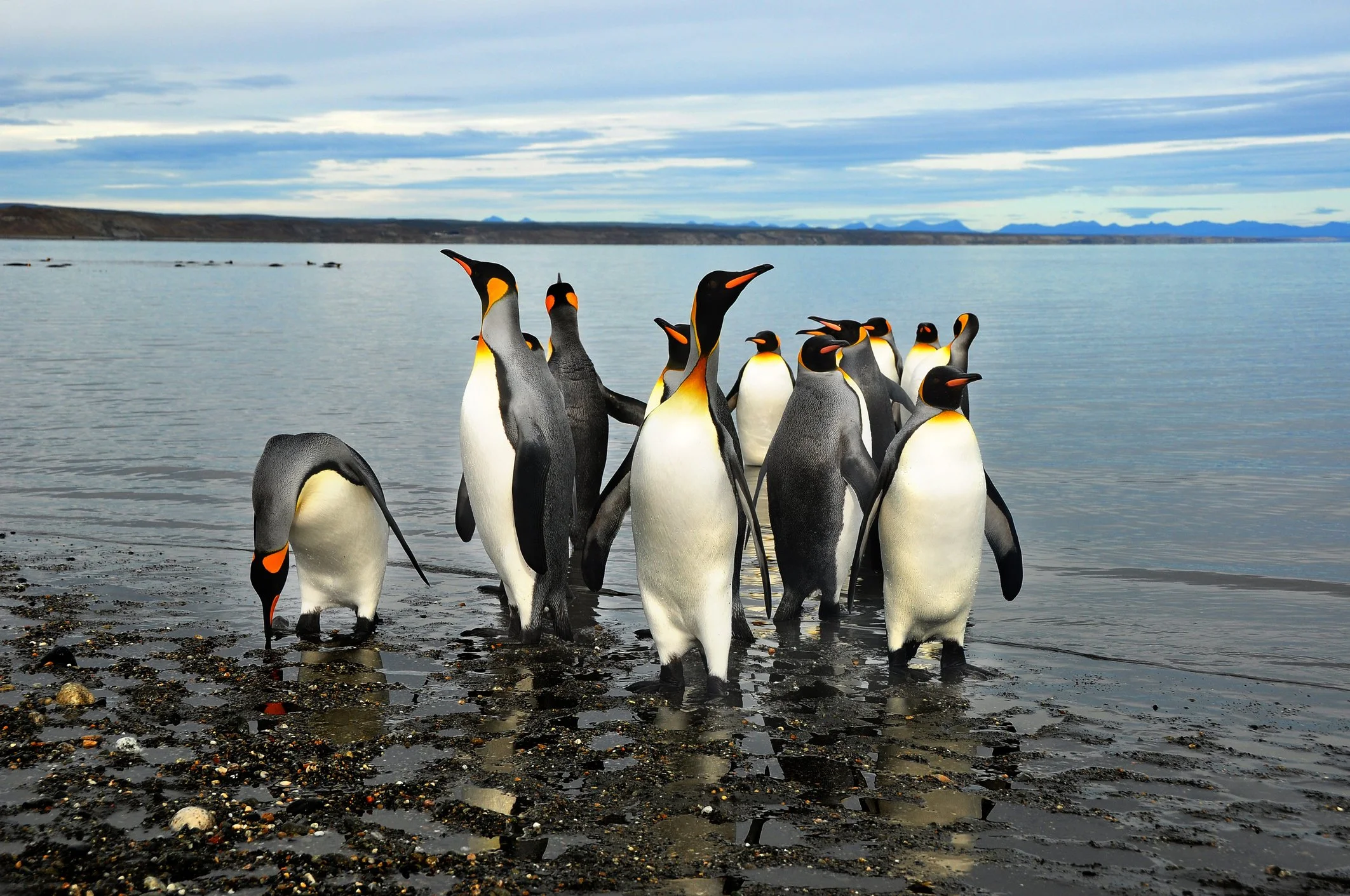
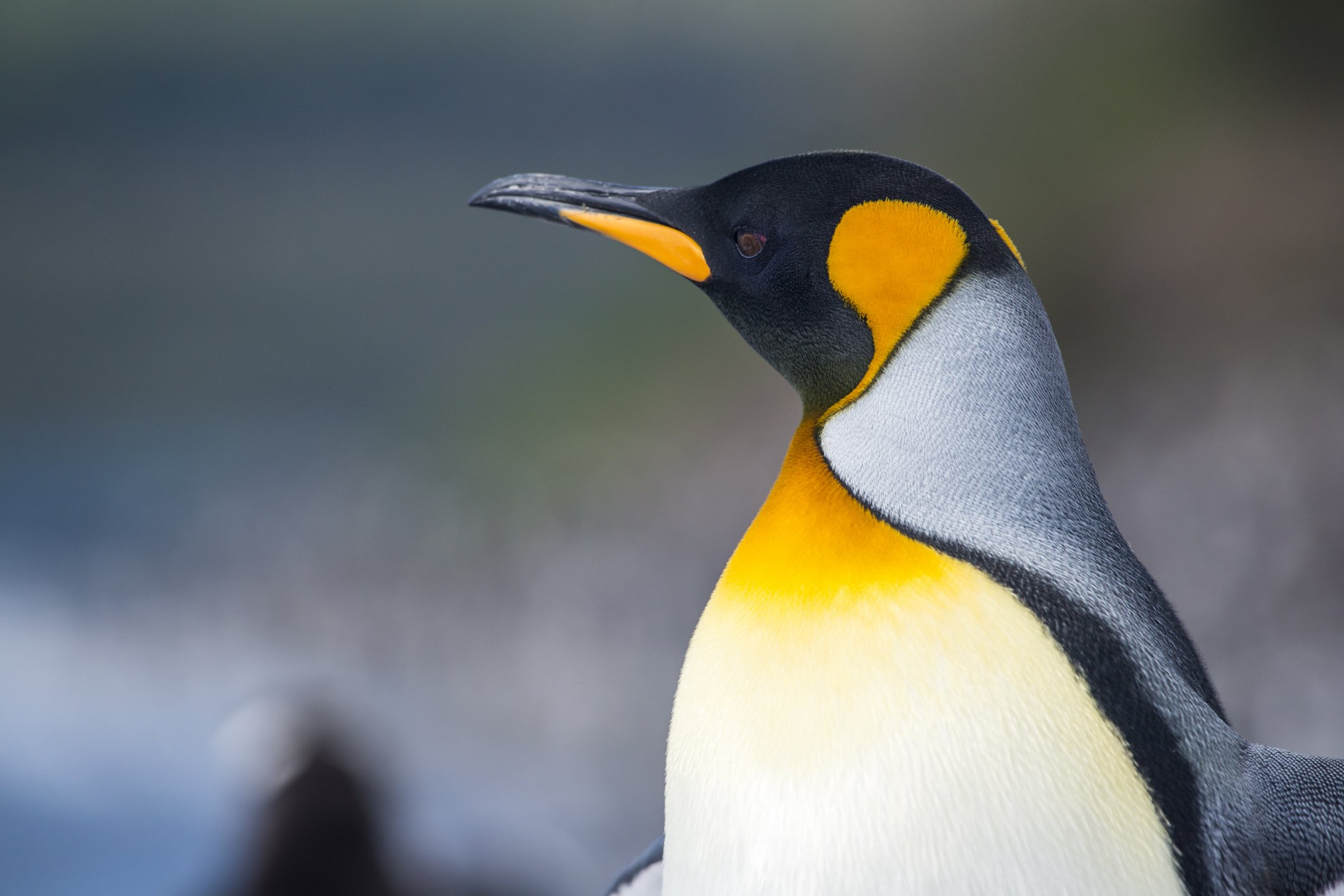
Here, in one of the southernmost king penguin colonies outside of Antarctica, the experience shifts from searching to simply witnessing. The birds gather in dense groups, their yellow-orange markings burning bright agains the muted palette of the southern coast. There is no hurry and no stealth required here, just patience, respect, and a willingness to stand still long enough for the colony’s quiet choreography to unfold. Parents calling for maters, partners trading duties, subadults lingering at the margins, unsure of their next move.
After the intensity of tracking pumas, photographing king penguins feels like stepping into another chapter of Patagonian history, one where the drama is gentler, the light is more forgiving, but the sense of awe is every bit as profound.
GENERAL INFORMATION
DEPOSIT: $5,000 | Three equal payments thereafter
GROUP SIZE: Limited to 6 photographers
SKILL LEVEL: Beginners to Advanced
INCLUDED IN PRICE:
Single-occupancy lodging (travel partners sharing a room save $500 each)
Meals, starting with dinner on day one through breakfast on day eleven
Private transportation throughout the workshop
Private estancia access
All local permits, taxes, and fees for entrance
NOT INCLUDED:
Transportation to/from Puerto Natales, Chile
Visa and related fees, if required
Lodging outside of the workshop dates (early arrival, later departure)
Travel insurance (highly recommended)
Medical evacuation insurance (required)
Items of a personal nature (e.g., laundry, souvenirs, etc.)
Incidentals incurred by participants at lodging
Alcoholic beverages
Gratuities for hotel/lodge staff, drivers, trackers, or our local naturalist guides
PHYSICAL DIFFICULTY:
Tracking pumas is an active pursuit. The terrain here is mostly rolling steppe — low scrub and long, sloping hills. But when a cat is on the move, we move with her. Some days this means a quiet, half-mile walk to a sighting. Other days, this can be a hike of two or three miles across uneven ground, always with our camera gear in hand. This land is not technical, but it is at elevation and parts of it are loose underfoot. Please read the FAQ below for a more detailed description of the physical requirements of this trip.
INSURANCE:
Due to the remote locations we will be working in, medical evacuation insurance is required for this workshop. General travel insurance is highly recommended, but not required.
We use and recommend Global Rescue for medical evacuation services. Unlike most companies, which require you to coordinate your way to care first and be reimbursed later, Global Rescue will deploy an evacuation team and get you to the medical care of your choice (i.e., not just the closest facility). No coordinating of care or filing claims needed.
Trip-only, short-term, and long-term policies are available. As a Global Rescue Safe Travel Partner, we are happy to initiate a quote on your behalf.
DATES:
SOLD OUT | October 29 - November 8, 2027 | $22,895
Join the waitlist here.

ITINERARY
Day 1: Puerto Natales to Cerro Casillo
We begin in Puerto Natales, the gateway to Chilean Patagonia. From our meeting place, we will travel to the heart of Torres del Paine, and settle into a carefully chosen lodge near Cerro Castillo. This small, picturesque community will be our home base as we embark on our unforgettable journey into one of the most breathtaking landscapes in the world.
Days 2 - 6: Private Estancia near Torres Del Paine National Park
Each dawn and dusk, when the light lifts and falls across the steppe and the pumas begin moving toward guanaco herds, we set out in private 4×4 vehicles with our tracking team. This region holds one of the highest concentrations of wild pumas anywhere in the world, and our work takes place on a private estancia bordering Torres del Paine national Park — an expanse of land where true tracking is still possible and where the rhythms of predator and prey play out far from the roadside crowds inside the national park.
Pumas are most active before sunrise and again in the late afternoon, and our days follow that natural cadence. We typically head out twice a day, returning to the lodge for rest and meals, adjusting the schedule as needed to match light, weather, and the cats themselves. Our trackers stay in constant radio contact across the property, reading behavior, herd movements, and terrain so we can move directly toward real-time activity rather than searching blindly. Visiting during this season also means a higher likelihood of encountering puma cubs, moments that require patience, distance, and a deep respect for the cats’ comfort and safety.
We’re not just looking for pumas as we move across the estancia and past the northern shores of Sarmiento Lake, the open plains near Laguna Amarga and Laguna Azul, and the rolling country that stitches them together. Guanacos thread the landscape in loose herds; Andean condors rise on late-morning thermals; foxes, caracaras, rheas, and an array of birdlife drift in and out of view. Our location in southern Chile means dawn comes later than you might expect, giving us a gentler entry into the day before the work of tracking begins.
Throughout these days, we’ll practice an ethic of quiet observing: watching from a respectful distance with binoculars, reading the cats’ behavior, and allowing them to choose how visible they wish to be. It’s a rare opportunity to see these animals not as spectacles, but as part of a living system, one that is recovering from decades of conflict with ranchers. Our presence here is intentional and careful, shaped by the belief that witnessing comes with responsibility and that the best wildlife photography opportunities are driven by a deep understanding of ethology (behavior), biology, and ecology.
By the time we return each evening, the steppe will feel a little more familiar, and you’ll begin to understand why Patagonia remains one of the last places where a puma can still be a puma.
Day 7: TORRES DEL PAINE NATIONAL PARK
Today we step away from tracking and give the landscape its own place to shine. While not a landscape-focused workshop, Torres del Paine is a place where the geology simply cannot be ignored, and we’ll visit some of the most iconic locations in the park. We’ll start at Salto Grande waterfall, framed by the Cuernos del Paine, then continue to Laguna Amarga, a quiet lagoon with one of the best views of the Torres themselves. Then onto Lake Grey and Grey Glacier, with pauses for wildlife photography and other opportunities as they present.
Today is the day that makes you understand why this landscape has drawn travelers, scientists, and storytellers for generations.
Day 8: Cerro Castillo - Tierra del Fuego
From the steppe we travel across the vast Patagonian steppe toward Punta Delgada. The route unfolds through open landscapes, quiet estancias, and wide horizons. We’ll enjoy lunch at a traditional spot that reflects the rustic charm of the region before arriving at the strait. From here, a ferry will take us to the legendary island of Tierra del Fuego where we’ll check into our lodging and enjoy dinner at the hotel.
Days 9 and 10: Tierra del Fuego
These days are devoted to time with one of the most striking residents of Tierra del Fuego: the king penguin. With their bright orange ear patches and upright stance, they carry a quiet dignity and charm that is impossible not to love. The second-largest penguin on the planet, this colony is one of the few places outside of Antarctica where you can observe them at meaningful proximity. It’s a rare chance to watch their world unfold without hurry.
Both days we will venture out to the colony after breakfast, joined by a specialist who will interpret the behavior, vocalizations, and social dynamics for our group. We’ll return to our lodge mid-day for lunch, then head back out in the afternoon and continue to photograph these incredible creatures in the afternoon light.
Day 11: Tierra Del Fuego to Punta Arenas
After breakfast, our ferry will usher us from Tierra del Fuego to Punta Delgada. Then we’ll board our van for one final drive across the Patagonian steppe toward Punta Arenas. Here, we’ll all say our goodbyes and continue our journey home or to whatever your next destination may be.
We do our best to adhere as closely as possible to the planned itinerary, but it is subject to change due to requirements from our vendors and travel partners, force majeure, safety, and other unforeseen circumstances.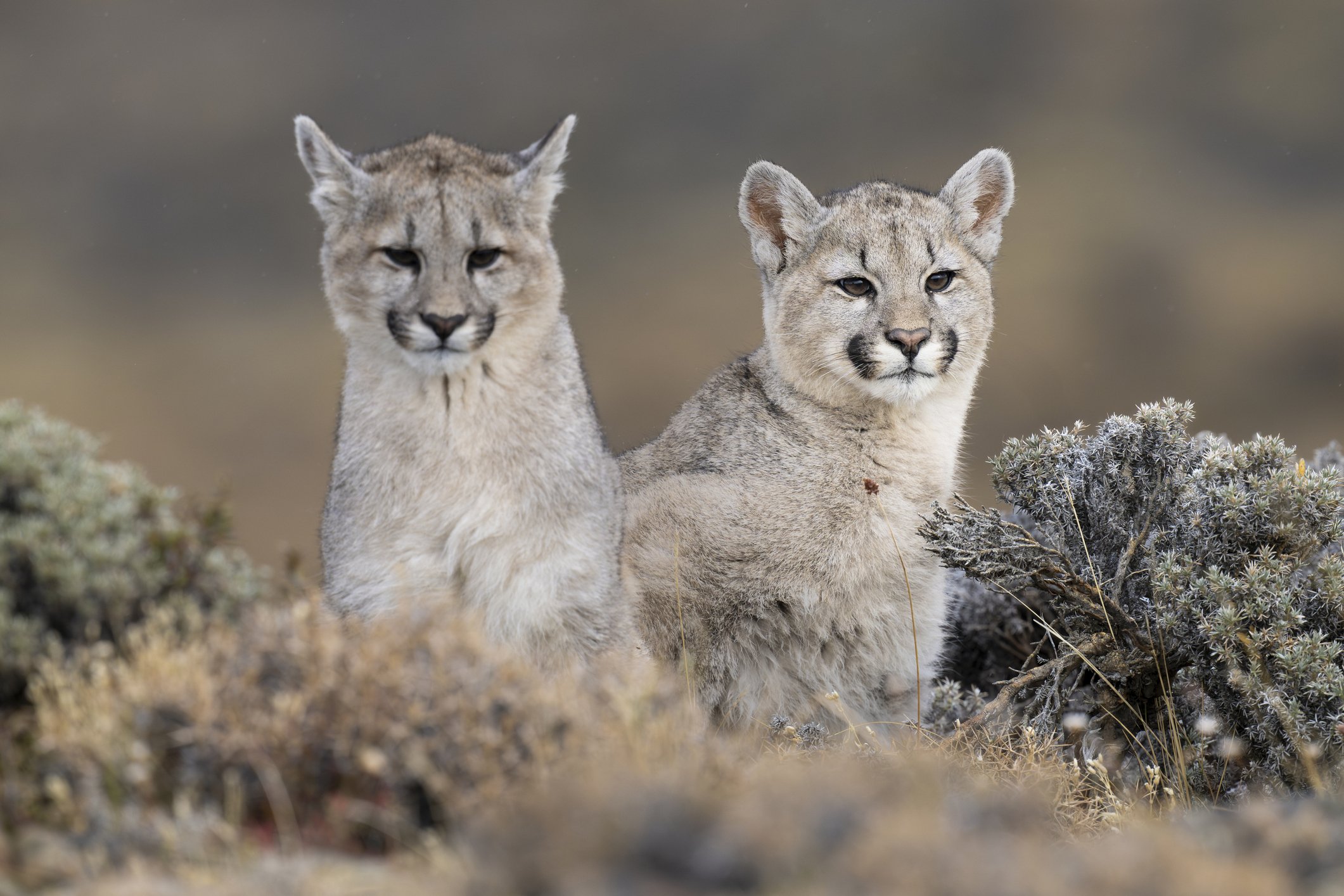
What to expect
Patagonia doesn’t stay still. Glaciers retreat, weather shifts, coastlines thread and unravel, and wildlife moves in quiet response. This expedition offers a chance to see, with your own eyes, the fragile grandeur of the southern wildlands. We will bear witness to apex predators and fragile colonies, mountains that were once ancient seabeds rising to the clouds, and coasts that have been shaped by wind, stone, and salt.
What makes this workshop different from others is the kind of access and the kind of fieldcraft it makes possible. Our puma tracking is on private, limited-access land bordering Torres del Paine. Only a handful of permits are issued here, and our small group of photographers will work the terrain without the crowds or roadside attractions of the national park.
Out here, we follow the natural movement of the cats, reading the alarm calls of the guanacos, scanning ridge lines, and learn to interpret the subtle shifts that hint at emerging behavior. It’s immersive, deliberate work rooted in the skill of moving quietly across a landscape and really working the opportunities that present themselves.
With only six photographers, plus Annalise and her local guiding partner, there is room to work and room to breathe. While limiting the group size means the trip has a higher price tag, it also means photographers will not be jockeying for position at a sighting or trying to frame a composition around competing lenses. Instead, we have the freedom to respectfully follow a cat as she climbs a rise or slips through the grass and to craft images that feel personal. This intimacy is rare in wildlife photography workshops, and your patience, proximity, and dedication to fieldcraft will show in the photographs you bring home.
The team is comprised of naturalists, conservationists, and local trackers who have worked with everyone from the BBC to National Geographic. Their experience in the field, their deep familiarity with these animals, and their commitment to ethical wildlife photography add depth and context to everything we do. As always, I work with as many locals as possible to make sure our economic impact stays within the communities we visit.
Throughout the trip, we stay in the region’s best accommodations. They are comfortable, welcoming places chosen not only for their proximity to the wildlife, but for the way they anchor us in the landscape.
Though sunrise isn’t quite as early due to the location, expect long days tuned to light: dawn lifting slowly over the steppe, dusk lingering in a soft, extended glow. We are not tethered to the vehicles. Expect to walk, sometimes a quarter mile, sometimes more, as we shadow pumas across the rolling country. Expect some times of waiting while we observe pumas at a distance and read their behavior to help anticipate their next move and ours.
In Tierra del Fuego, the rhythm shifts to the new landscape, but it’s a nice ease into the end of our trip. We’ll still have plenty of photography, but without the intensity of tracking. We’ll have several outings to this colony, where we can be ground-level with the penguins, who typically stay 50-150 feet or closer to us. This is one of the only places outside Antarctica where these birds can be photographed at this proximity. Again, the small group size allows for time and space to work, observe, and await for the subtle behaviors that make an image come alive.
Above all, expect to create images that extraordinarily difficult to make anywhere else. Not because the wildlife is elusive, but because the access is real, my approach is thoughtful, and the entire journey is rooted in respect for the land and the creatures who call this place home. This is photography shaped by exclusivity and a landscape that has spent millions of years embracing what it is to be wild.
FAQs
-
Once you let us know that you are ready to book, we’ll send you our registration paperwork along with an invoice for your deposit. When the paperwork is complete and the deposit has been paid, you are officially registered!
While you’re waiting for your departure time to arrive, you’ll receive my detailed workshop guide, featuring a more detailed itinerary, gear recommendations, clothing recommendations, a packing list, and more.
About three months before your departure, we’ll have a group Zoom meeting. You’ll have a chance to meet everyone traveling with you, and we’ll go over logistics and make sure everyone has all of their questions answered.
-
Every day in the field is different, which makes it impossible to predict exactly how much hiking each sighting will require. Tracking pumas is an active pursuit. The terrain here is mostly rolling steppe — low scrub and long, sloping hills. But when a cat is on the move, we move with her.
Some days this means a quiet, half-mile walk to a sighting. Other days, this can be a hike of two or three miles across uneven ground, always with our camera gear in hand. This land is not technical, but it is at elevation and parts of it are loose underfoot.
What I can promise is that virtually none of our photography will happen from the vehicle. To see and photograph these cats respectfully, we need to be on foot — and ready to move quickly when an opportunity presents itself. This is especially true if we’re fortunate enough to walk with a puma as it travels. When that happens, the pace can be brisk, and keeping up matters. If you fall behind, you risk trading moments of profound connection for a collection of tail shots.Carrying big lenses for several kilometers over the course of a week adds up, and it requires a solid level of fitness. On occasion, our guide may recommend leaving heavier lenses behind in favor of a lighter zoom to match the terrain and the pace. Knowing your limits — and being honest about them — will make your experience far more rewarding.
If you have any concerns about the physical requirements of this workshop, please reach out before booking. I want every participant to feel confident, capable, and prepared for the kind of fieldwork that makes this trip so extraordinary.
-
Single-occupancy lodging is already included in the price of this workshop. It’s my experience that most photographers prefer their own room, so all of my workshops are built around single occupancy whenever possible. If you are traveling with a spouse, partner, or friend and would like to share a room, I will gladly extend a discount for double occupancy.
-
This workshop is priced higher for several reasons. First, it already has single-occupancy lodging built into the price. The king penguin portion of the trip is also built into the price, whereas most companies, if they offer it at all, offer it only as an add-on to the trip.
But the biggest difference between my itinerary and others is that it offers access and opportunities that standard tours simply can’t match. We track pumas on private, limited-permit land where true on-foot fieldcraft is possible, not roadside viewing inside the national park. Most puma tours in Patagonia stay inside Torres del Paine National Park, where regulations keep visitors on roads and designated trails. It’s an important system, but it also means there’s no true tracking, only scanning from the roadside and hoping a cat happens to be visible at distance.
The group is capped at just six photographers, ensuring unobstructed photography for everyone, quieter approaches, and far more meaningful time at each encounter. We stay in the best accommodations in the region, chosen for comfort and proximity to wildlife, and we work with highly experienced trackers and naturalists who’ve guided BBC, National Geographic, and major scientific teams. The cost reflects the quality, exclusivity, and depth of the experience.
This workshop is built around something far more intimate. It’s the rare opportunity to practice real fieldcraft and track, observe, and photograph these cats in a way simply not possible within the park itself.
-
The Explorer Editions are special, small-group photography adventures that offer early access to locations I’ve carefully researched but haven’t yet led as a fully-developed workshop. These immersive trips include everything you’d expect from one of my workshops: plenty of wildlife photography, in-the-field instruction, and creative guidance, but with the added experience of seeing how I scout new destinations, solve real-time challenges, and shape future trips from the ground up.
If you’re curious, flexible, and love the idea of getting in early, this is your invitation. You’ll explore wild, visually rich places before they appear on my main workshop calendar, and you’ll do so at a lower cost than standard workshops —while still receiving the full benefit of traveling and learning alongside me.
-
IAfter you register, you’ll receive a comprehensive workshop guide with a detailed section that outlines everything you’ll want for photographing both pumas and penguins in these environments. But in general, plan to bring the tools that allow you to work both ends of Patagonia’s spectrum: intimate wildlife encounters and sweeping, elemental landscapes.
For puma photography, a long lens is essential. Something in the 500–600mm range gives you the reach needed to work comfortably from a distance. Many photographers also bring a teleconverter to extend their range without sacrificing flexibility and without the added weight of another long lens. A mid-range zoom is useful for environmental portraits, guanacos, condors, and wider behavior scenes.
Patagonia’s landscapes deserve attention too, so pack a wide-angle lens for the towering peaks, glacial lakes, and open steppe we’ll move through each day. Tripods are optional and depend on your shooting style, but a sturdy, lightweight support can be helpful for pre-dawn or low-light conditions.
The comprehensive guide you’ll receive after booking will cover everything from cameras and lenses to weather, clothing layers to pack, and everything in between.
-
Non-photographers are always welcome on my workshops. The price for every participant is the same, whether or not they are a photographer.
-
We understand that cancelling a long-anticipated trip is disappointing. But we, too, plan far ahead before each departure and continuously send non-refundable payments to hotels, other suppliers, and travel partners. Therefore, we must strictly adhere to the cancellation and refund policy. We strongly suggest that you purchase travel insurance in the event that your travel plans change or you need to cancel your trip. The following are the terms of our cancellation and trip change policy:
Cancellation & Refund Policy:
• Deposits are non-refundable after a 10-day grace period.
• If you cancel within the grace period, we will refund your deposit to the original form of payment, minus a $250 administrative fee and any payment processing fees incurred.
• After the grace period, no refunds will be issued unless we can fill your spot. If we can fill your spot, we will issue a refund minus a $250 administrative fee and any payment processing fees incurred.
Final Payment Deadlines:
• U.S.-based workshops: Final balance is due 90 days before the start date.
• International workshops: Final balance is due 120 days before the start date.
By booking, you acknowledge and accept these terms. If you have any questions, we’re happy to help clarify.
-
Patagonia is spectacular, but it’s also remote. We’ll be working in areas where professional medical care may be many hours away, and weather or terrain can delay access even further. In the rare event of an injury, illness, or unexpected emergency, medical evacuation insurance ensures you can be transported quickly and safely to an appropriate medical facility. It protects both you and the group, allowing us to operate responsibly in a landscape where self-sufficiency isn’t optional.
As a certified Wilderness First Responder (via Solo), your safety on my workshops is of the utmost importance. I’ve travelled to 40 countries in my lifetime thus far, and I pay for and strongly recommend a Global Rescue membership, because they specialize in exactly the kind of environments in which wildlife photographers work. Their medical evacuation and field rescue services are built for remote regions and their teams have real experience with wilderness incidents, international logistics, and the complicated handoffs that can occur far from major hospitals.
Their biggest benefit, in my opinion, is that your evacuation and coordination of care is included in the price. No claims to file and no waiting for reimbursement after the fact. Global Rescue will transport you to a hospital of your choosing, not just the nearest hospital, as well.
It’s the provider I trust with my own safety, and the only one I recommend and endorse outright, and I am proud to be a Global Rescue Safe Travel partner. Please let me know if you would like additional information as you compare your options.