Ecology of Awe: The Wild Wonders of Brazil
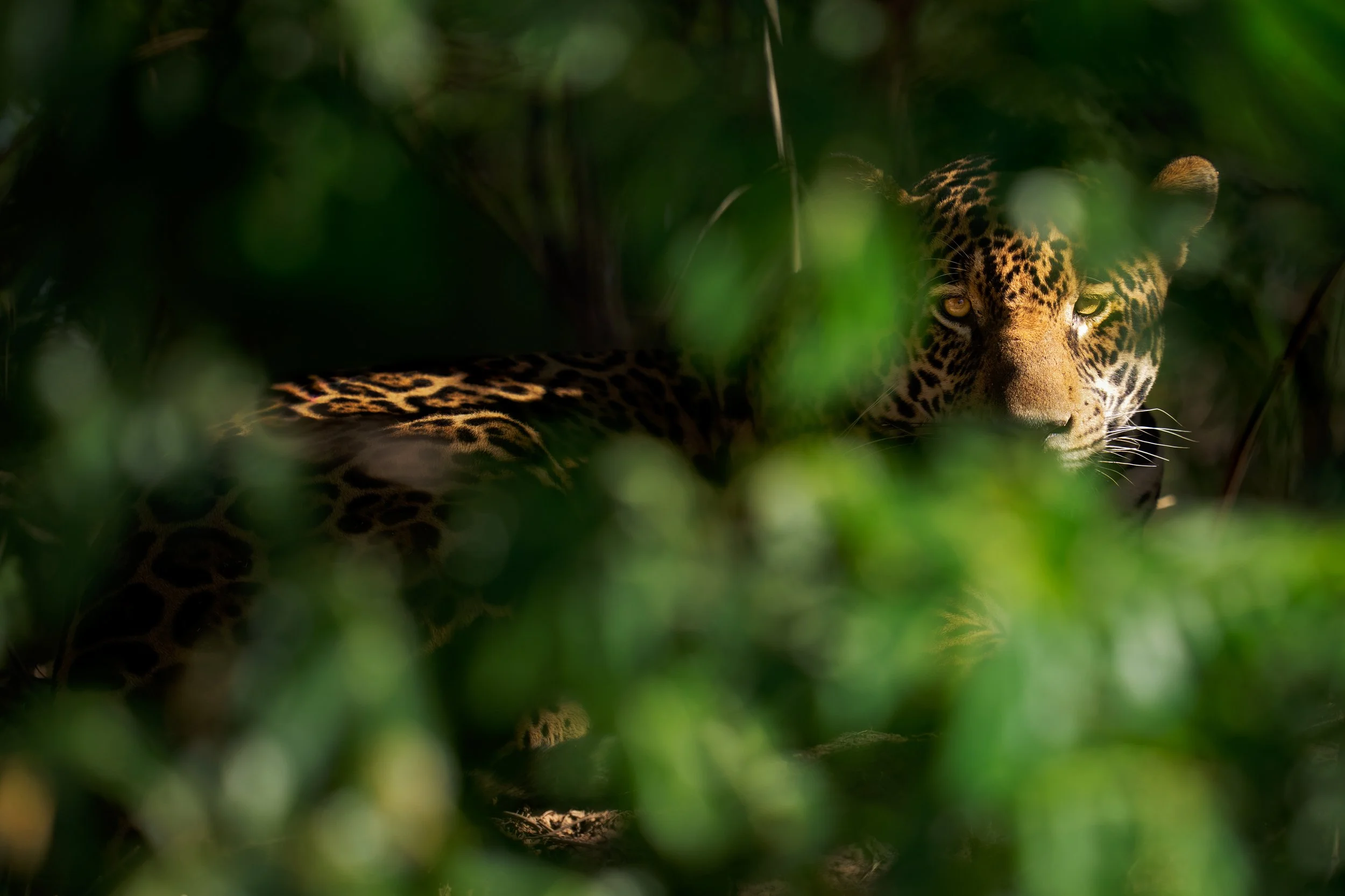
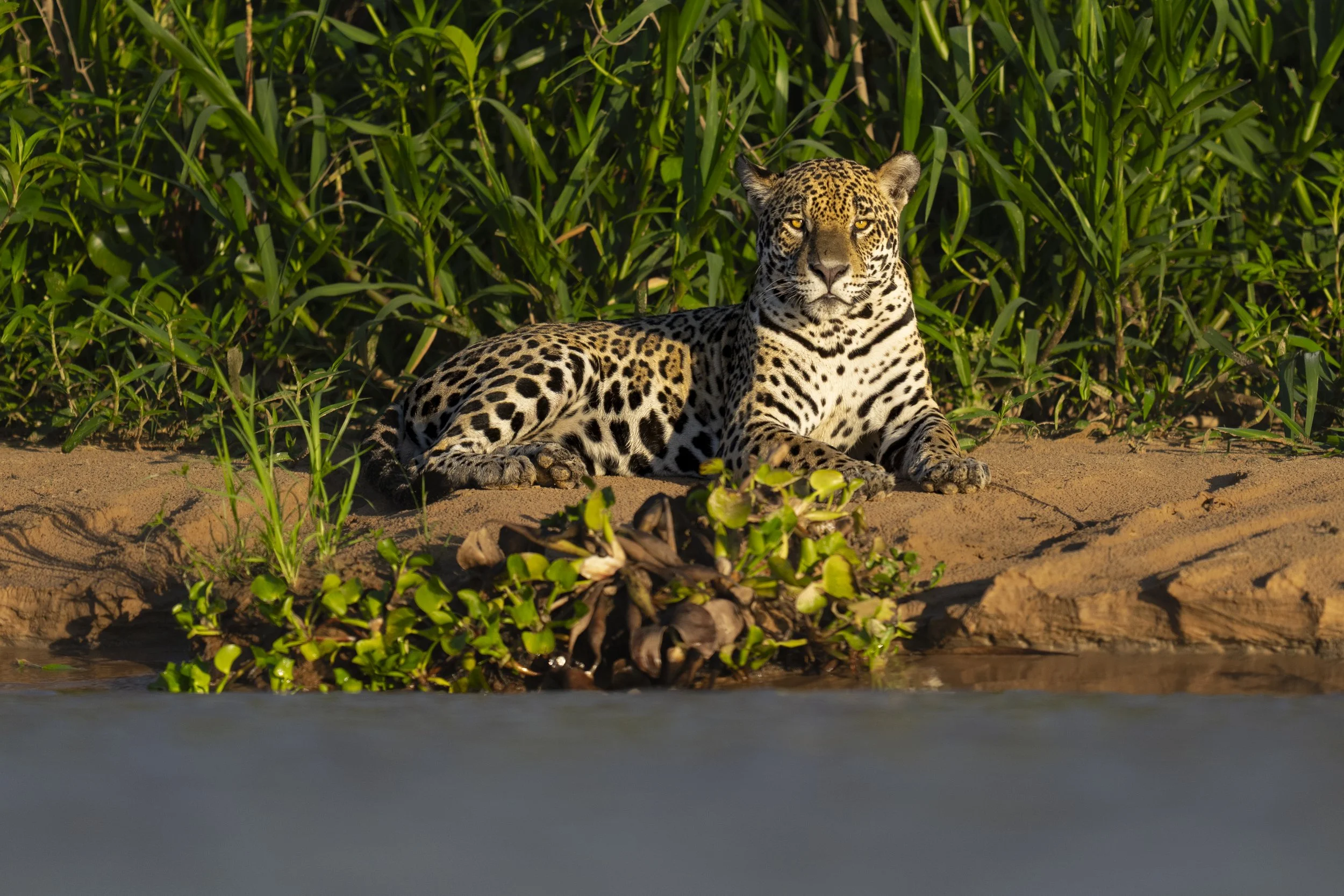
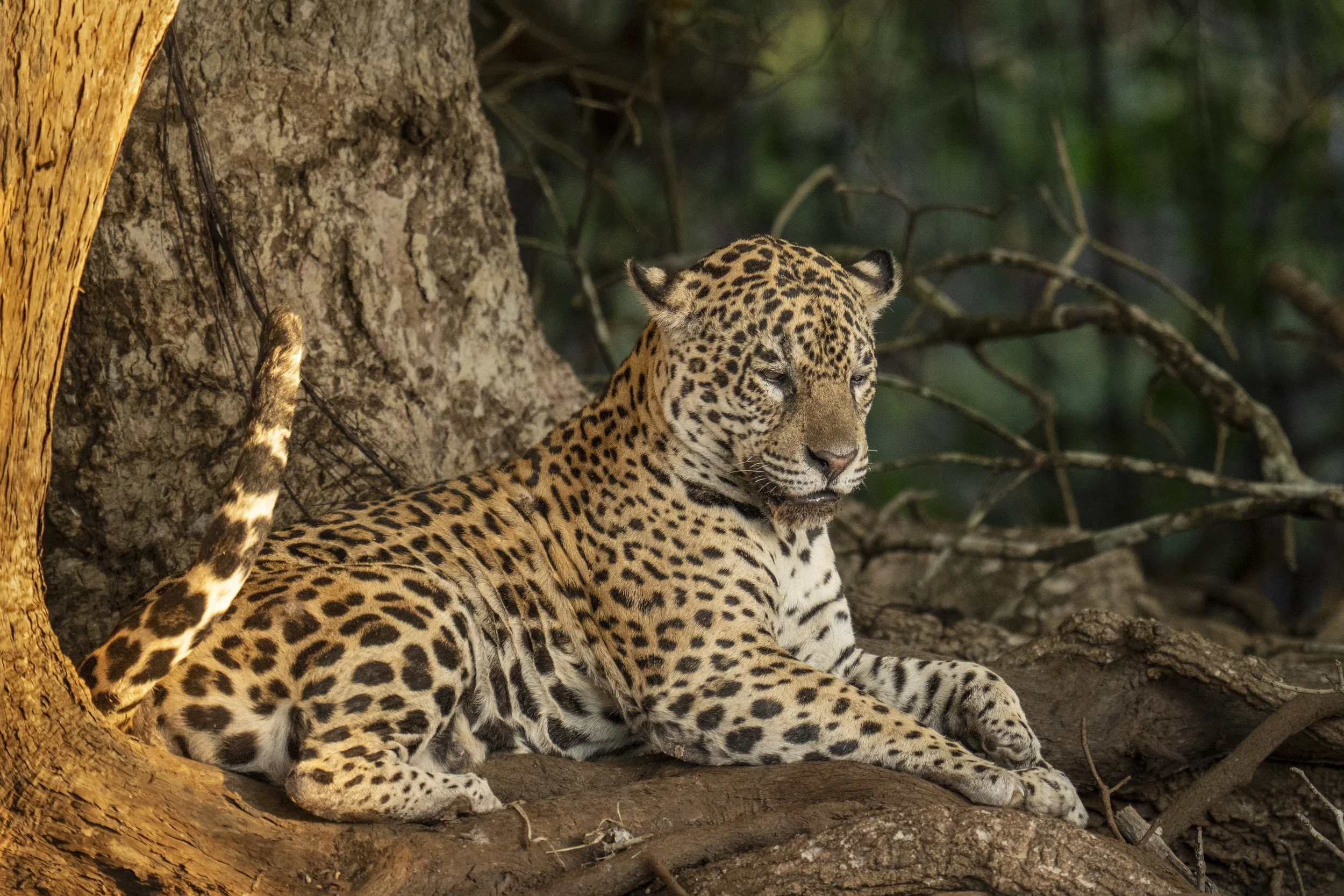
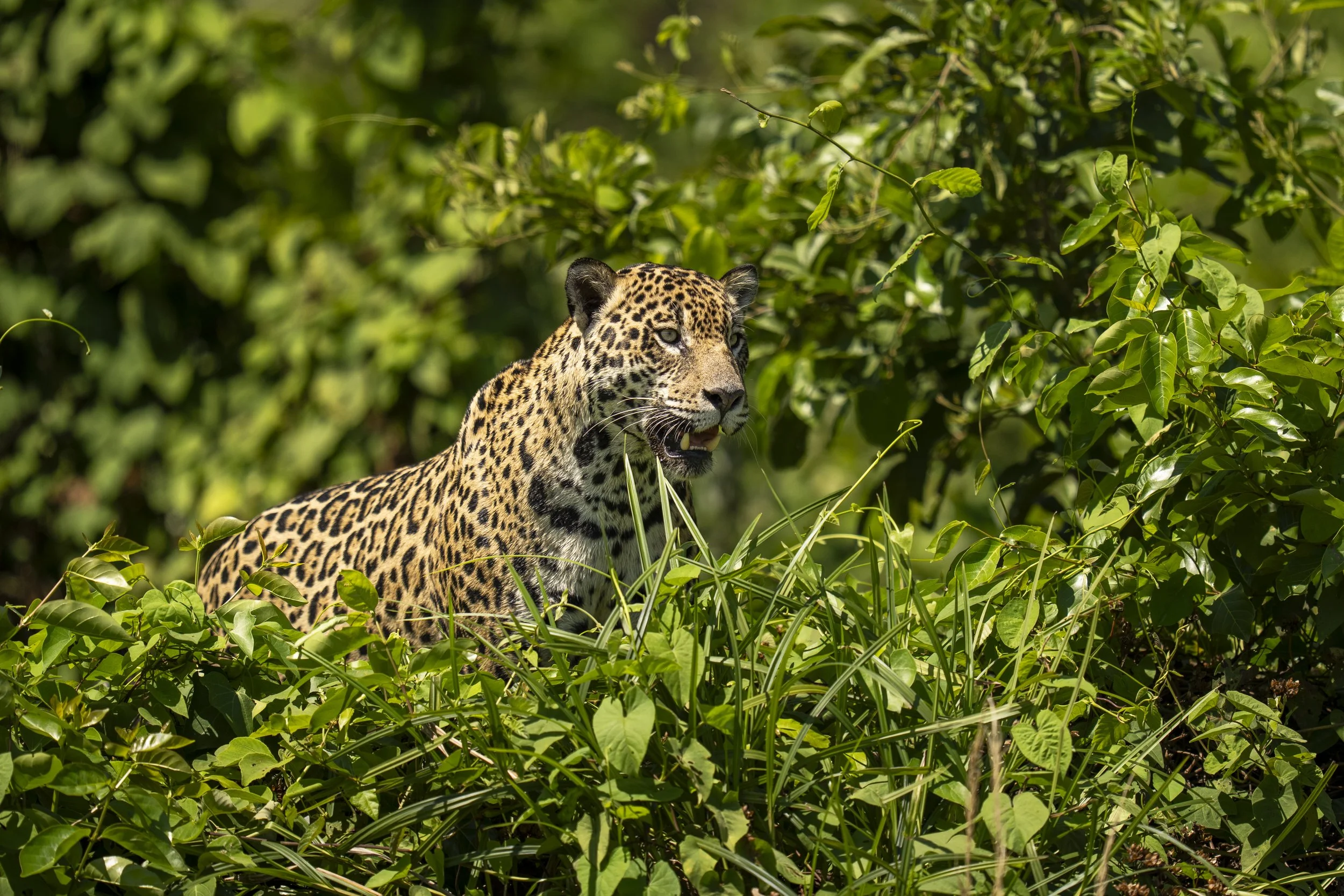
A jaguar (Panthera onca) rests in the shade of the riverside foliage, taking respite from the heat.
A trip report from my workshop, Untamed Brazil: The Amazon and The Pantanal
At first light in the southern Pantanal, the world wakes not with any ordinary birdsong, but with a riot. The chaco chachalacas begin before sunrise, their calls erupting from the trees, a raucous alarm clock that makes the gentle birdsong alarm sound option on my phone feel like a lullaby. Here, dawn isn’t whispered into being; it’s declared.
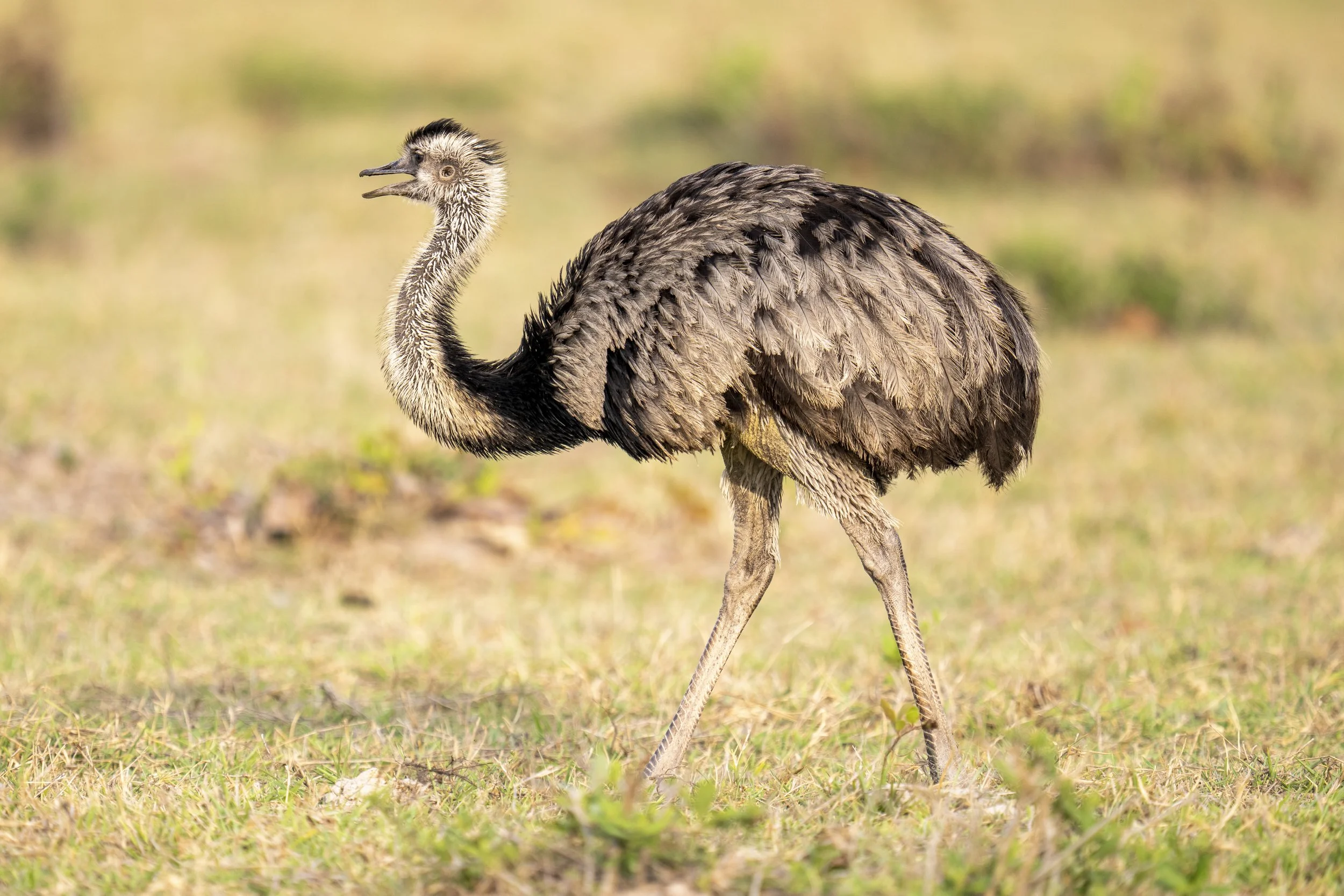
For the first four days of our journey, we called this landscape home. The open grasslands and gallery forests near Aquidauana, where the land still breathes with the rhythm of the dry season’s last gasp. We stayed on one of the region’s iconic working ranches, where herds of Brahma cattle move through the same fields as greater rheas and, on lucky mornings, giant anteaters, one of the icons that makes up the Brazil Big Five. The mix of wildlife and livestock is a visual paradox, but it would look wrong any other way. It’s proof that this land, managed with care, still pulses with wild life in every sense of the word.
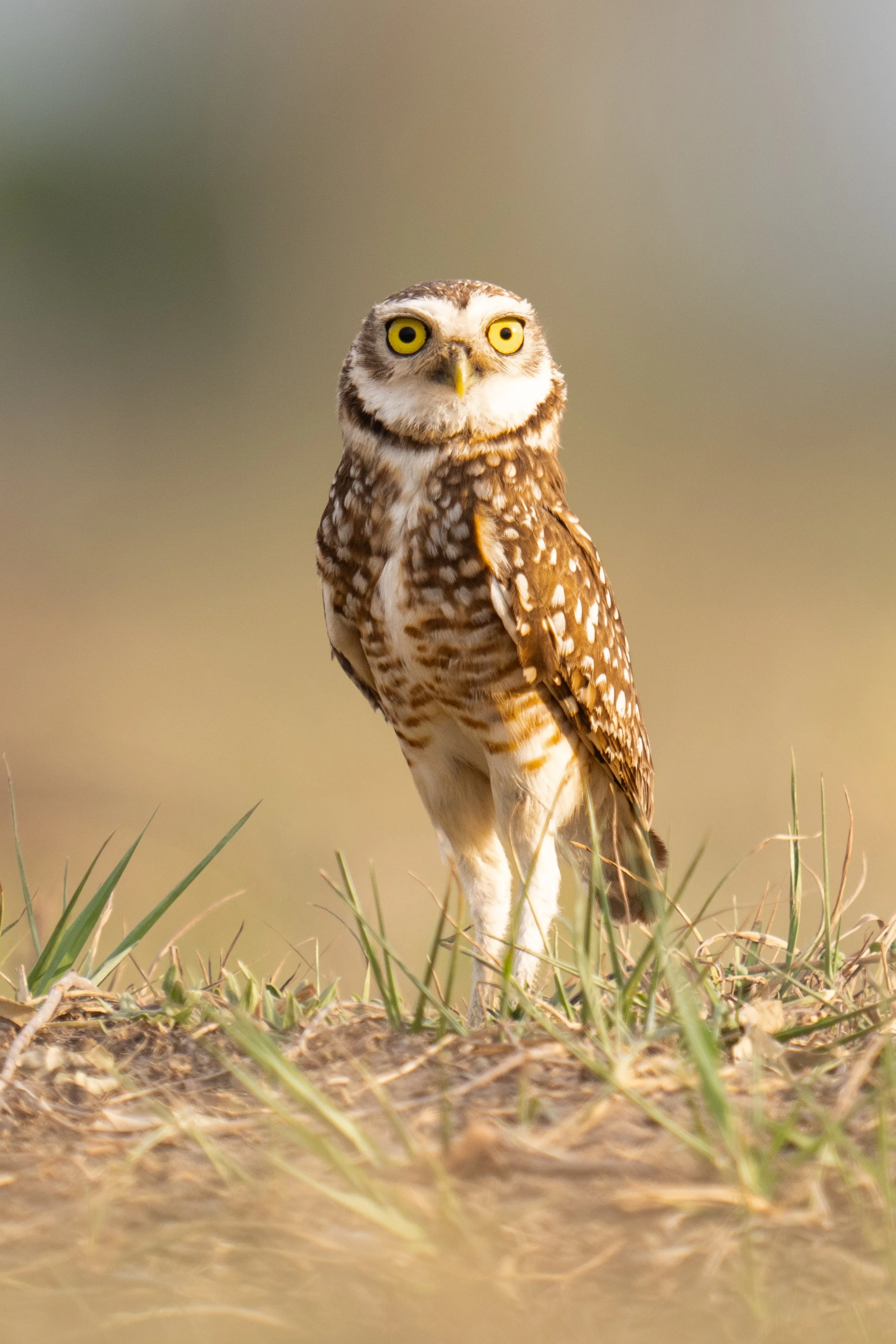
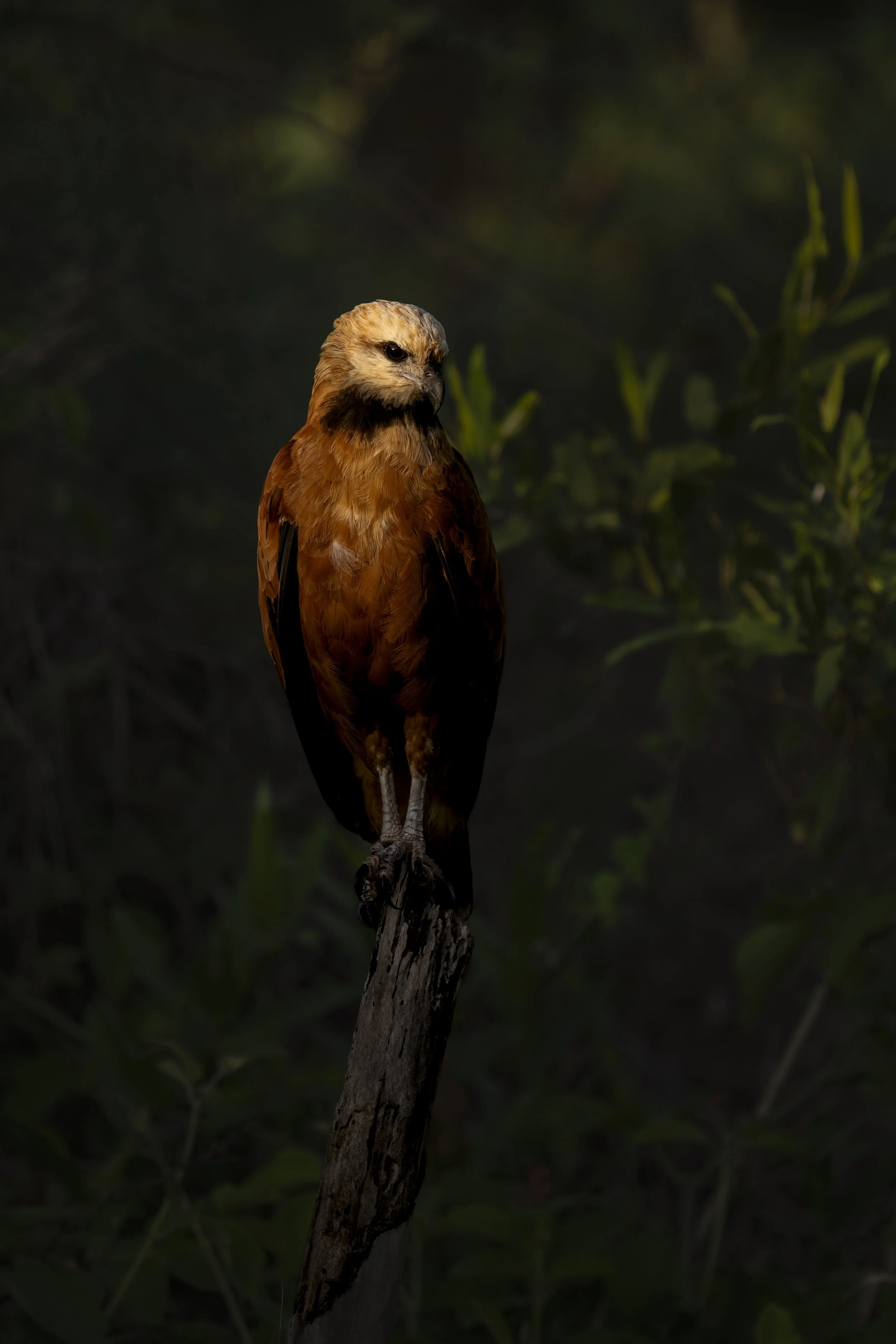
The Pantanal’s southern reaches are a wonderland of biodiversity, a living mosaic where grassland melts into wetland and every horizon hums with movement. The birdlife alone could occupy a lifetime: hyacinth macaws and blue-and-yellow macaws gliding over the palms, yellow-billed cardinals flitting through the brush, savanna hawks scanning the fields, and burrowing owls standing alert at their earthen doorways. Overhead, the lesser yellow-headed vultures and caracaras seem to trade shifts in dominance, like rival monarchs of the sky. My overall species list for this trip would climb to nearly 150 in total, without even “trying” to bird, just via casual sightings as we moved about.
The southern Pantanal sits at the crossroads of worlds, a place of vast inland delta where the cerrado savanna, Atlantic Forest, and Amazon all brush against one another. Seasonal floods spread nutrients across these plains, feeding a web of life so intricate it feels almost improbable. Capybaras share the same waterways as caimans. Macaws and rheas patrol the same horizons.
This convergence of biomes is what makes the Pantanal so astonishingly alive. It’s a place where evolution seems to have held a convention and invited everyone. For photographers, that means every direction holds potential, every turn on the dirt road another scene in nature’s grand improvisation.
We explore it all in an open safari vehicle, a light wind taking the edge off the heat. At the wheel is Fabiano, a soft-spoken man who has worked this ranch for nearly thirty years. By his side was Rafael, our naturalist for this leg of the workshop. Both quiet and unassuming, they know every bend in the dirt tracks, every tree cavity favored by the aracaris. With a single glance, Fabiano can spot a common potoo so perfectly camouflaged that the rest of us need convincing to believe it’s there at all. His fieldcraft is a reminder that knowledge, in the right hands, becomes something like reverence.
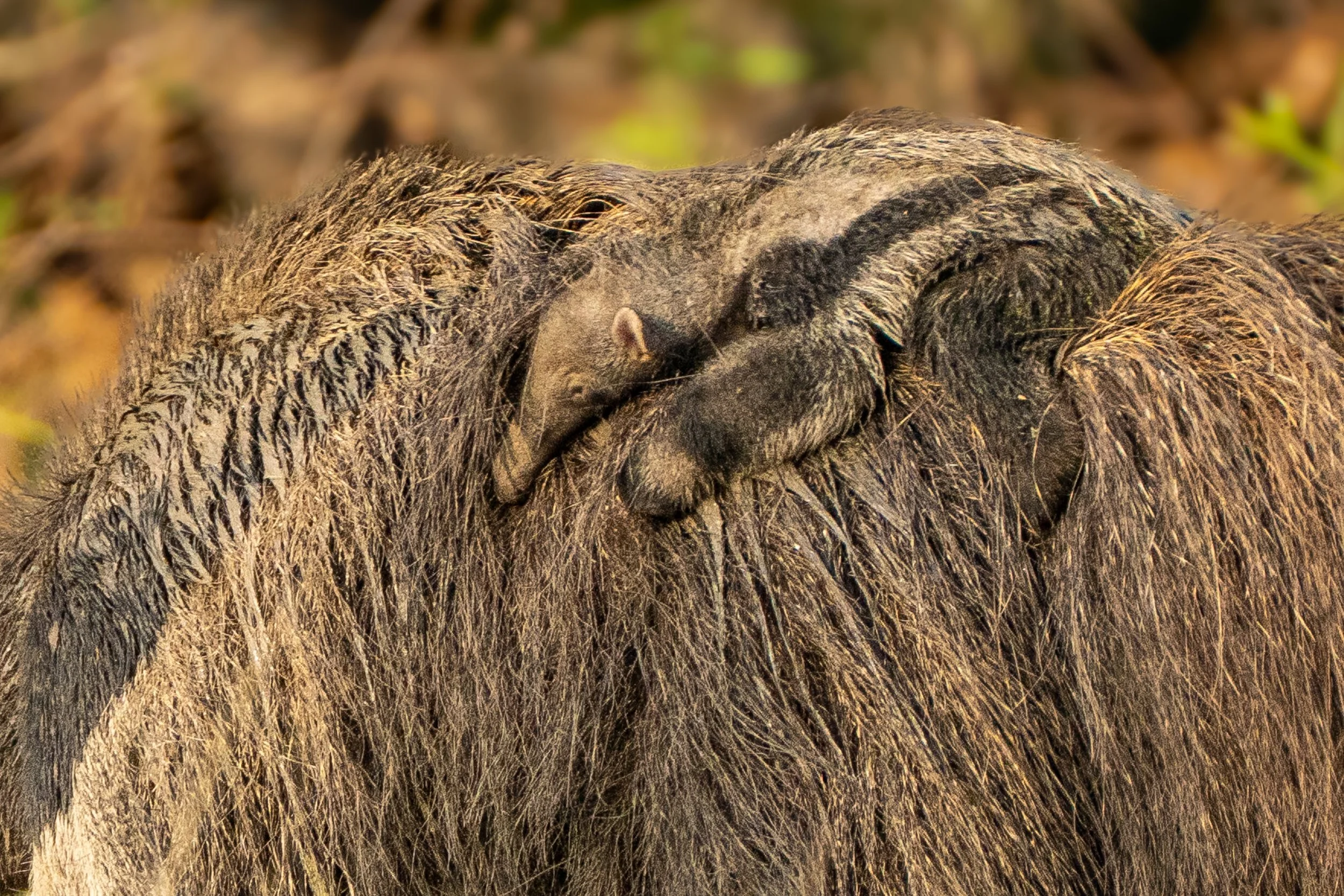
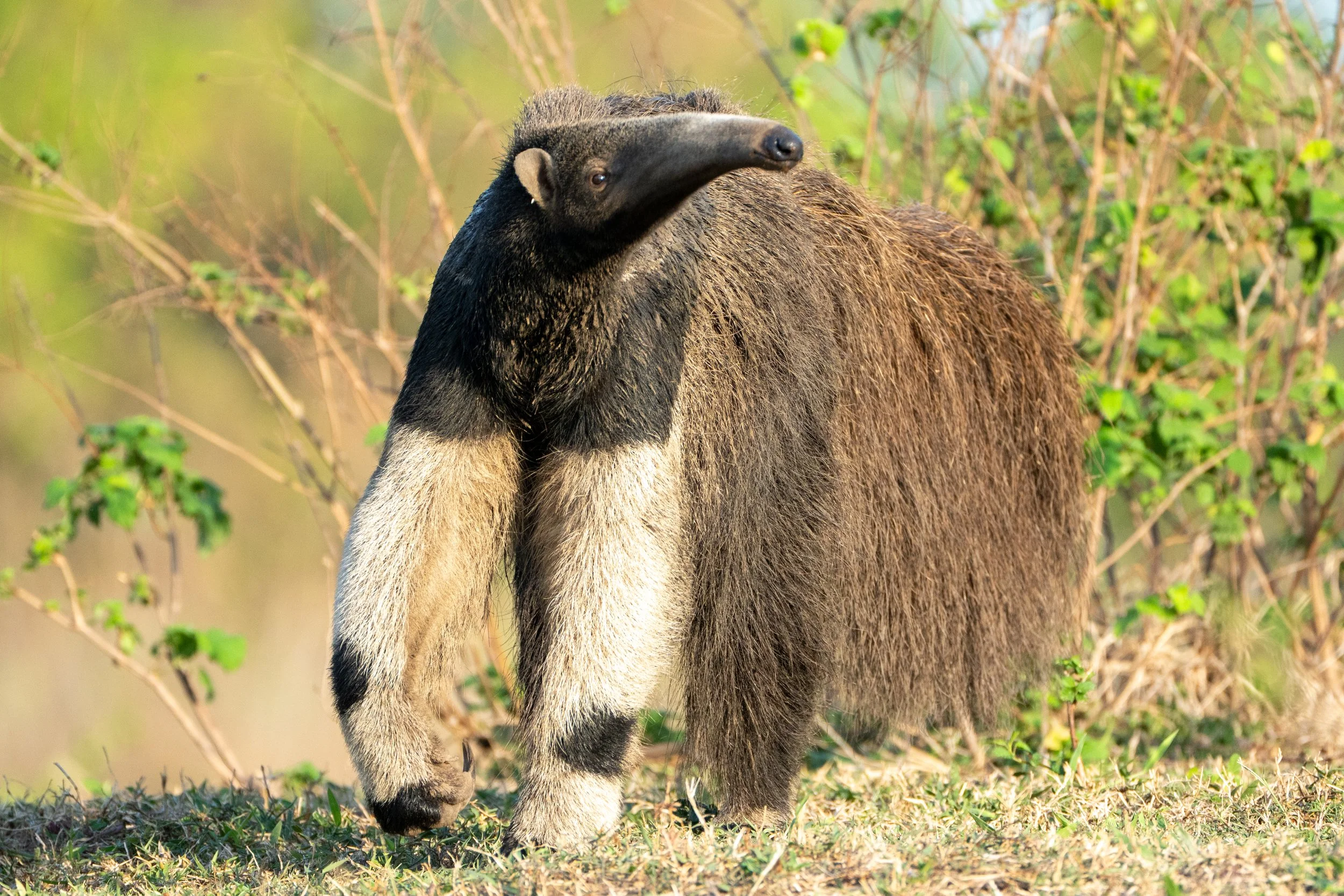
Anteater pups ride on their mother’s back for almost the entire first year of their lives, and will head out for life on their own around two years of age.
The Anteater and Her Young
It was on our first morning drive that we encountered her. The giant anteater, one of Brazil’s “Big Five,” and perhaps one of the more difficult to photograph. They can easily move like apparitions in the landscape, and, if easily startled, will disappear into the bush with a blink of an eye. She appeared through a curtain of golden grass, large and shaggy, her long snout sweeping the earth in slow, methodical arcs. Across her back clung a baby, its shape so precisely aligned with hers that at first you could mistake the two for one being.
We spent nearly an hour with them, engines off, the group hushed except for the sound of shutters and the din of the birds still carrying on in the trees behind us. There was something both awkward and exquisite in the way she moved, a creature that looks assembled from spare parts yet glides through the grass with an ancient grace. We would see six giant anteaters that first outing — six — and several on every drive that followed. By the end of our stay, they’d come to feel like neighbors you wave to each morning.
When the heat finally pressed down, we retreated to the shade of the lodge for breakfast and downtime. Bird feeders hung just beyond the open-air dining room, a familiar setup in much of South America, where wildlife seems to live at arm’s length. Yellow-billed cardinals and saffron finches came and went in flashes of color, but it was the six-banded armadillos who ruled the roost. They strolled beneath our tables with the unhurried confidence of animals that know exactly how charming they are. Like my dog, Susan, they trotted with that same swagger made of equal parts entitlement and delight and you couldn’t help but smile every time one wandered past.
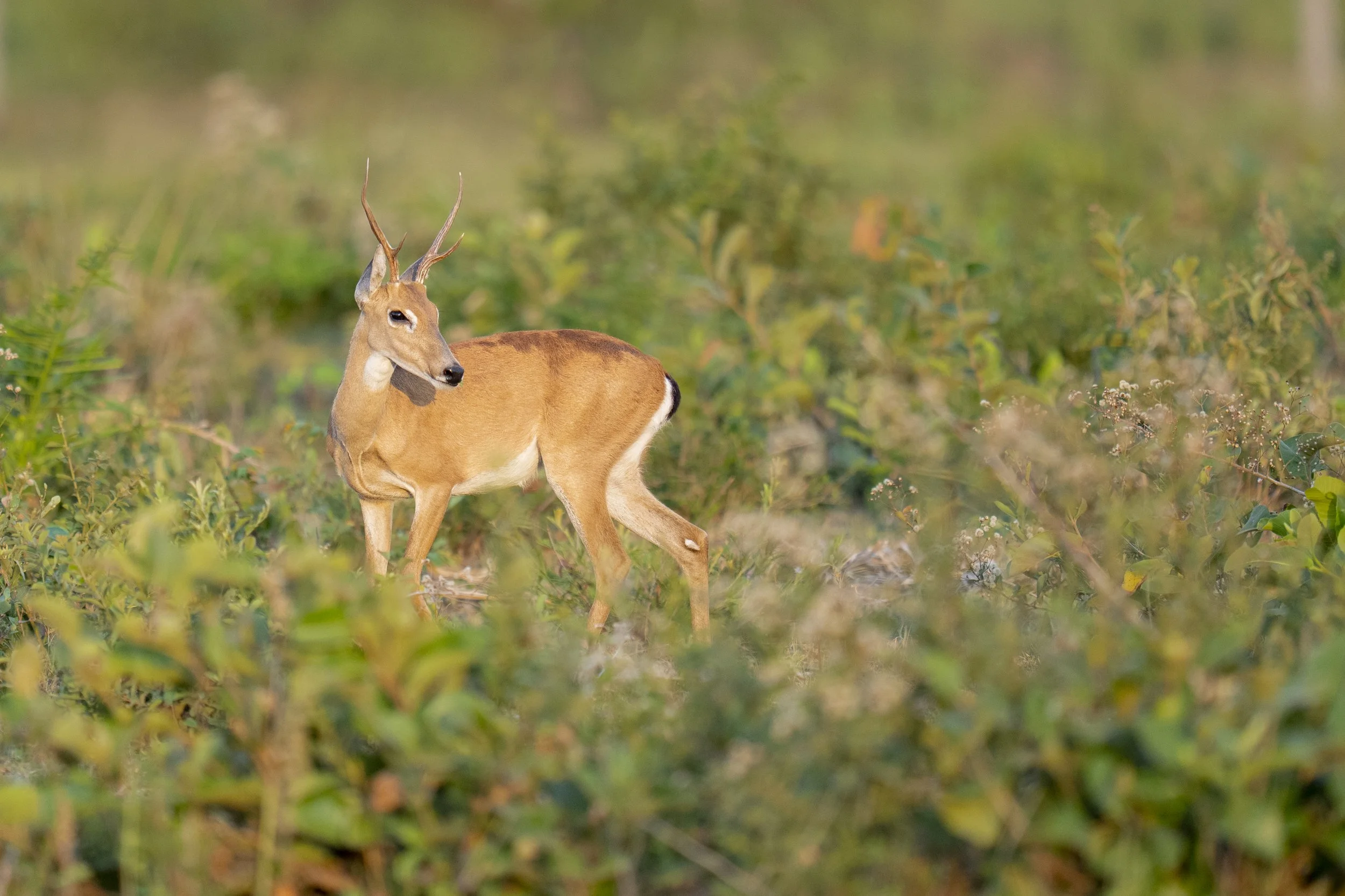
Evening drives brought new faces to the stage: burrowing owls peering from their dens, pampas deer stepping through tall grass with the lightness of dancers. The air cooled, the colors deepened, and the cameras stayed busy. It was during one of those dusky returns that Frank, who always has a way of putting a smile on my face, leaned back with a grin and said, “This is more fun than any human should ever have.” We weren’t even a third of the way through the trip, and already he was right.
The food here mirrored the best of Brazilian hospitality. Buffets with a little of everything, from roasted meats to fresh salads, all simple and satisfying after long days in the field. But it was the desserts that stole the show: cakes soaked in condensed milk, tarts layered with passionfruit, sweets so good they could silence a table of photographers mid-sentence. No one goes hungry when traveling in Brazil, no matter your diet.
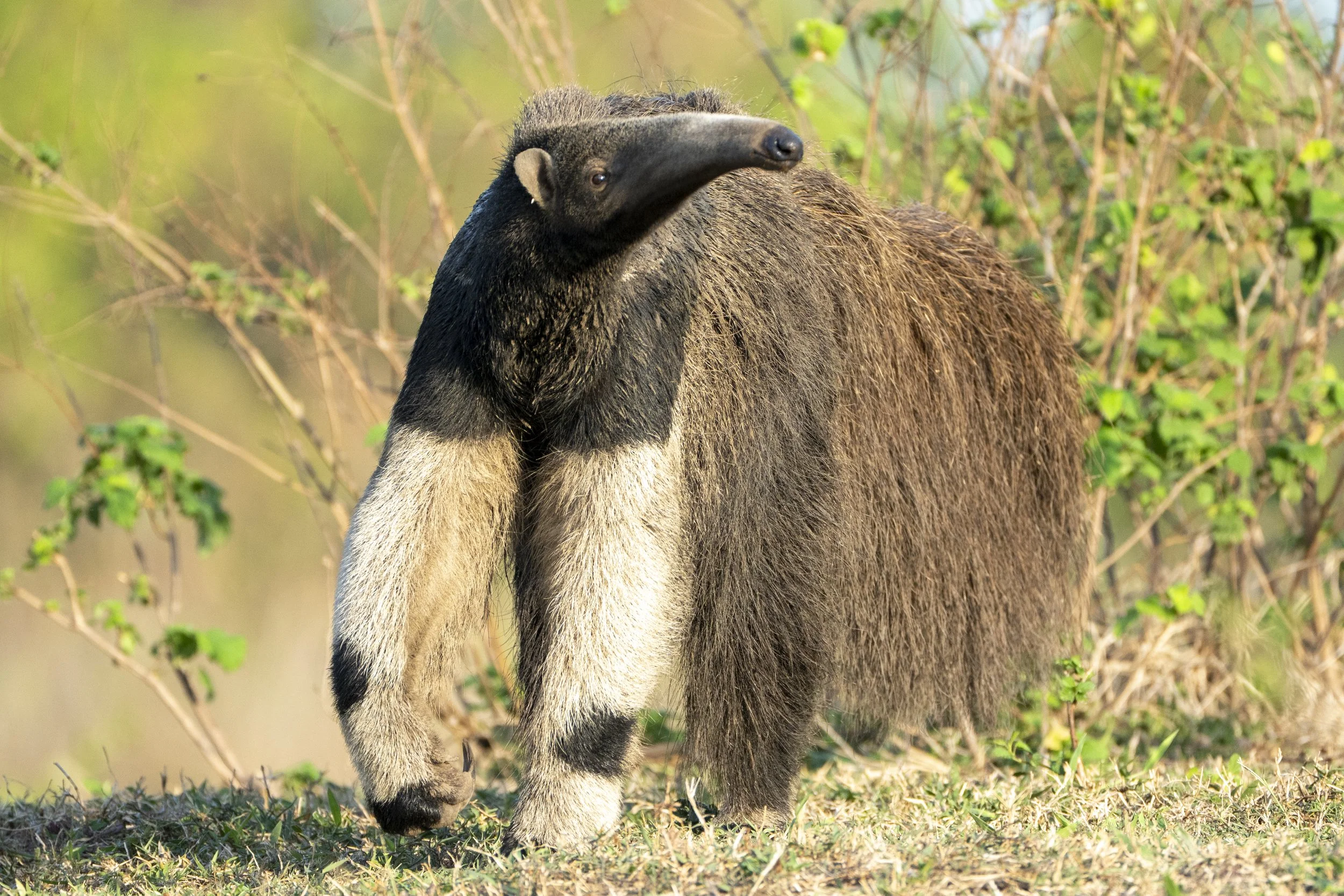
A giant anteater (Myrmecophaga tridactyla), guided by their nose, can eat up to about 30,000 ants and termites per day. They also do not have any teeth!
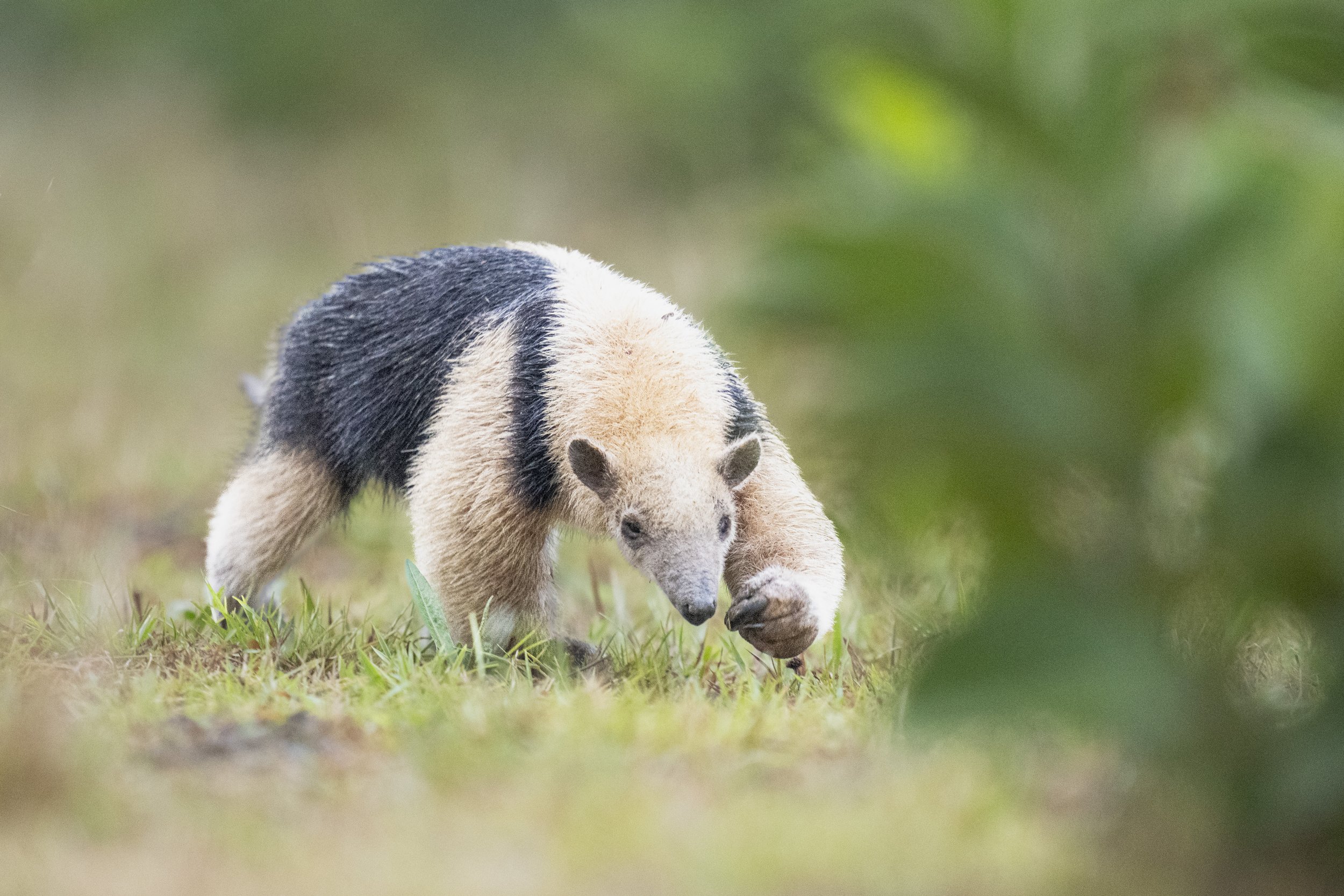
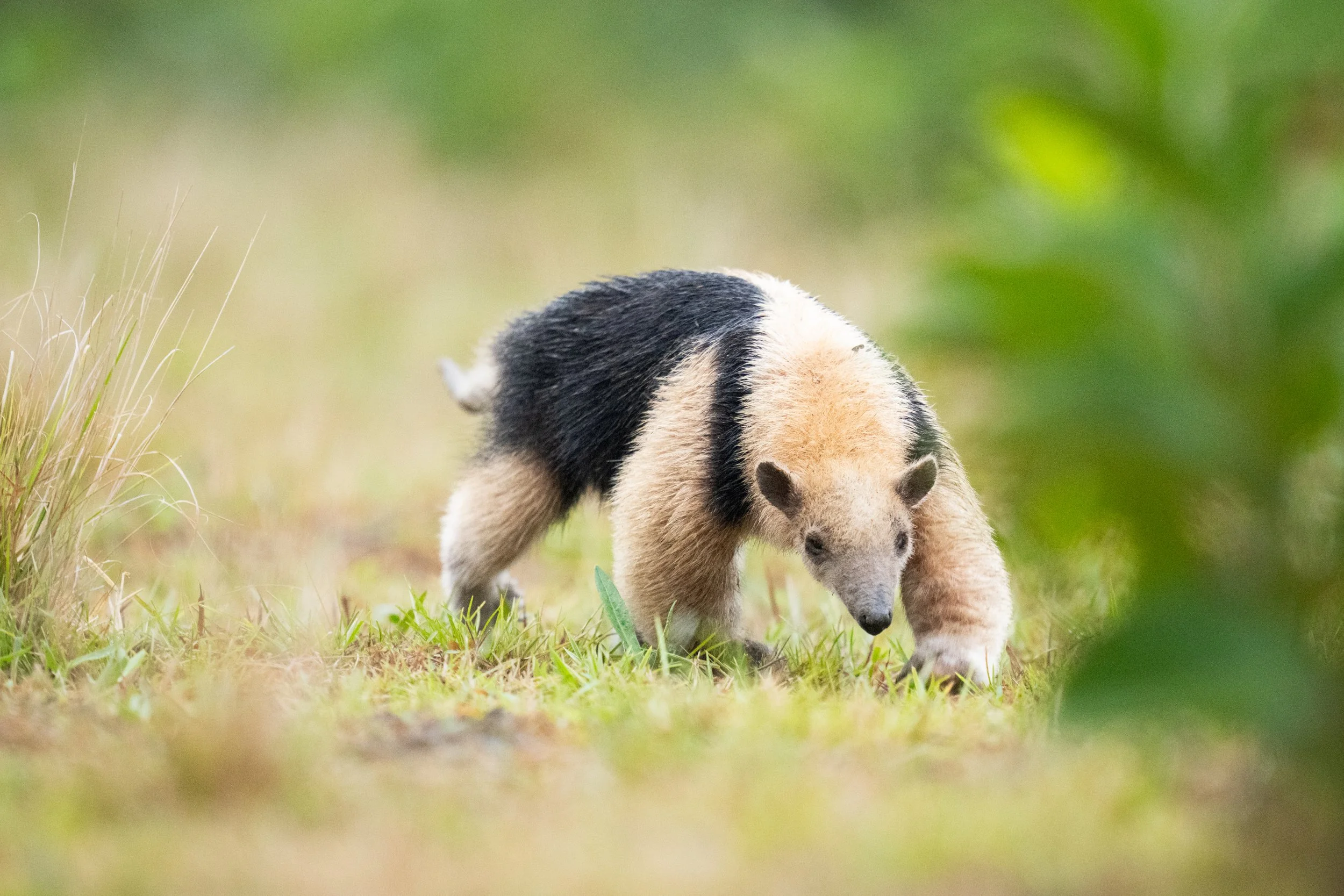
A Southern tamandua (Tamandua tetradactyla), also referred to as the lesser anteater, out searching for his morning meal
The Flight of the Red-And-Green Macaws and The Buraco das Araras Sinkhole
On our last morning in the south, we took one final spin across the ranch, a last chance to frame the anteaters against the rising light, to watch the rheas sprint through the grass. Soon, we’d be loading the coach and heading east toward the famed Buraco das Araras Sinkhole in Mato Grasso do Sol.
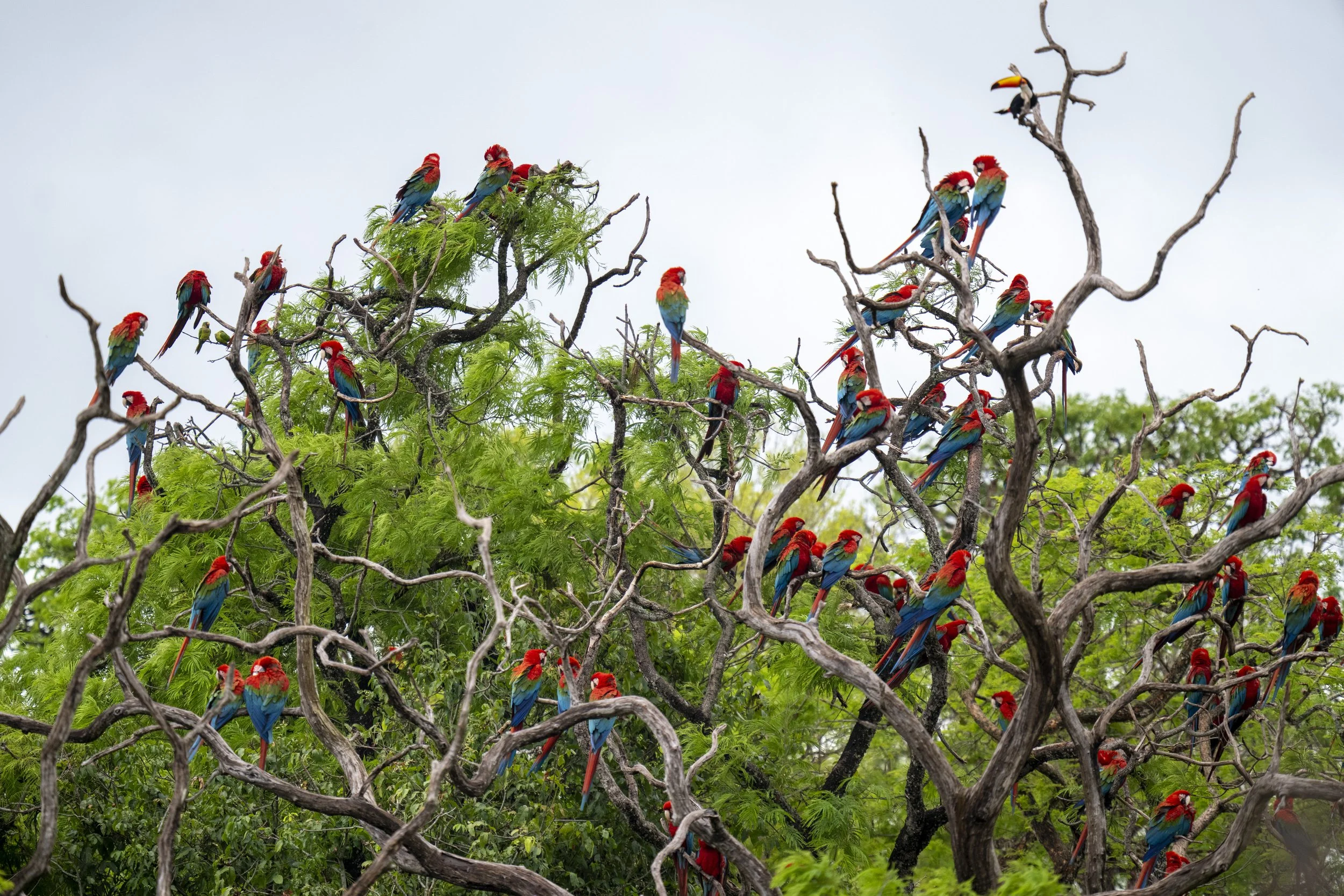
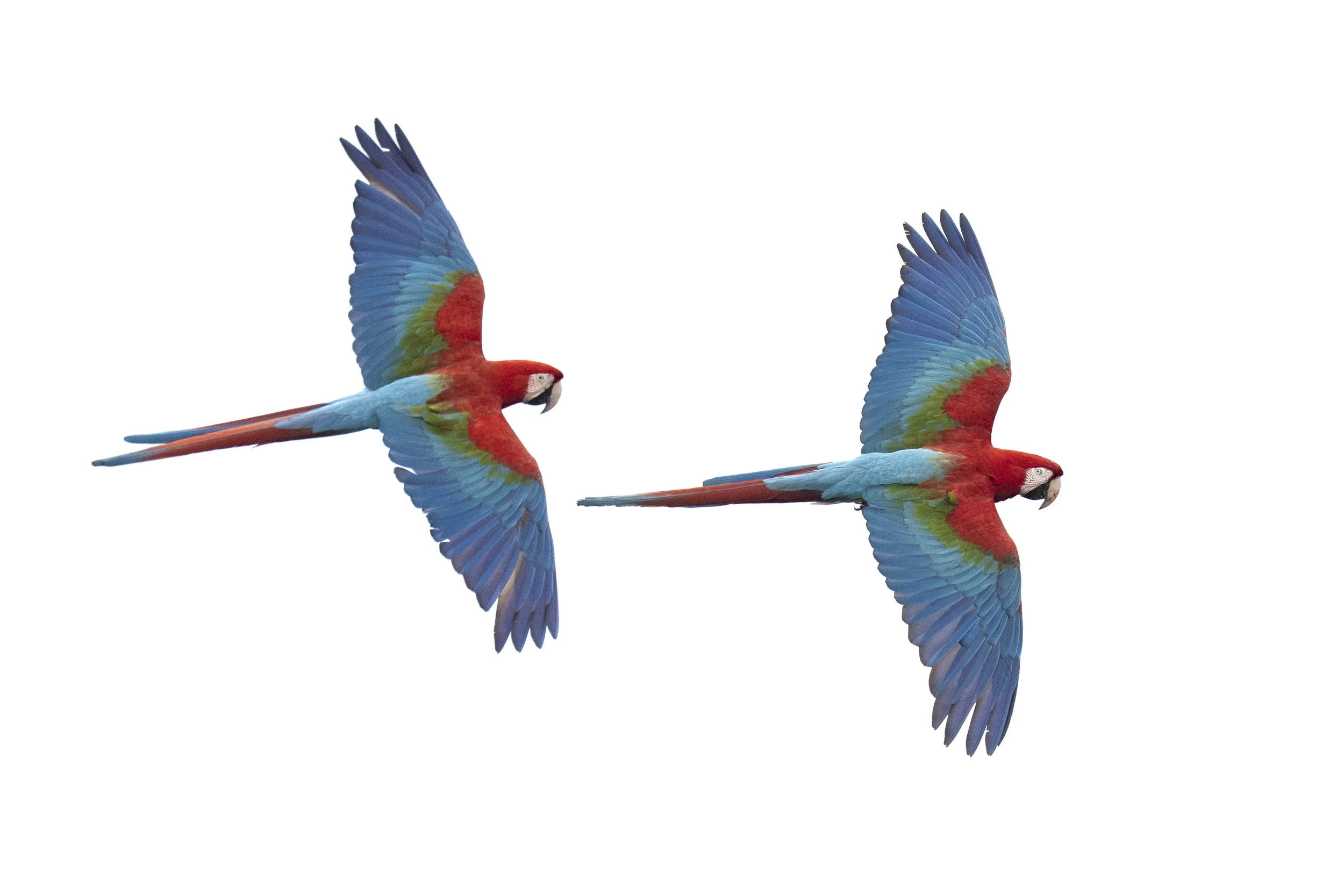
The sky was soft and overcast by the time we arrived. For photographers, that means one thing: high-key opportunity. Against the pale light, the red-and-green macaws became brushstrokes of color, their flights etched cleanly against that giant softbox in the sky.
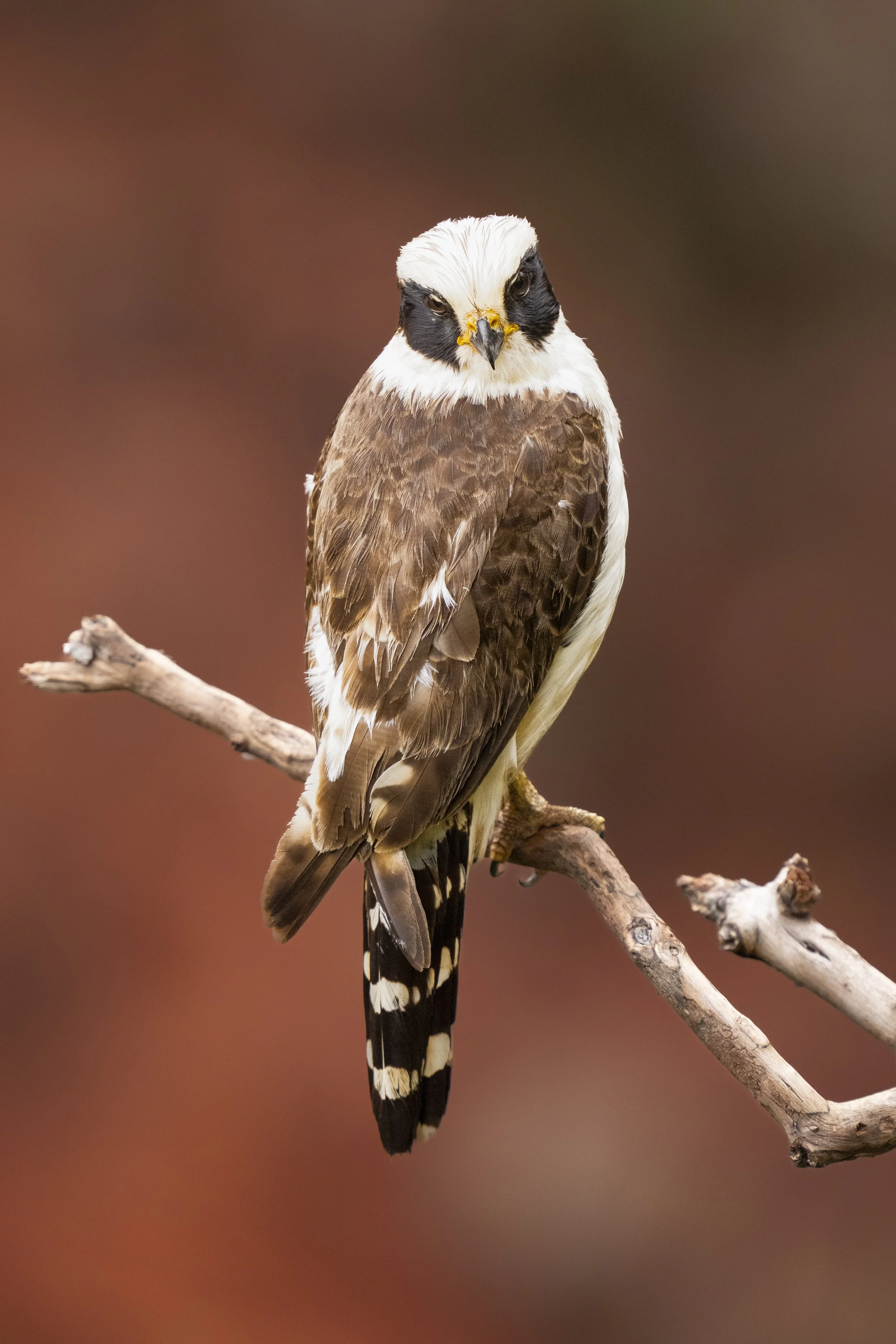
This gorgeous laughing falcon (Herpetotheres cachinnans) delighted us by flying in closer and perching for a portrait.
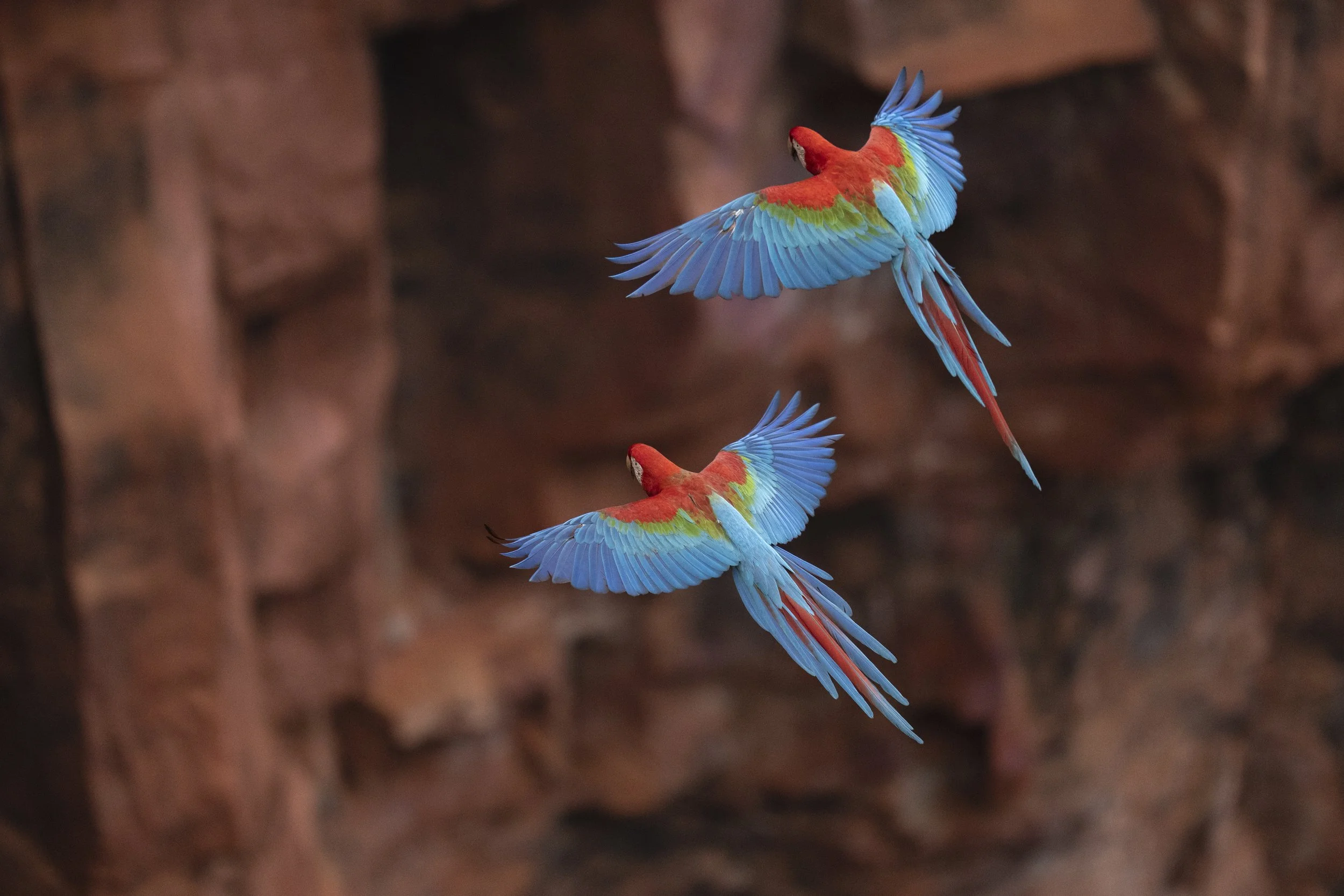
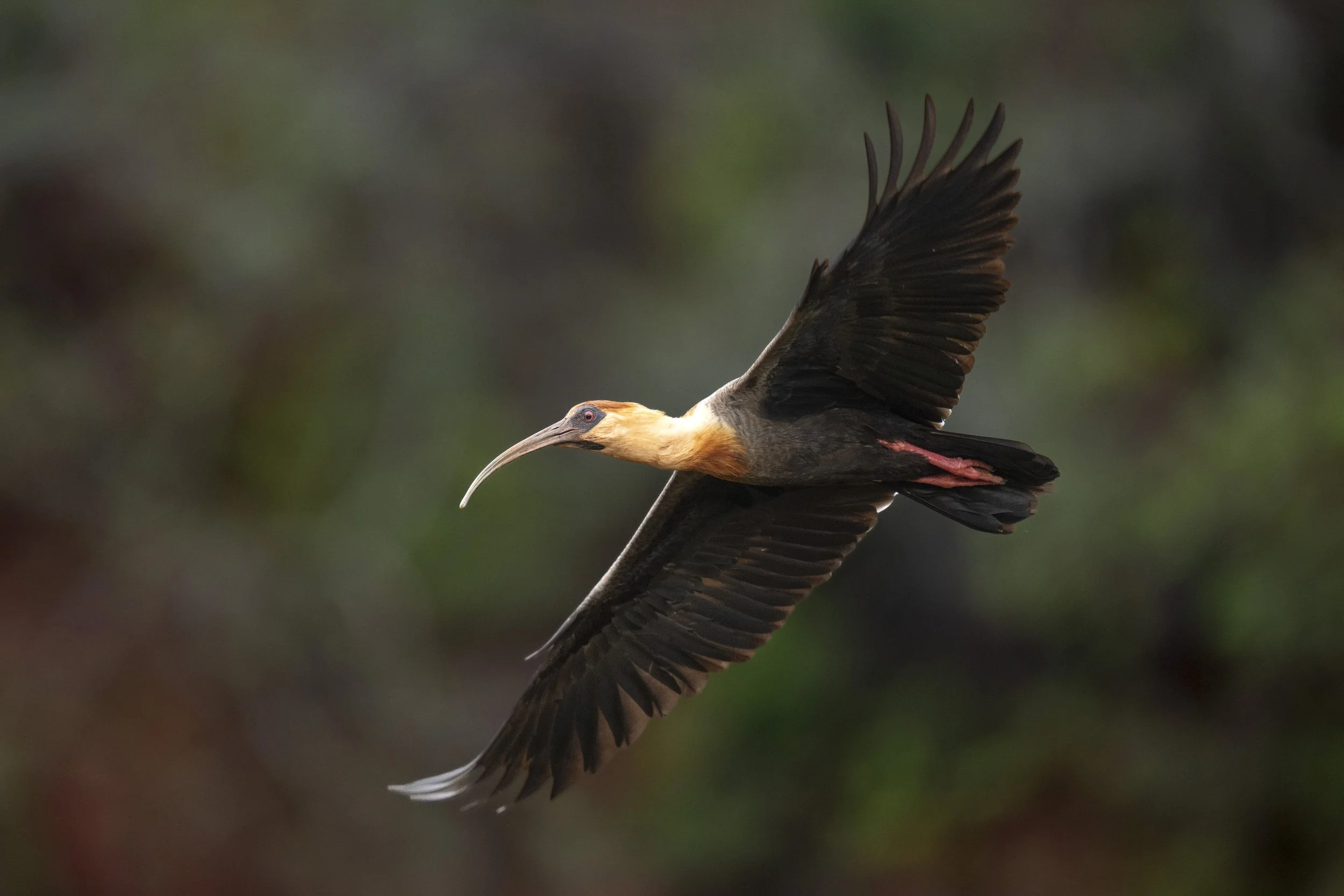
The sinkhole itself is breathtaking. A collapsed limestone and sandstone cavern more than a hundred meters deep, its rim alive with motion. Macaws wheeled and dove through the gorge, their calls echoing like laughter from the stone walls, a rich red from the iron oxide. Between macaw flights, we turned our lenses on buff-necked ibises and even a rare laughing falcon, a small raptor with a noble posture and a name that felt apt in this place so full of sound.
That evening we drove into the little tourist town of Bonito for dinner, a change from our usual buffets, the hum of conversation mixing with the smell of grilled meat and a tasting of piranha, which was delicious! Then it was back to our lodge for the night and a brief rest before dawn called us again to the sinkhole’s edge.
The second visit was magic of a different sort. Morning light split the canyon into halves. One drenched in sun, the other cloaked in deep, moody shade. The contrast created a kind of theater lighting for flight photography: brilliant color against darkness, shadow giving shape to the air itself. Pairs of macaws, who mate for life, moved in perfect synchrony, their feathers igniting in the sun and dimming again as they crossed into shadow. It felt like watching joy made visible.
After packing up, we headed to the small airstrip where a Grand Cessna Caravan waited, its polished wings glinting in the late-morning sun. We bid farewell to our guide, Rafael, whose steady presence from the previous five days kicked off our workshop on the best possible footing. Our next guide, Ricardo, is the owner of the partner company I trust for all of my central and South American adventures, but Rafael left some significant, large shoes to fill.
It has never made sense to me to ask photographers to fly 20+ hours from the United States and then spend only a week seeing one part of one region in one of the most biodiverse and wildlife-rich countries in the world. Chartering private flights to bring us from the southern Pantanal to the north, and then to the southern Amazon and back into the city means we save almost four days of driving and add three days of time in the field. It’s the only way to make this trip exceptional.
Within minutes we were airborne, watching the patchwork of grasslands and rivers drift beneath us, the southern Pantanal shrinking into memory as the wetlands of the north rose to meet us. Ahead lay the next chapter of our expedition: the heart of jaguar country, where the world narrows to river channels and the promise of golden eyes along the banks.
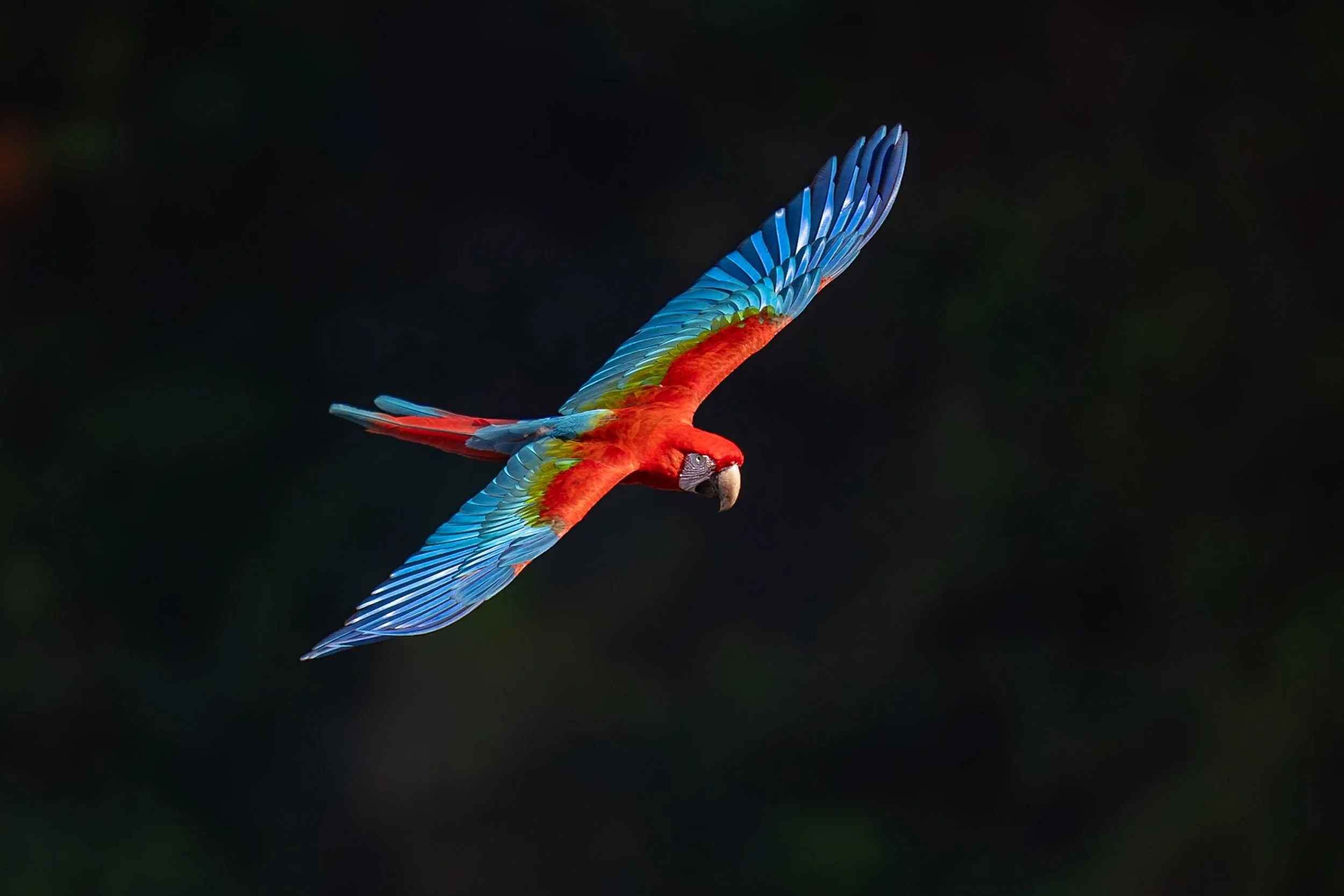
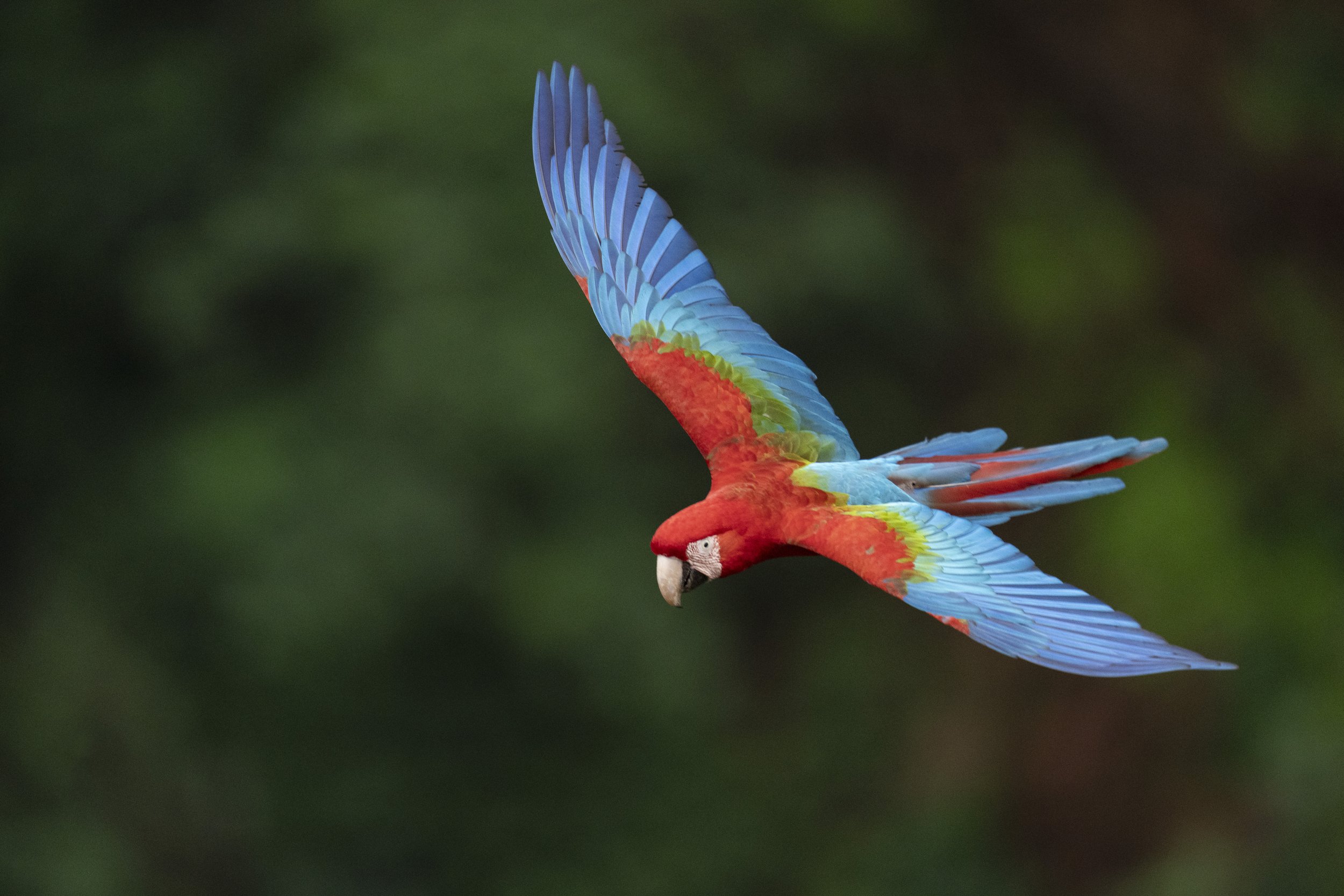
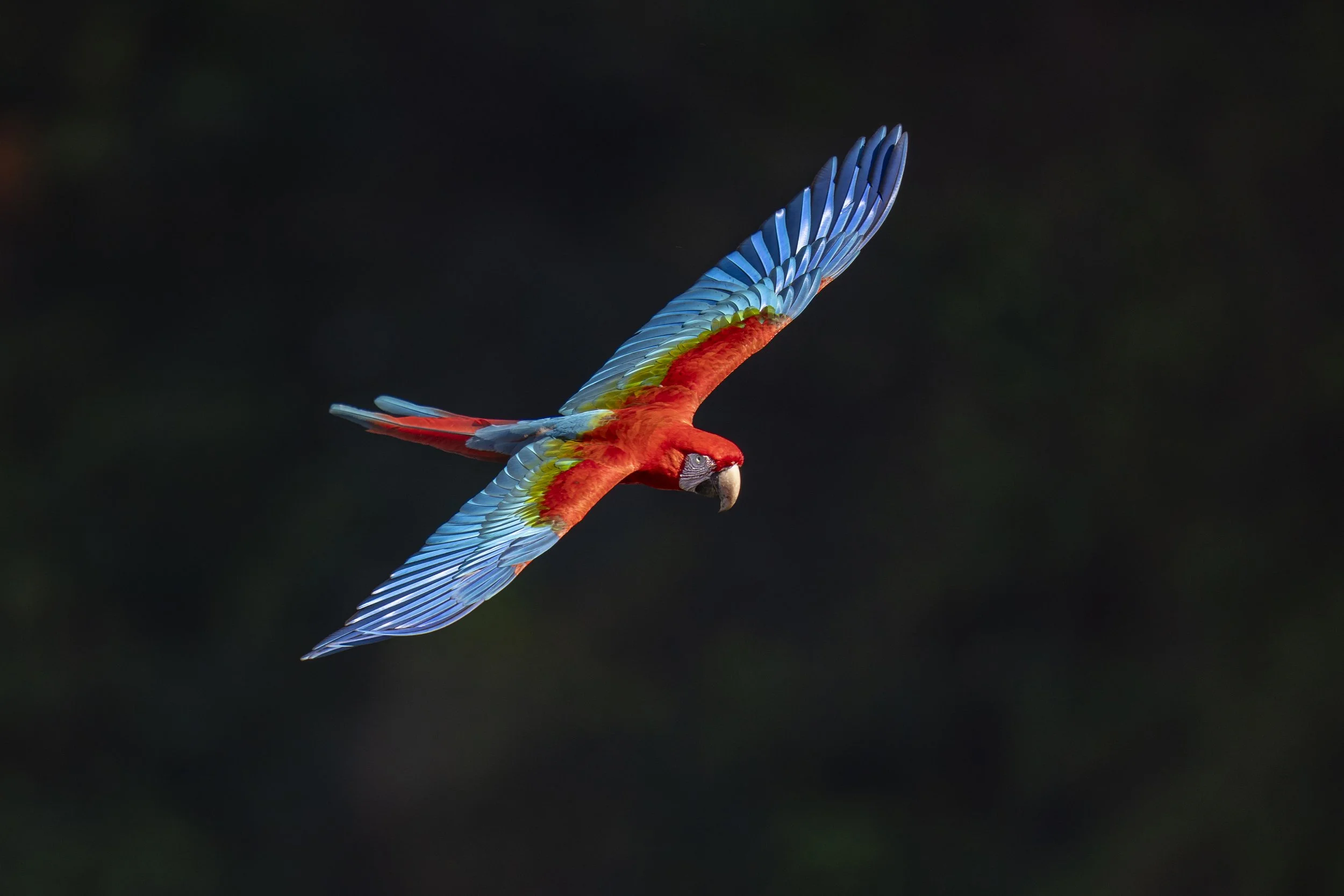
The red-and-green macaw (Ara chloropterus) is one of the most highly trafficked birds for captivity, sadly, as in the wild they are incredible beyond words.
The Realm of the Jaguar
If the southern Pantanal hums, the north roars in silence.
Here, near Porto Jofre, the land dissolves into a world made almost entirely of water, even at the height of the dry season. A tangle of slow-moving rivers that braid and unbraid themselves across the horizon, the sky feels twice as large as anywhere else on Earth, and its edges melt into the floodplain like watercolor. Each sunrise paints the Cuiabá River in sherbet tones of pink and orange, and for a few moments, before the air thickens with heat, the whole world seems suspended in color and mist.
This is the northern Pantanal: the beating heart of South America’s largest wetland and one of the planet’s greatest strongholds for jaguars, the largest cat of the Americas. The predator’s power here is not mythic but measurable, with densities higher than anywhere else on Earth. To travel this labyrinth of waterways is to move through a landscape ruled by stealth, hunger, and grace.
Unlike the open grasslands of the south, the north is liquid terrain. Thick mats of hyacinth drift freely, guided by invisible currents and whim. Along the banks, cecropia trees reach outward like open hands, their silver leaves trembling in the breeze. Jabiru storks stand sentinel in the shallows, their great bills poised above reflections. Yellow-billed terns skim the sky in quick, slicing arcs and black skimmers drag the tips of their bills like calligraphy pens across the water.
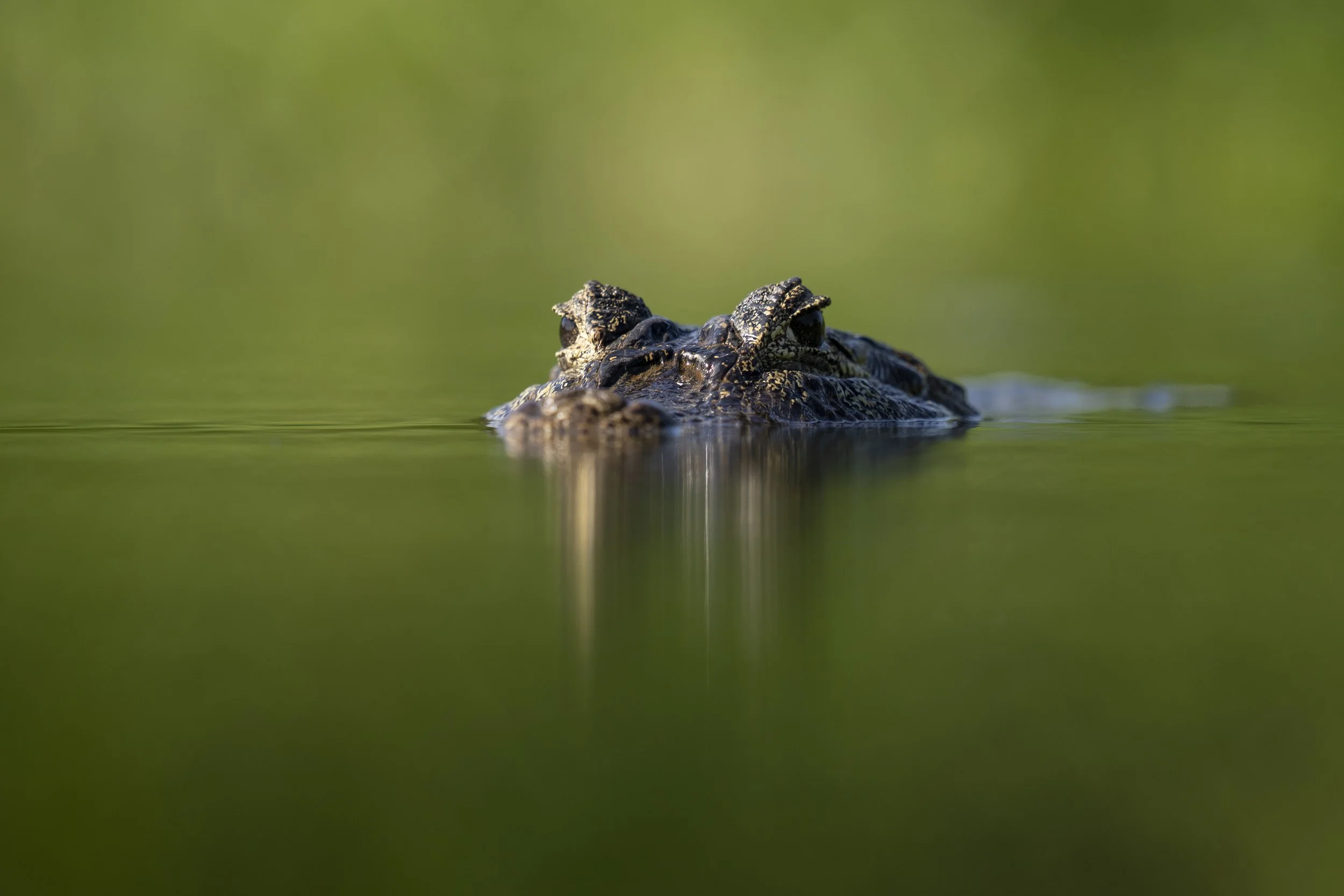
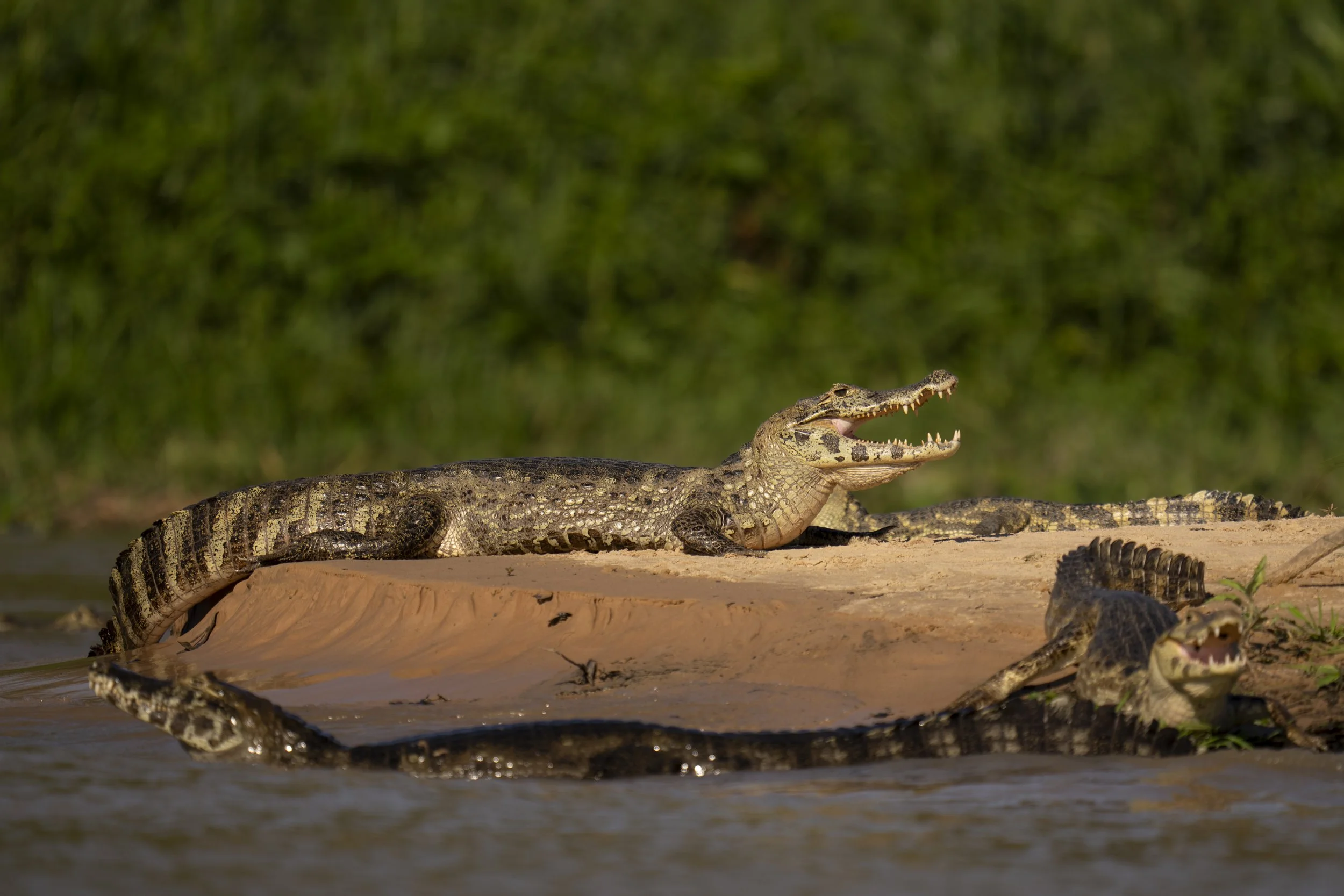
Beneath it all, life stirs constantly. Caimans glide like living shadows, fish scatter in silver flares, and somewhere in the towering grasses, a tapir and her newborn calf move unseen. It is not an exaggeration to say that the water itself feels alive, as if the whole biome is breathing beneath the surface.
The First Afternoon
Our first jaguar appeared less than an hour into our first afternoon. Ricardo and Alan, our unassuming, eagle-eyed boat driver spotted her, a faint flicker of movement among the hyacinth mats, her rosetted coat a mirage against the green. “On the bank,” he whispered, and the engine idled down to a heartbeat. From there, we enjoyed several sightings more, already hitting the number of sightings in one afternoon as I had all week the last time I visited. Timing is everything in wildlife photography, and this trip was proof positive of that.
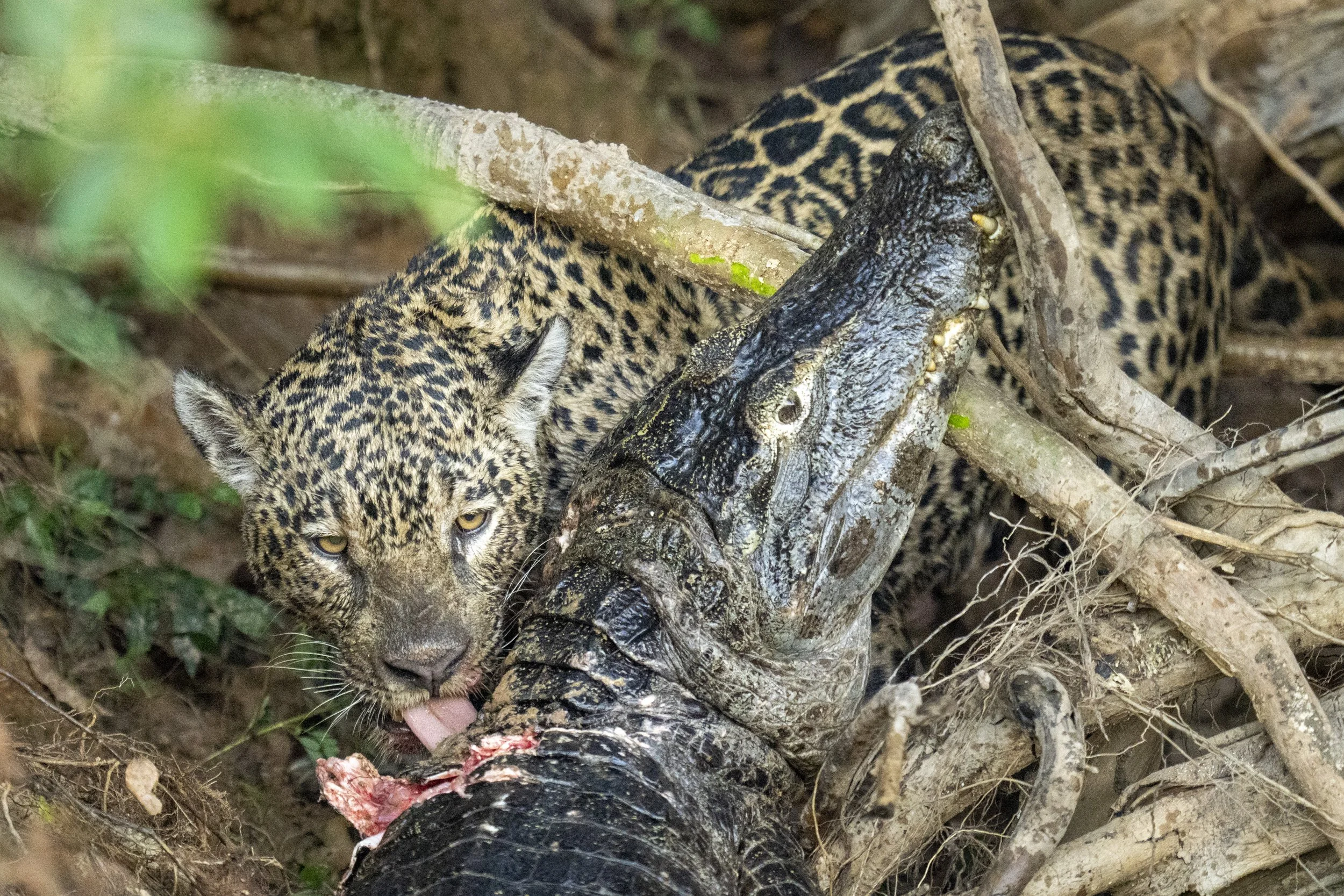
The last jaguar of that evening was ushered in gently, on our sunset ride back to the lodge for the night. She was resting on a mound of reeds and driftwood, her body relaxed, her gaze anything but. The guides knew her well. She’d taken down a caiman a few days earlier and still wore the languid confidence of a predator with no need to hurry.
There she was: a golden constellation of rosettes against the soft greens of the riverbank, eyes the color of burnished amber. For several long minutes, no one spoke. Cameras hung forgotten around necks. It wasn’t about the photograph — not yet. It was about simply taking her in, the physicality of her breathing, the slow rise and fall of her chest, the absolute sovereignty of a creature perfectly at ease in her world.
Seeing so many jaguars on your first day is the kind of luck that makes you superstitious. But more than that, it redefines what you think wildness means. Up close, they’re not just beautiful, they’re awe-inspiring. Everything about them feels inevitable, from the geometry of their coat to the quiet authority in their stillness. To see one like this, unhurried and unbothered, is to remember that power doesn’t always announce itself through motion. Sometimes it reclines in the reeds, half-lidded, watching, reminding you that presence itself can be the purest expression of strength.
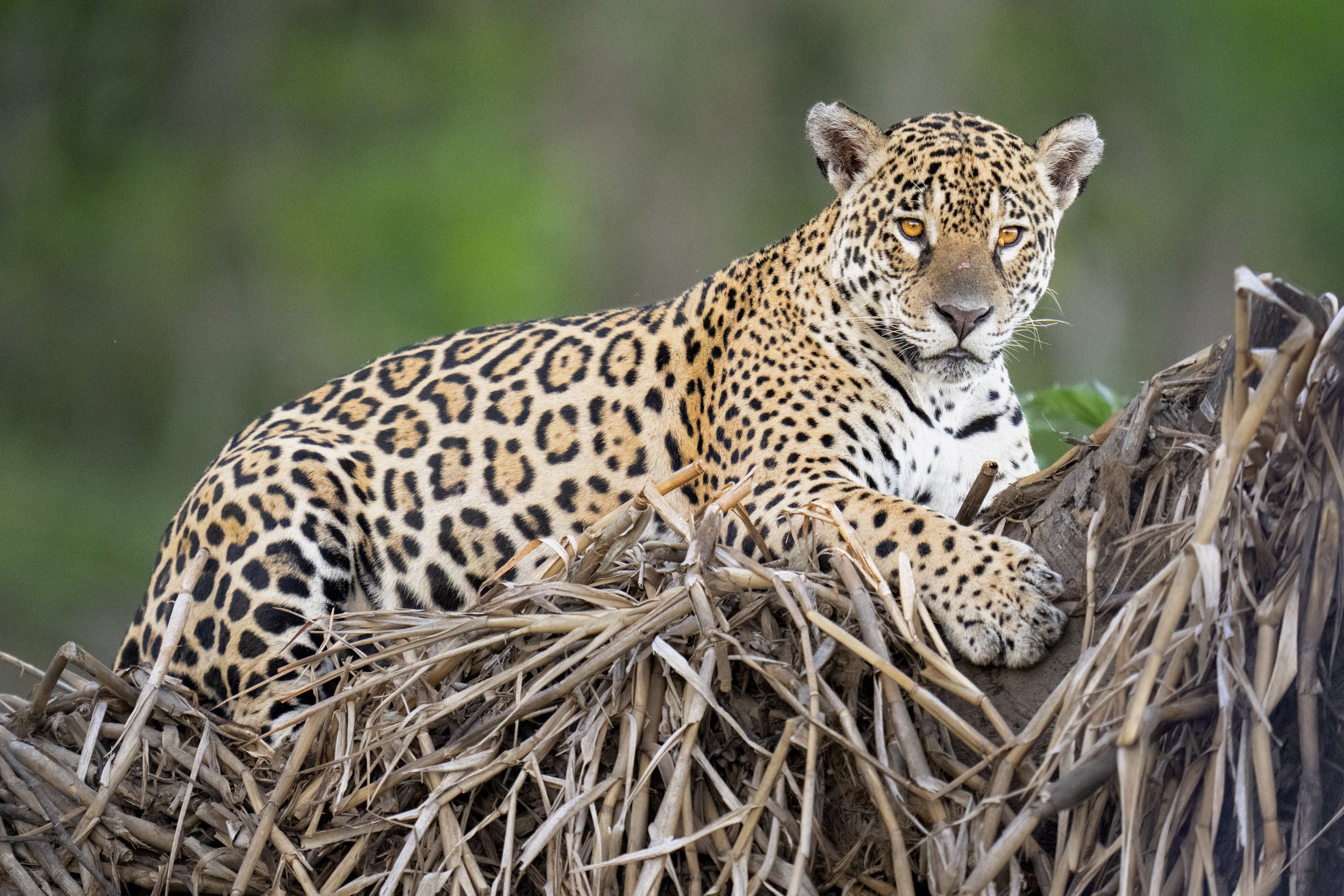
A jaguar (Panthera onca) cools off in the evening shade.
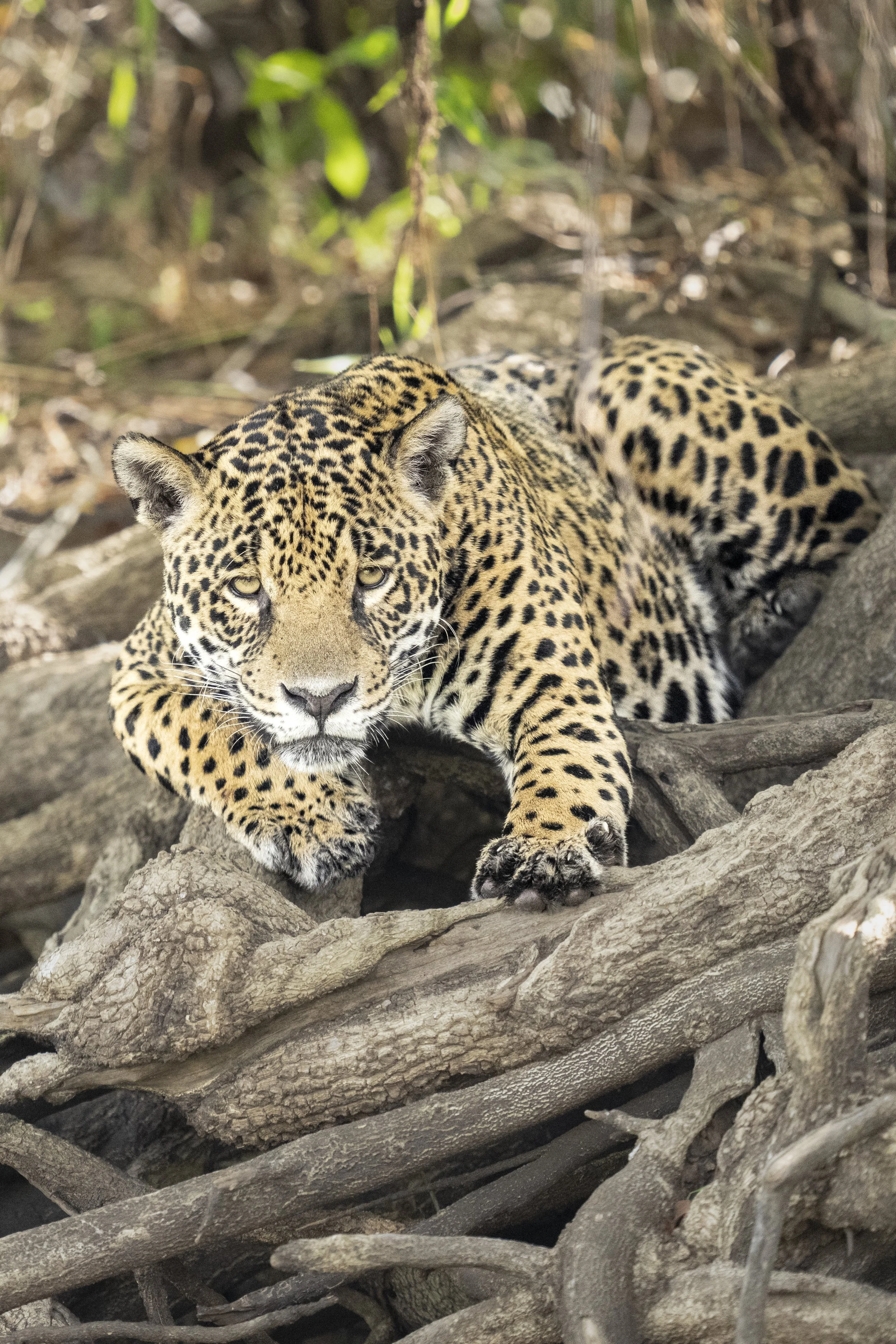
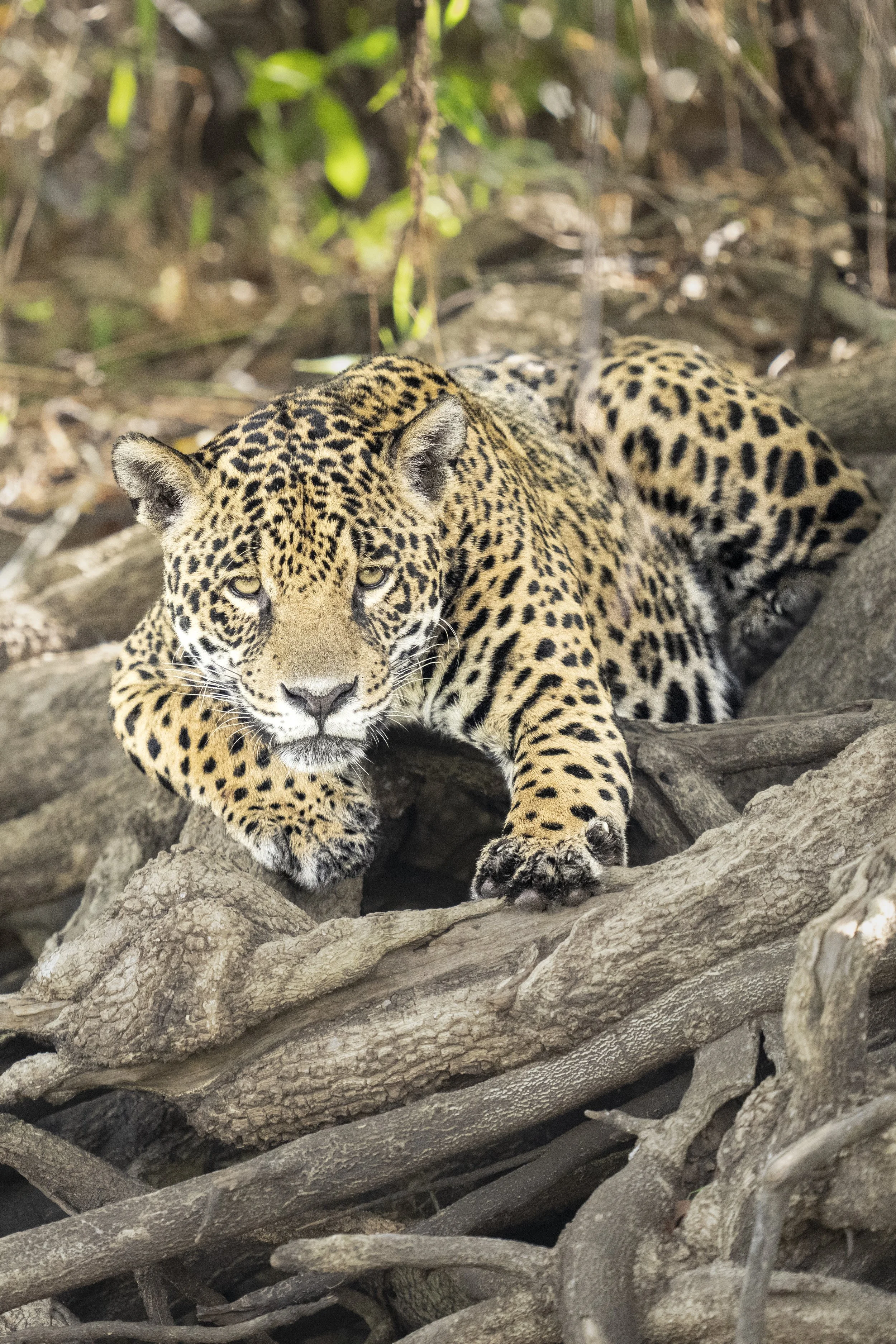
Jaguars (Panthera onca) like to rest near the edge of the water, should the opportunity arise for an easy meal, like an unsuspecting caiman.
The afternoon in the northern Pantanal brings the “feels-like” temperature up to around 112 °F. The air was so thick it seemed to have texture, a humid veil that clung to skin and gear alike.
Many companies keep guests out on the river all day, baking under the sun from dawn to dusk. I’ve done that version of life in this part of the Pantanal, and it borders on madness. The animals may be active around the clock both hunting and being hunted, but, like us, they also surrender to the mid-afternoon lull when the heat presses down like a physical weight. There’s wisdom in rest. So I build my trips with a break at the hottest part of the day, a pause for shade, air conditioning, and a proper meal. It keeps everyone cooler, happier, and, most importantly, sharp for the evening hours when the light turns liquid and the action returns.
The rhythm of each day became its own ritual: sunrise departure, six hours tracing river channels, lunch and shade, then back out for the long-angled light of late afternoon. The smell of wet vegetation and sun-baked mud fused into something elemental. The river’s surface mirrored the sky until a jaguar ripple or an otter splash broke the illusion.
Each evening, the sun melted into the horizon like molten copper, and the forest exhaled. Capybaras welcomed us home for the night. Cicadas began their electric chorus. And somewhere out there, the jaguars resumed their patrols, unseen but certain.
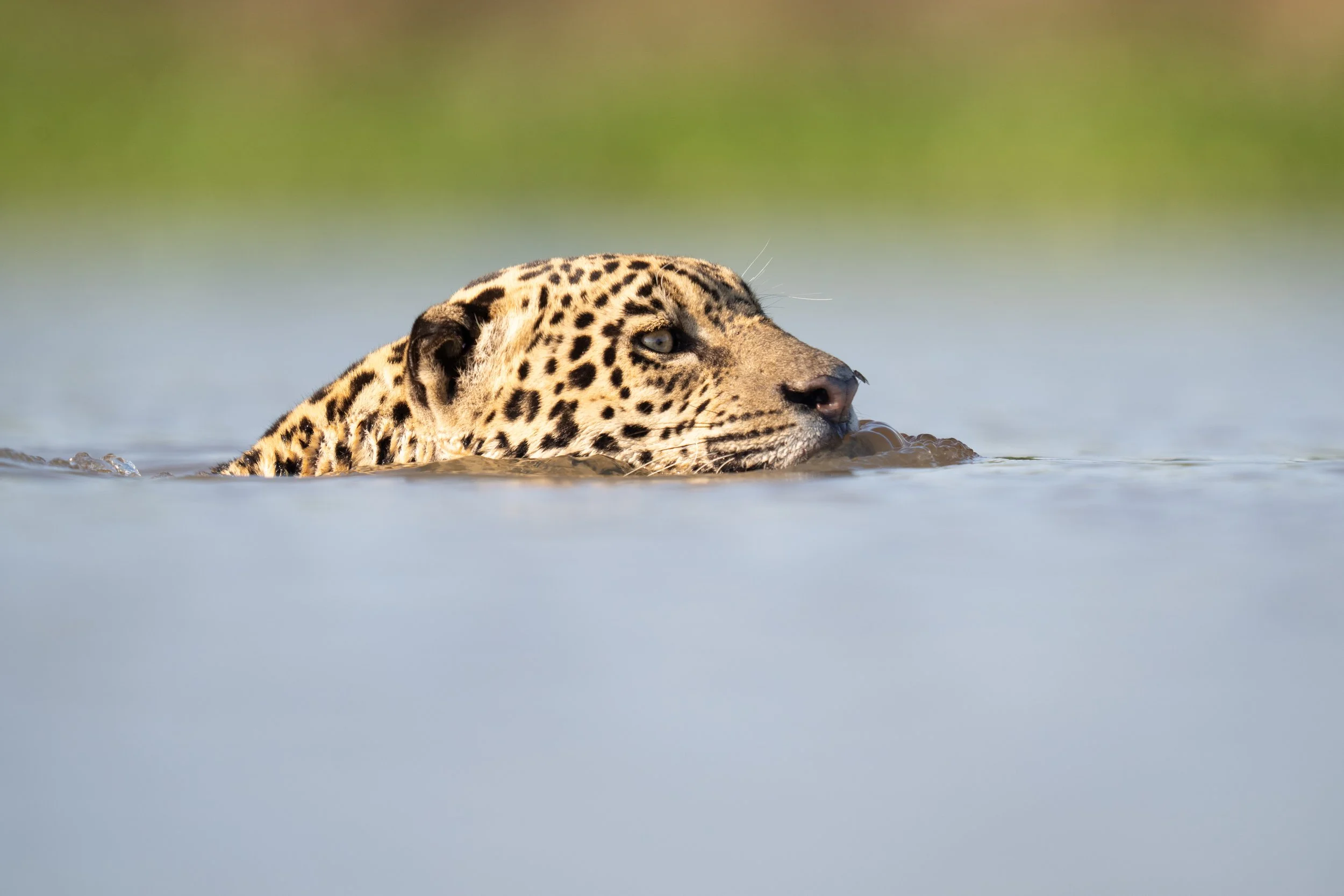
The jaguar (Panthera onca) is an excellent swimmer, navigating the local rivers with ease. A fly takes advantage of the free ride on nose of the cat, too.
The Tapir Stalk
One morning, the river fell quiet. No wind, no birdsong, only the hum of insects and the soft slap of hyacinth and river water against the hull. Then our boat driver Alan, hands-down the best in the entire region, slowed the motor and pointed in his signature quiet and authoritative way. On the far bank, a female jaguar crouched low, her gaze locked on a tapir and her calf moving through the shallows.
For a long stretch, we all breathed in fits and starts. The tension in the boat thickened instantly. It was one of those rare scenes where every sense sharpens. The kind of moment when, if you listen hard enough, you can almost hear Sir David Attenborough’s voice whispering narration in your ear. The predator in the grass. The mother and her young. The tension between hunger and innocence.
We didn’t know who to root for. The tapir and her calf were so impossibly endearing, their trust in the river both naïve and noble. But the jaguar, too, was magnificent, a hunter who also needed to eat. This is the part of wildlife photography that humbles us most. We come here to witness nature in its purest form, but we forget that purity includes peril. We find ourselves taking sides, and those sides shift, empathy swinging like a pendulum between predator and prey.
The tapir calf stayed close to her mother’s flank, her small trunk-like nose twitching nervously. The mother lifted her head, scenting the air. The jaguar crept forward, shoulders rolling in perfect silence, each step stealthy and as precise as clockwork. With every step the cat took to close the distance, the mother tapir became more ready to defend.
So many people think they want to see the “kill shot,” the raw reality of life and death. But when the prey has a face, when the stakes are a mother and her newborn, it’s different than when the prey is caiman. Why?
The idea of it hits somewhere deeper, somewhere uncomfortable. In those long minutes of suspense, our excitement gave way to something quieter. Respect, reverence, maybe even reluctance.
In the end, the tapirs escaped, at least so far as we know. The jaguar paused, tail flicking once, then melted back into the grasses. There was no victory or defeat, only a kind of uneasy equilibrium. The river resumed its rhythm, and we sat in silence, changed just a little by what we’d seen and by what we hadn’t.
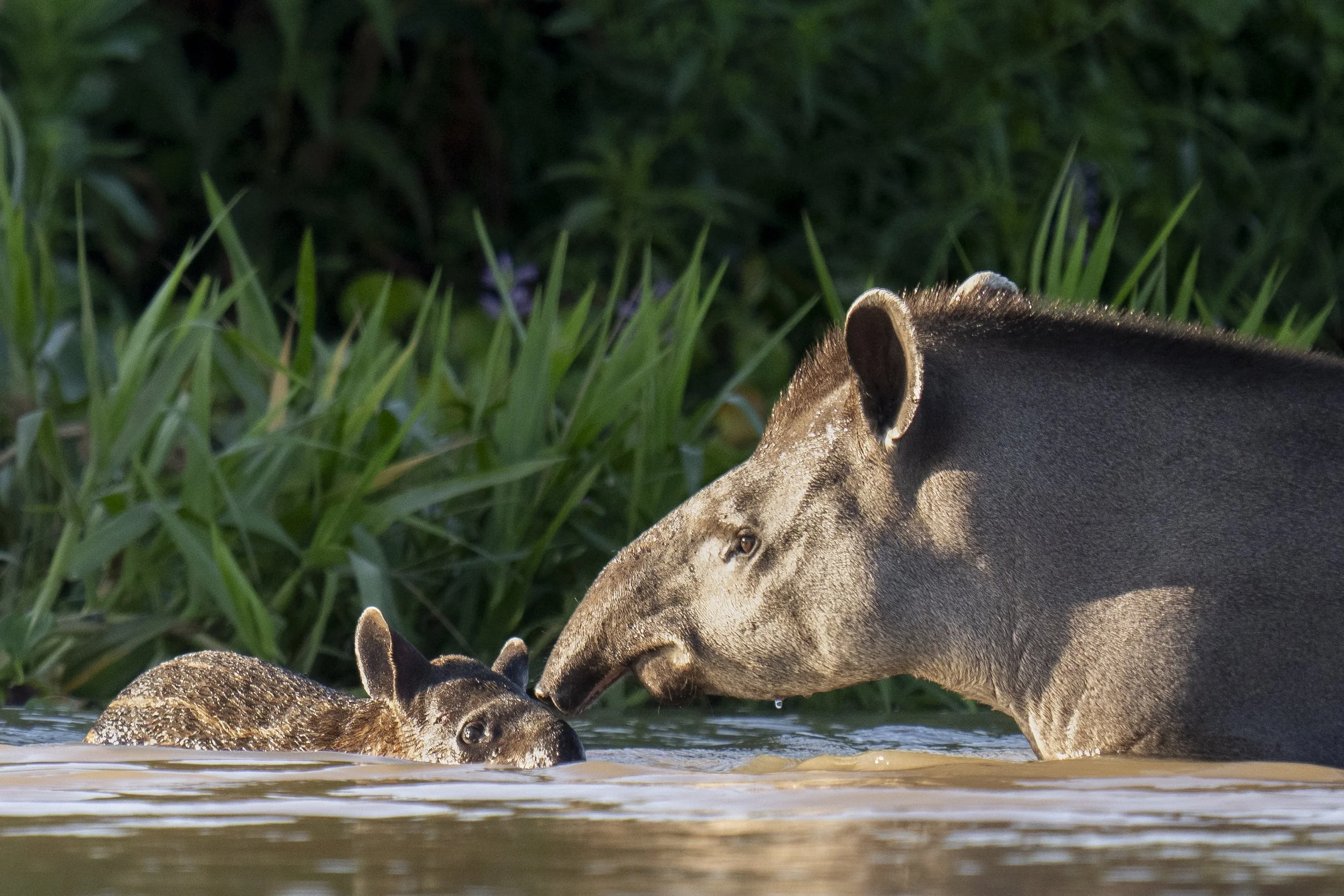
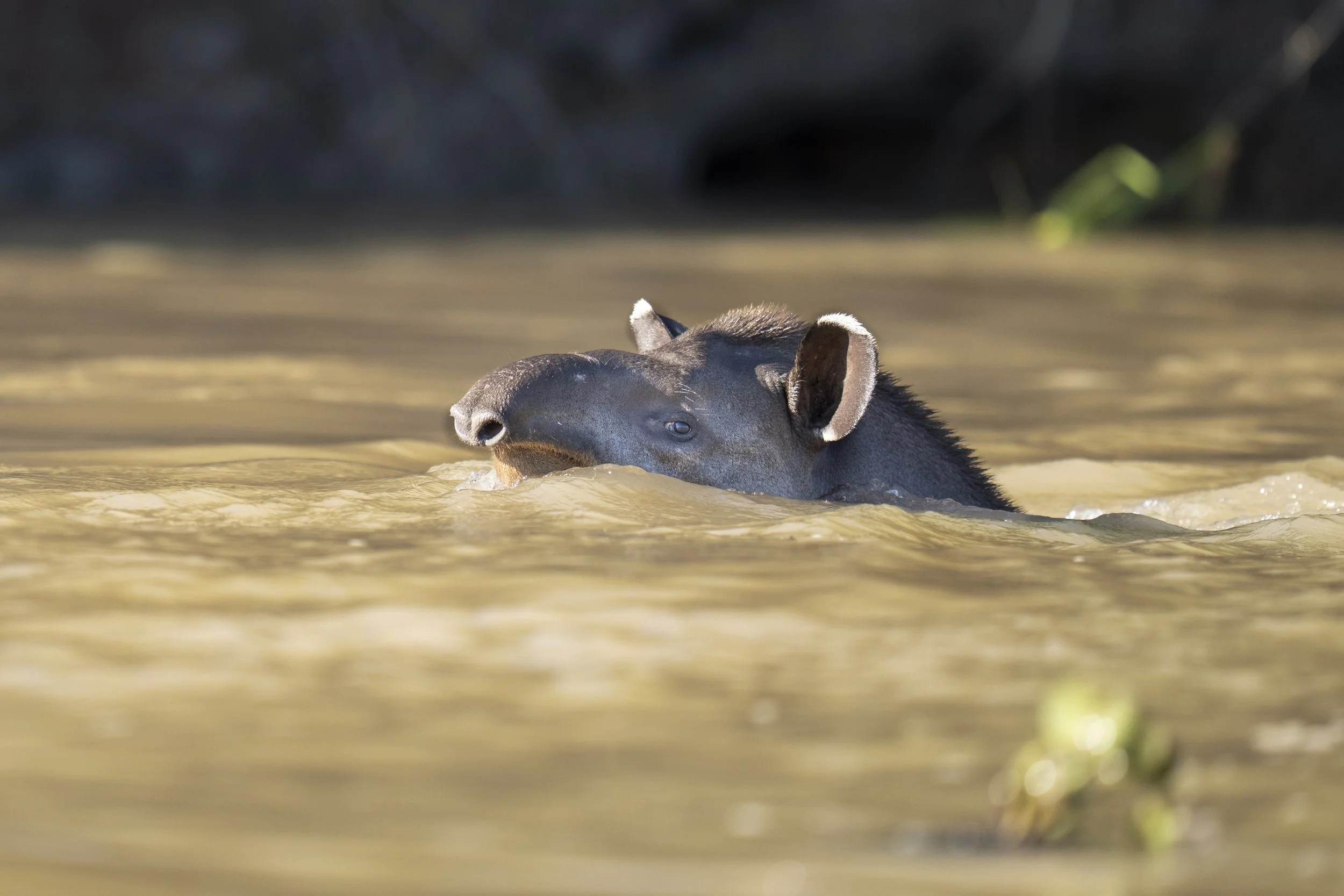
A tapir (Tapirus) and her calf stick together, as a nearby jaguar stalks the duo in the hopes of an easy meal.
Giants of the Water
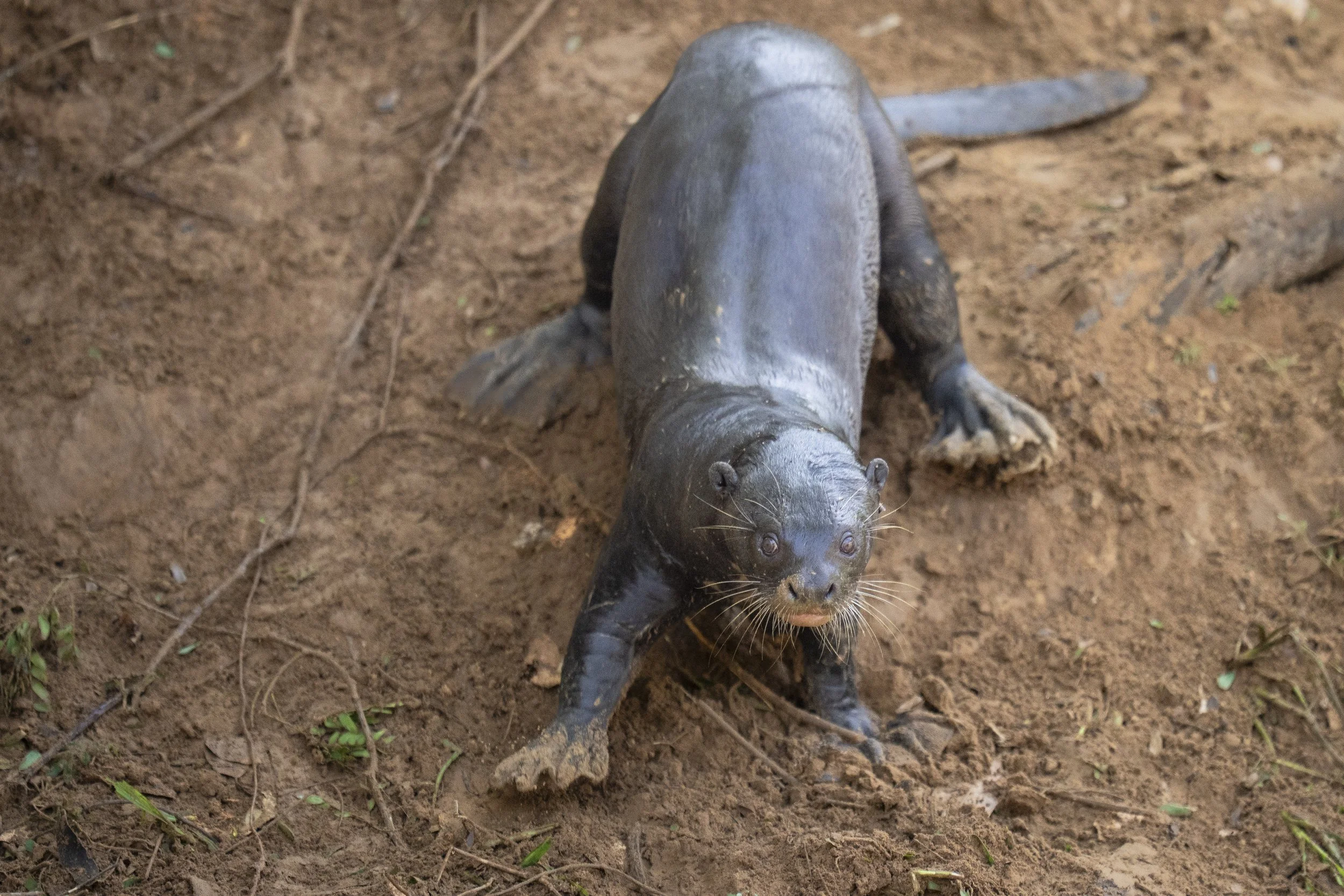
The jaguars may be the headliners, but the rivers themselves are never short of supporting characters. Giant river otters, six feet from nose to tail, claim these channels with a bravado that is nothing short of theatrical.
We met one family mid-morning, their sleek bodies scrambling around a riverbank in a chorus of chirps and snorts, fishing with ruthless efficiency. Like it was no effort at all, they were surfacing with fish after fish and, once, an eel twisting in protest. Each otter seemed both part of a team and gloriously self-interested, a microcosm of cooperation and competition.
They moved with the kinetic energy of a street band, all sound and motion and confidence. Photographing them was chaos in the best way, with every move pure action and laughter all in the same breath.
Our five days on the river unfolded like one long improvisation, each bend a new verse. The heat was punishing, yes, but laughter made it lighter. The camaraderie among the group was effortless. People sharing sightlines, adjusting boat positions so everyone could frame their shot.
Ricardo, a/k/a Captain of Fun, Professor of Positivity, Chief of Cheer, and Sultan of Snacks, kept our spirits high and our schedules tight. He is a one-man blend of field biologist, storyteller, and stand-up comic. There wasn’t a silence he couldn’t fill with knowledge or anecdote from his decades of living in this incredible ecosystem.
Humor on the water is its own kind of fuel. It breaks the tension, bonds the group, and keeps the long hours buoyant. Between sightings we swapped stories, compared camera settings, and marveled that this — this exact confluence of heat, laughter, and apex predators — was all at our fingertips.
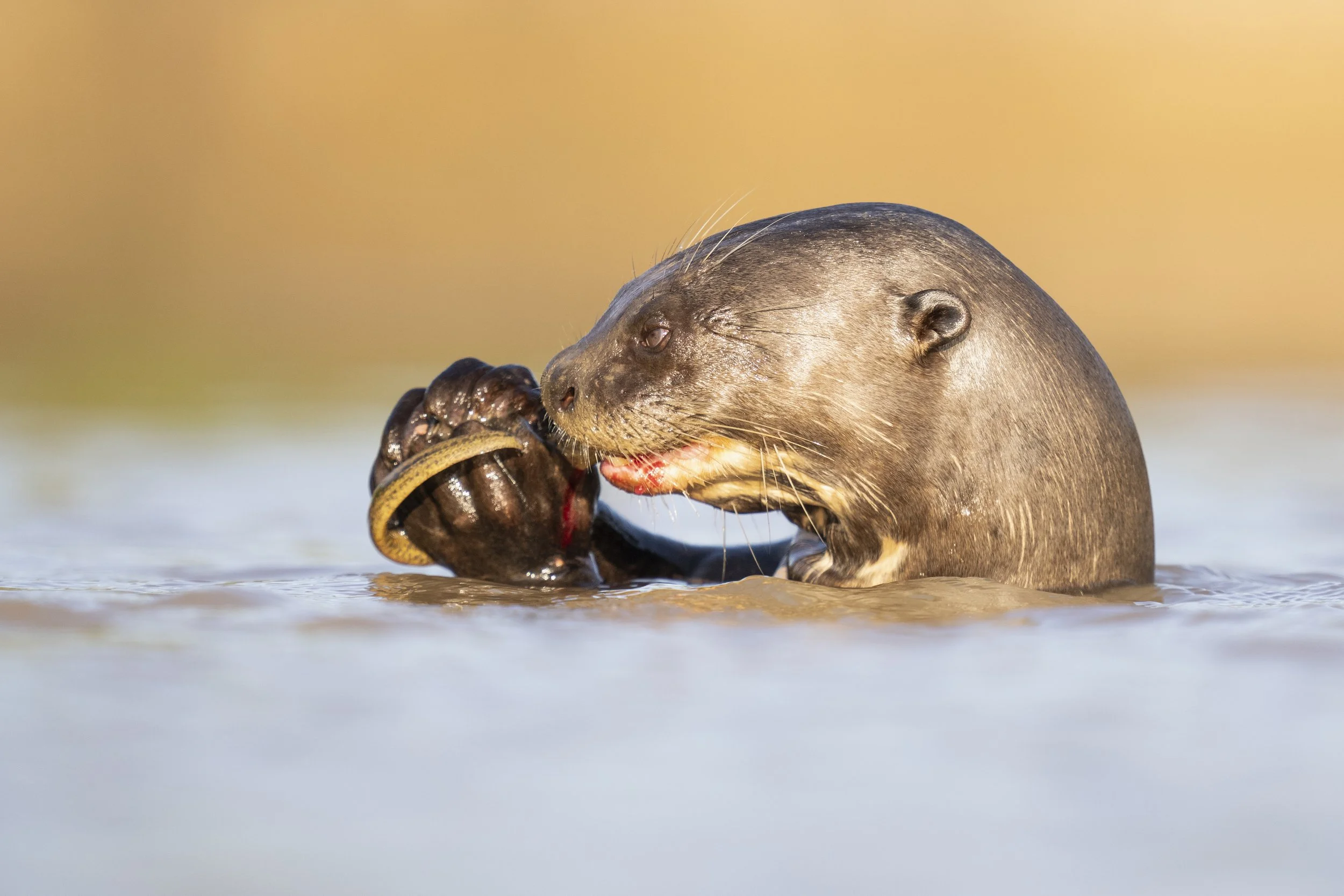
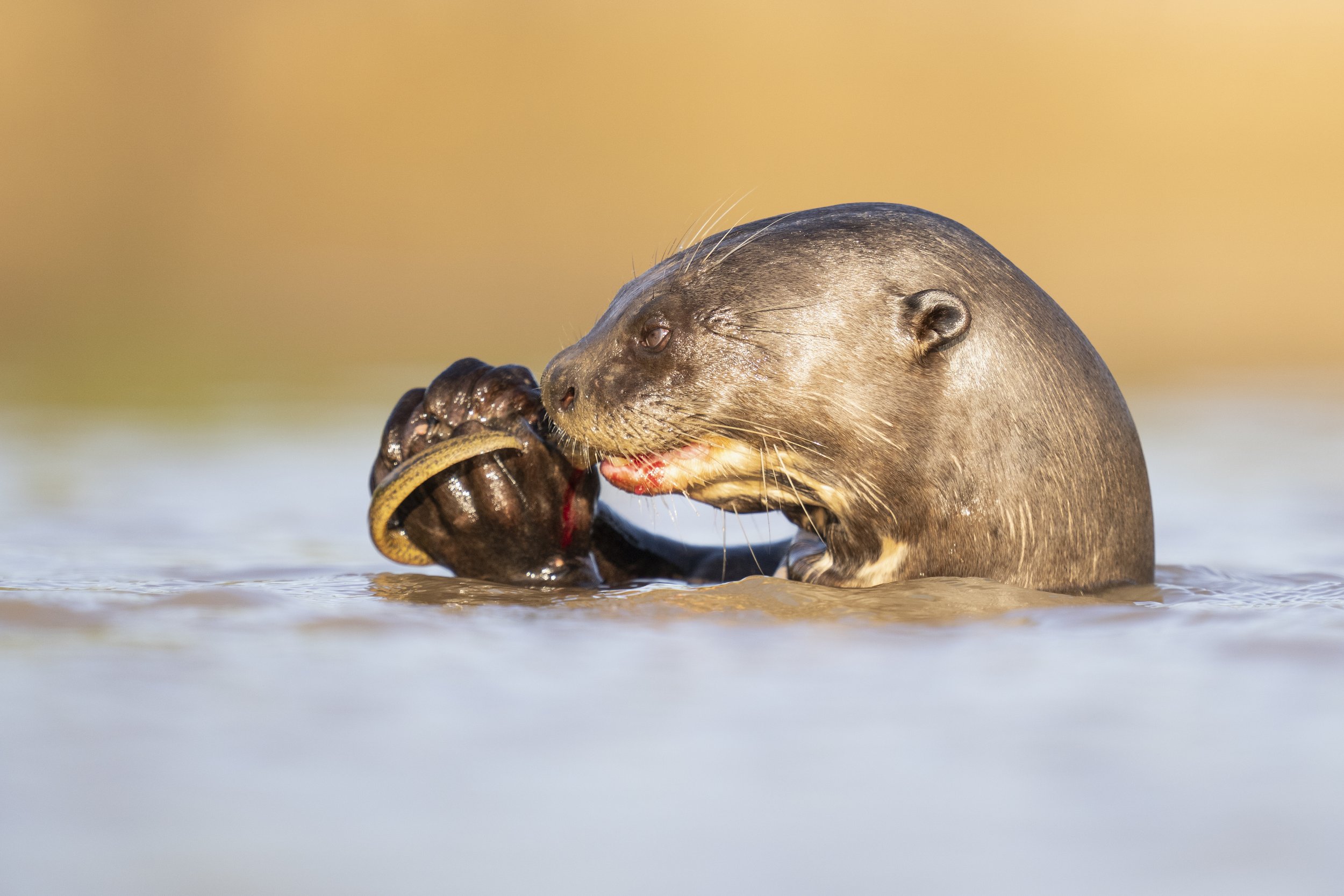
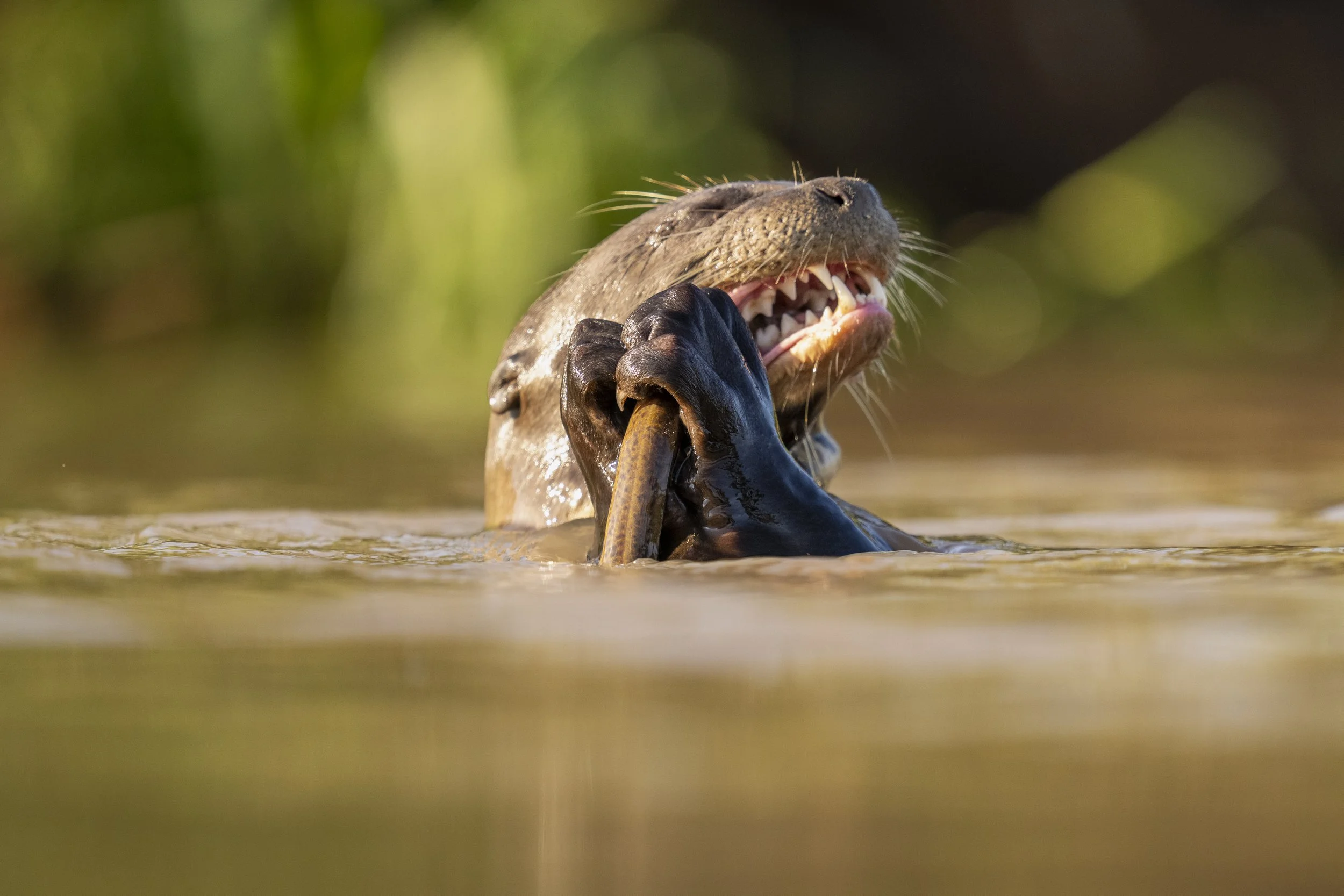
One of the Brazil “big five,” the Giant River Otter (Pteronura brasiliensis) is the largest mustelid and a whole lot of fun to watch rule the river. Here, one enjoys a morning meal of eel!
Ecology of a Predator’s Paradise
What makes the northern Pantanal so special isn’t luck, it’s architecture. This is where three great rivers converge and overflow into an intricate delta of channels. The seasonal floods concentrate prey along the shrinking waterlines — the capybaras, caimans, fish, and more. The abundance of food supports an equally abundant predator, and over centuries, jaguars here have adapted to hunt where others would drown.
Their bodies are stockier, their skulls broader, their habits bolder. They swim as easily as they walk, padding across riverbanks in plain sight. This ecological perfection is why photographers flock here from every corner of the world. Every encounter feels cinematic because the stage itself was built by water and time for exactly this kind of drama.
There were quiet moments, too, though. Reflections of cecropia leaves trembling on still water, the flash of a kingfisher diving, a jabiru lifting off in slow motion. Between the hunts and heat and laughter, there were these pauses where the enormity of the place settled in.
On our final evening, as the sun bled into the river, the air filled with the smell of rain — the kind that teases but never falls. Caimans drifted beside us, eyes glinting. The world glowed amber and violet, and for a long while no one spoke.
This expedition was one of my “Explorer Edition” journeys, which are part reconnaissance, part revelation. A few of the routes were new, stitched together from research and intuition. Watching the group thrive in it, watching them trust the itinerary, trust me, trust that this uncharted rhythm would deliver, was one of the most gratifying experiences I’ve had as a workshop leader.
The laughter, the shared discoveries, the willingness to sit for hours in heat that felt like a living thing, all of it reaffirmed why I build these journeys in the first place: to guide the heart, and in doing so, move the mind.
By the end of our fifth day, we had logged at least fifteen jaguar sightings. Each one different, each one impossible to forget. And yet it wasn’t just the number that mattered. It was the understanding that here, in this flood-carved wilderness, we were guests in a world still ruled by instinct.
There’s something humbling about realizing that even in a landscape shaped by water and sun and the slow churn of seasons, a single animal can redefine everything. The jaguar is both myth and mirror. A reflection of strength, patience, and the quiet assertion that power need not shout to be absolute.
As we packed our gear that evening, river light fading into shadow, I felt the kind of tired that comes only from the fullness of experience, of gratitude, of awe. We’d witnessed nature at its most elemental: life, death, and the thousand small negotiations in between.
The group was still buzzing, already swapping photos and stories, teasing “Snackmaster Ricardo” every time they could. The engines hummed, the last caimans slipped beneath the surface, and the river carried our reflections downstream.
Ahead lay the slow, breathing heart of the southern Amazon. But for now, the Pantanal held us still, as if unwilling to let go, reminding us that the wildest places don’t always shout. Sometimes, they purr.
The Southern Amazon: The Slow Heartbeat of the Forest
Everyone tells me that photography workshops in the Amazon are too hard. And I understand why.
In places like national parks or the northern Pantanal, wildlife is served up to photographers on a silver platter. The animals are habituated to our loud and obnoxious human behavior, the trails are clear, the photo ops come prepackaged. They are consistent and reliable and a place which every workshop leader knows they can bring a group with enough of a guarantee to make it worth the effort.
But the Amazon doesn’t play by those rules. Here, every image is earned. This is the realm of field craft and patience, of listening as much as looking. It rewards those who understand that ethology, biology, and geology are not trivia, but are in fact the keys that unlock visibility itself.
That’s why I bring people here. The Amazon asks more of us, and in doing so, it gives back something rarer: authenticity. This is what being a wildlife photographer is in the real world. Working for it. Sweating for it. Waiting for it. Earning it.
Our arrival was unlike any I’ve ever experienced. As the charter plane touched down on the small dirt airstrip, a local news crew was waiting with cameras rolling and microphones poised. They’d come to cover our arrival and the ecological reserve where we were staying, not because of who we were, but because of why we were here.
They wanted the region to see that the forest’s greatest wealth isn’t measured only in cattle, but in the living mosaic of its biodiversity. We were there for ecotourism, not agriculture. We were there for observation, not extraction.
I gave an interview beneath the hum of propellers, and both Michael and Frank shared their impressions too. It felt like a shared declaration of intent: that curiosity and conservation can coexist, that wonder can still be an economy.
The southern Brazilian Amazon is a living intersection where the vast ecotone of the drier cerrado begins to surrender to rainforest. Everything here feels amplified: the green deeper, the air denser, the sounds closer. Cicadas drone like machinery. Howler monkeys roar from invisible perches. A thousand shades of chlorophyll seem to compete for the light.
After the wide-open skies of the Pantanal, this place felt like stepping into the earth’s lungs. The canopy swallowed us whole, filtering sunlight into flecks that danced across the forest floor. The humidity wrapped around us like a second skin, much like it did in every other part of Brazil.
Here, photography slows. The compositions are tighter, the subjects more elusive. But that difficulty is the point. It asks for participation, not consumption.
This is where wildlife photographers elevate their craft in a way they simply cannot and will not in a mass-produced environment.
Pristine Amazon Sanctuary and Stillness
We stayed at an ecological reserve of more than 5,000 hectares that shelters animals caught in the crossfire of the modern frontier, in addition to the residents who already called this place home. Individuals injured, displaced, or rescued from retaliation by ranchers. Some are rehabilitated and released; others remain as ambassadors, their presence a quiet reminder of what coexistence costs.
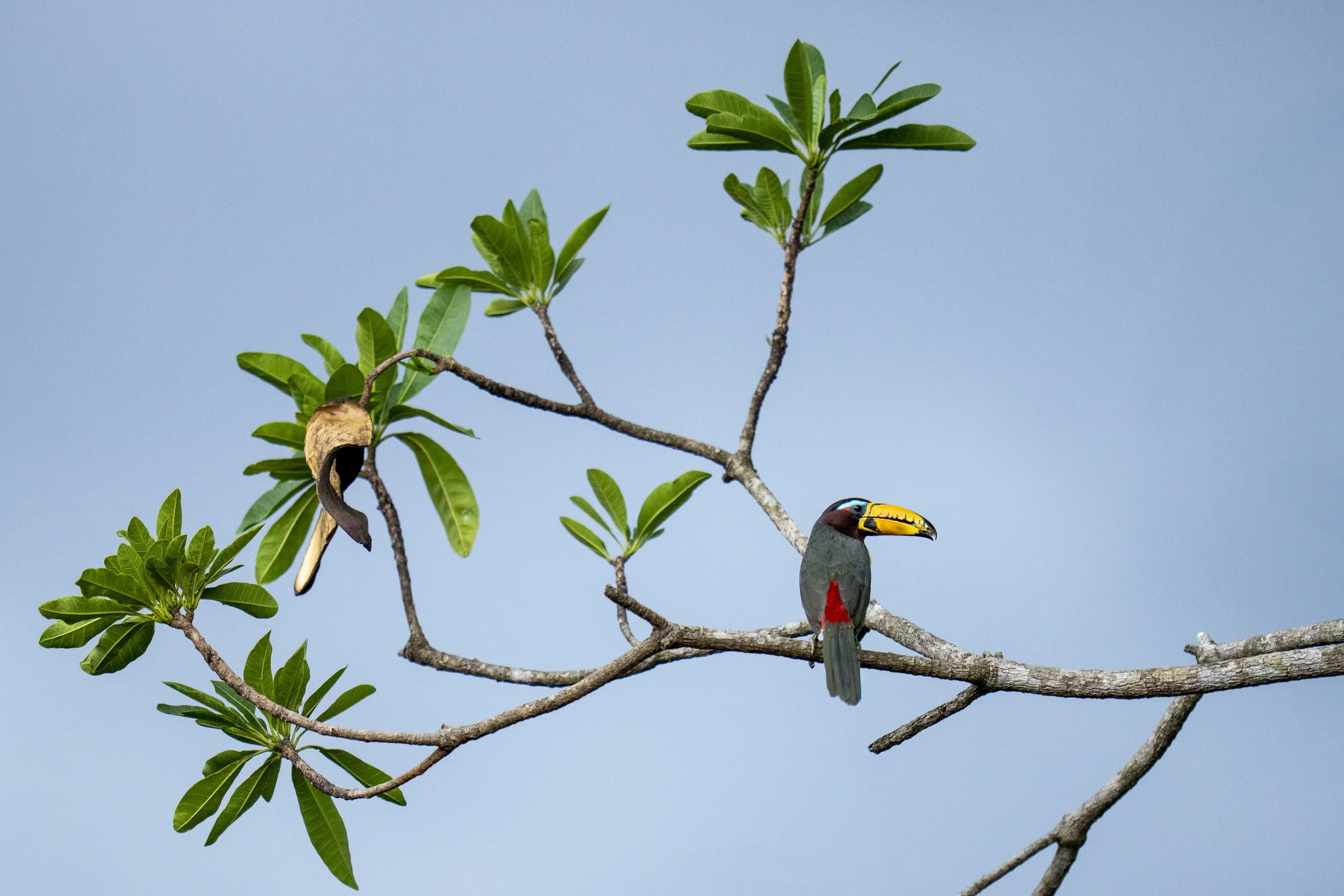
The grounds were lush, pulsing with unseen life. White-lipped and collared pecarries darted in and out by the in-ground hides, Gould’s toucanets called from the canopy, and every night the forest came alive with a chorus so textured it felt orchestral. The water here was unlike the murky channels of the Pantanal, instead crystal-clear, reflecting the sky in tones of jade and bronze.
After two weeks of adrenaline, the endless pursuit of jaguars, the thrill of river otters, and the constant motion, this place asked us to decelerate. The rhythm shifted from chase to contemplation.
One morning we climbed the observation tower before sunrise, ascending until we stood above the canopy. Below us stretched an unbroken sea of green, the treetops beaded with dew that caught the first light like gemstones.
From that vantage, we photographed a nesting pair of lettered aracaris, small toucans whose namesake markings shimmered in the morning sun.
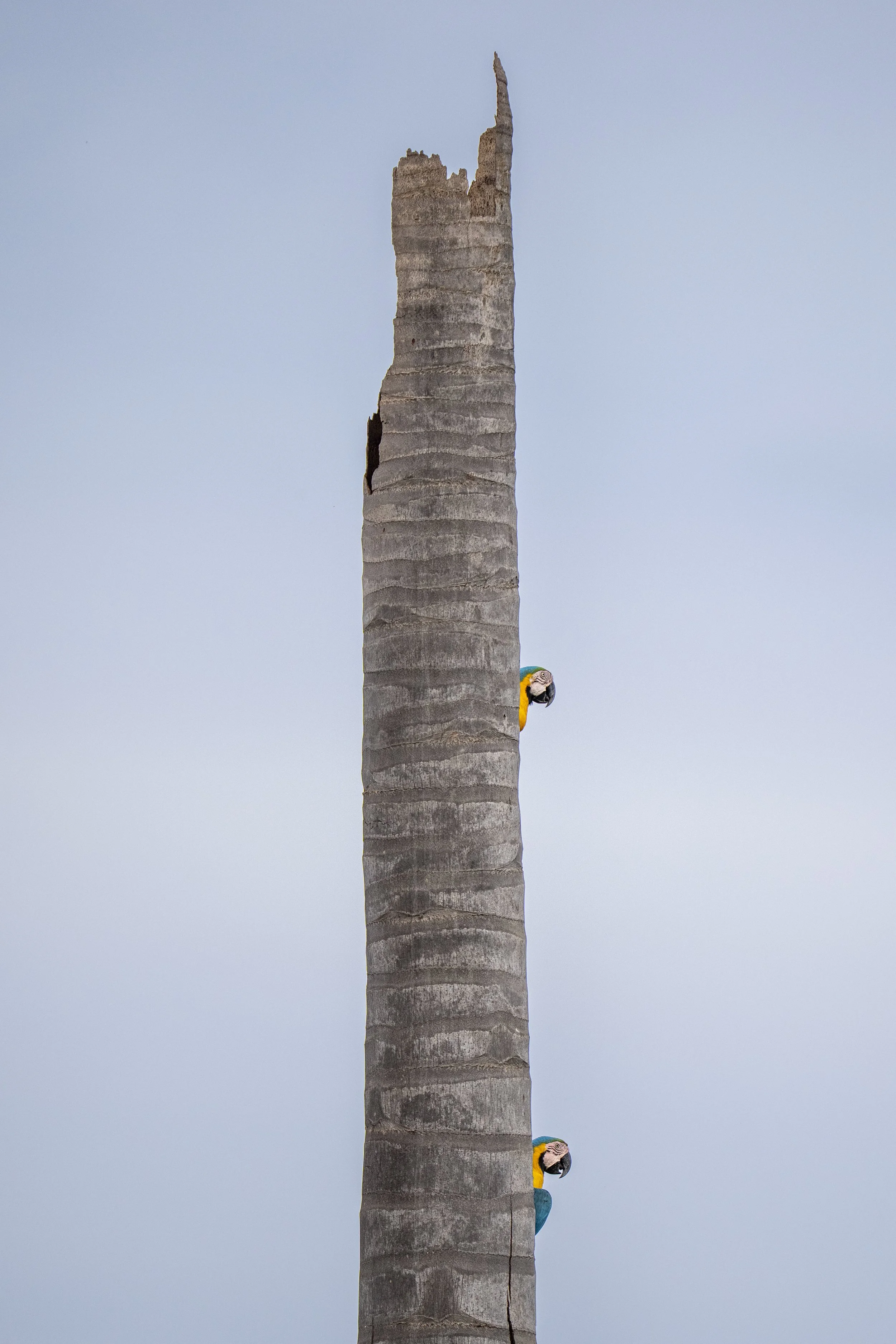
One afternoon, we traveled to a quiet lagoon pierced by the skeletal trunks of dead palms, each one transformed into a vertical neighborhood for blue-and-yellow macaws. Their calls echoed across the water like laughter at a distance, pairs ferrying back and forth from their “apartments” in the hollowed-out trees.
The whole place felt alive with routine, watching as the red-bellied parrots announced their commutes and the macaws and parrots traded watch duty at their nest holes. It was a reminder that even decay has its second life in the Amazon.
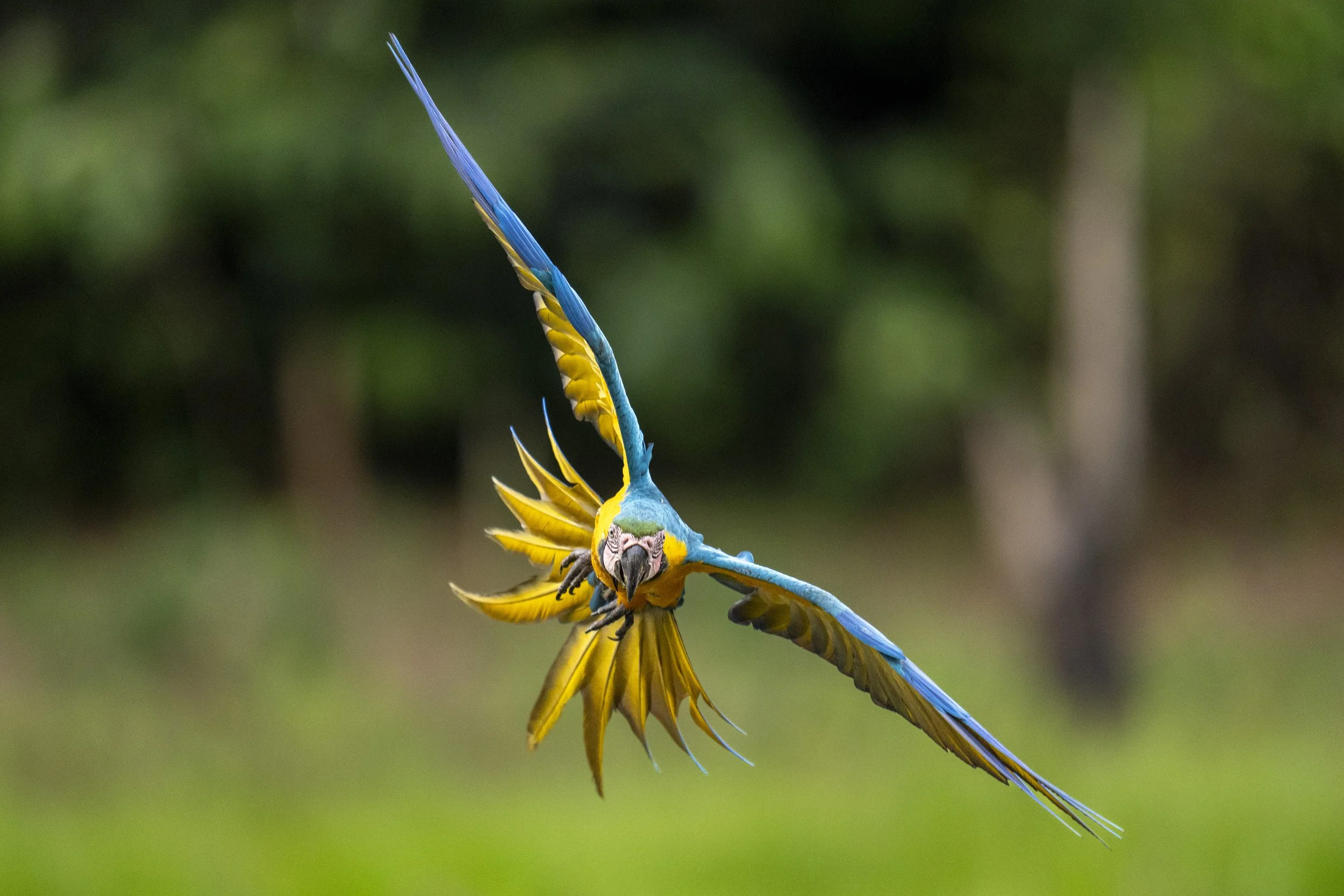
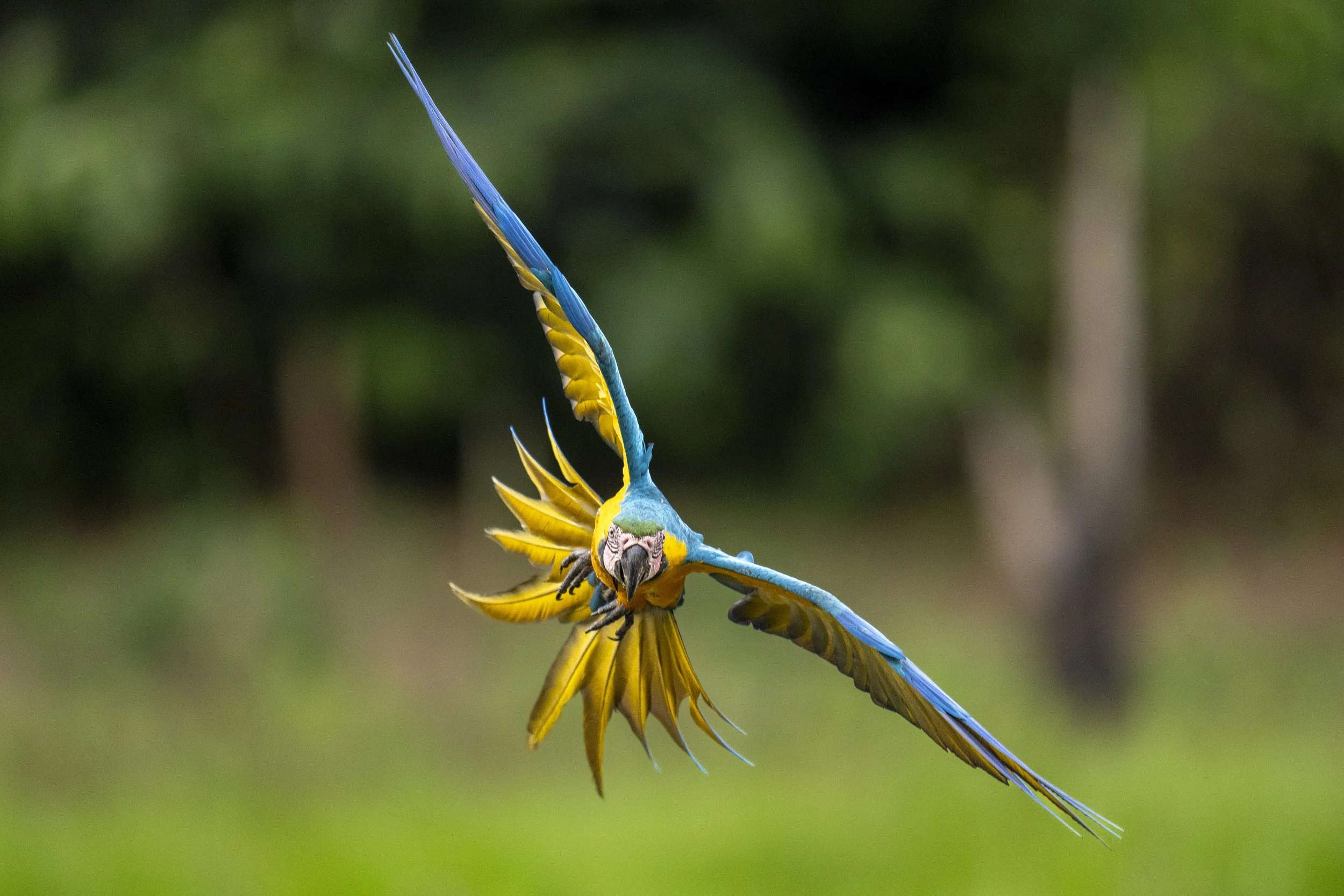
One of my favorite parts of the Amazon-based part of this trip is the incredible lagoon that is home to dozens of blue-and-yellow macaws (Ara ararauna). Photographing them as they fly into their cavities, in sync with their mate, is incredibly special.
In the Pantanal, wildlife fills the frame; in the Amazon, it fills the imagination. You learn to see differently here. You learn to notice motion before form, shadow before shape. The forest trains your eyes to decode subtleties: a leaf trembling against the direction of the breeze, the faint scrape of claws on bark, the whisper of wings just beyond sight.
For some, this was their first real taste of how hard, and how rewarding, wild photography can be when the subjects are not accustomed to humans. I watched them lean into the challenge, slowing their breathing, adjusting their expectations, finding joy not only in the shot but in the pursuit itself. And in doing so, made some incredible images!
That’s what this place does: it teaches humility. It reminds you that not all wildness can be catalogued, not every encounter captured. Sometimes the story isn’t about what you photograph, but about what you finally learn to leave unseen.
Ecologically, the southern Amazon is one of Earth’s last great classrooms. Here, river systems shape microclimates, soil types dictate entire plant communities, and evolution is still visibly at work. This convergence of habitats, the floodplain forests, terra firme plateaus, and gallery streams, creates staggering biodiversity. Yet that richness hangs by a thread, threatened by deforestation and the slow encroachment of pasture. To witness it firsthand is to understand both its beauty and its fragility.
As the light faded on our final evening, I thought about how this trip had unfolded: from the grasslands of the south to the flooded rivers of the north and finally to this dense, breathing labyrinth of green. Each ecosystem had revealed a different truth about wildness: one loud, one lyrical, one whispered.
Leading photography workshops, especially ones untested by the many others in my industry, are always a gamble. You plan meticulously, but nature writes her own script. This time, she gave us everything: spectacle and stillness, laughter and awe, the chance to see not only wildlife but our own place within it.
When people tell me the Amazon is too hard, I nod. They’re right, for many photographers, it is. But that’s what makes it sacred. The difficulty strips away pretense and leaves only what’s essential: attention, respect, wonder.
We came here to photograph Brazil’s wildlife. What we found was a living reminder that the best images aren’t proof of arrival, they’re invitations to keep looking.
As I write this, 2026 is already sold out, but the wild heart of Brazil still waits. I’ve opened two new departures for 2027, with just four spots remaining between them. If you’ve ever wanted to experience the Pantanal and Amazon not as a tourist, but as a participant in something larger, I’d love to have you join me.
You can read more about my other open workshops, as well.